

How Electricians Can Keep the Right Records for Medicare Levy Surcharge Exemptions
Share this article
Published on September 22, 2026
Medicare Levy Surcharge (MLS) record keeping helps electricians make sure their tax return reflects the right private hospital cover, income and Medicare eligibility information. When records are scattered across insurer emails and business files, it can be hard to confirm whether you may have to pay the surcharge and for how many days. The MLS is separate from the standard Medicare levy that most Australian taxpayers pay. The Australian Taxation Office (ATO) considers your income for MLS purposes, hospital cover and personal circumstances.
Essential Records for Medicare Levy Surcharge Purposes
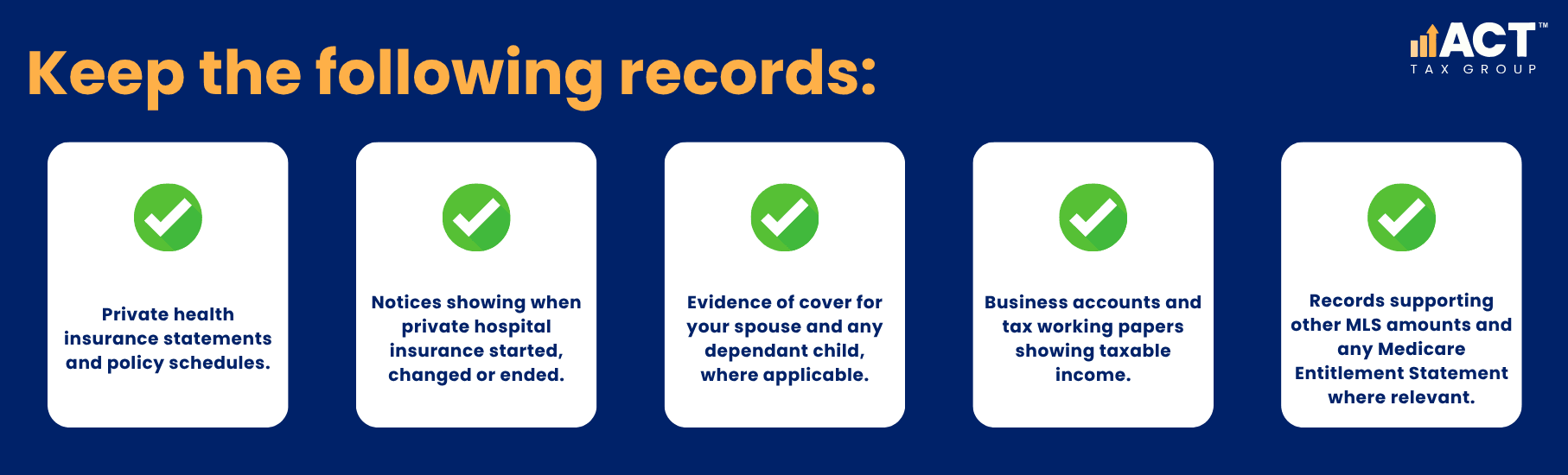
Keep records showing eligible private hospital cover, annual income and any period when you were entitled to a Medicare levy exemption. This matters if you changed health cover, added a dependant child or moved between single and family income thresholds. Your records should confirm who was covered, the type of hospital cover and the dates it applied.
Is your income close to the MLS threshold?
Schedule a complimentary consultation with us today to review income records before tax return lodgement.
Private Hospital Cover Records Are the Starting Point
For MLS purposes, eligible private hospital cover must provide an appropriate level of private patient hospital cover through a registered health insurer. Extras only cover does not qualify. The excess must be $750 or less for singles and $1,500 or less for couples or families. Keep your health insurance statement so your accountant can confirm whether you held hospital cover for all or part of the financial year.
Example: In a 2024-25 ATO example, Jacinta had income for MLS purposes of $99,000 and began hospital cover on 16 January 2025. Her cover dates affected the number of days MLS applied.
Income Records Can Change the MLS Outcome
Annual taxable income is not always the same as income for MLS purposes. Other amounts can be included when the ATO works out whether you fall within the MLS income thresholds. For the 2026-27 financial year, the base income thresholds are $105,000 for a single person and $210,000 for families. The family income threshold increases by $1,500 for each dependent child after the first, while MLS rates range from 1% to 1.5%.
Example: In a 2024-25 ATO example, Josh had $90,000 taxable income, $20,000 reportable fringe benefits and $7,000 net investment losses. His income for MLS purposes was $117,000.
Medicare Levy Surcharge Rates Depend on Income and Cover
How much you pay for the Medicare Levy Surcharge depends on your income level, family status and whether you hold eligible private hospital cover. If your income is above the relevant threshold without qualifying hospital cover, you may have to pay the MLS in addition to the normal Medicare levy. The surcharge is calculated as a percentage of relevant income. A Medicare Levy Surcharge calculator can provide an estimate, but family income, combined income and part-year cover can change the final result.
Example: A single person who becomes part of a family during the year may need both single and family information reviewed.
Part-Year Exemptions Need Date-Specific Evidence
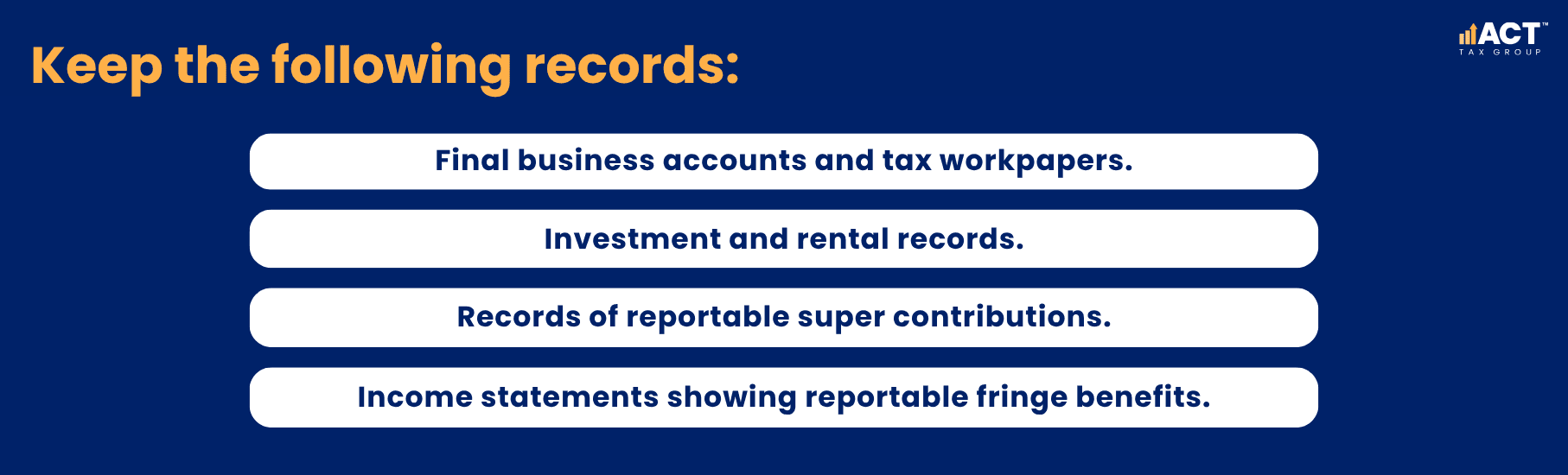
You may not have to pay the MLS for every day if you held appropriate hospital cover for part of the year or qualified for a Medicare levy exemption for a specific period. Exact dates matter. If you were a foreign resident for tax purposes, a prescribed person under the Medicare levy rules, or not eligible for Medicare for part of the year, keep evidence supporting the relevant exemption period.

A Simple Digital Filing Routine Keeps Evidence Ready
Create one secure financial year folder for MLS records and keep it with your tax documents. This makes it easier to check income, private health insurance and family details at tax time.
“You don’t want to find yourself searching far and wide for receipts at tax time,” explains Rob Thomson, Assistant Commissioner at the Australian Taxation Office. The same approach helps when checking hospital cover and exemption dates.
Save health cover statements and policy-change notices.
Record changes to family or dependant status.
Keep Medicare exemption documents with the matching financial year.
Back up the folder before your tax return is prepared.
Power up your business with Accounting Built for Electricians
From start-up to expansion, our accounting team supports your tax, payroll, and cash flow at every stage of growth.
How ACT Tax Group Can Help with Medicare Levy Surcharge Record Keeping
We understand electricians already manage quoting, payroll, supplier bills and job schedules. Our IPA-certified team can review taxable income, private hospital cover, family income and exemption records so your tax return uses the right information. If your annual income is close to an income threshold or your private health insurance changed, we can help review the details. Book a meeting with ACT Tax Group before lodgement so we can check the records that matter.

How ACT Tax Group Can Help with Medicare Levy Checks for Electricians
We understand that tax time competes with quoting jobs, managing staff and getting invoices paid. Our IPA-certified team can review your taxable income, Medicare levy, MLS position, private hospital cover information and other relevant tax details before your return is lodged. If you are unsure how much tax you may pay or whether your circumstances affect the surcharge, book a consultation with ACT Tax Group. We can check the calculations and provide practical advice based on your situation.

Lukasz Klekowski
Principal of ACT Tax Group, specialising in tax compliance and financial strategy for Australian small businesses.

Share this article
Disclaimer: All information provided in this publication is of a general nature only and is not personal financial or investment advice. It does not take into account your particular objectives and circumstances. No person should act on the basis of this information without first obtaining and following the advice of a suitably qualified professional. To the fullest extent permitted by law, no person involved in producing, distributing or providing the information in this publication (including ACT TAX GROUP PTY LTD, each of its directors, councilors, employees and contractors and the editors or authors of the information) will be liable in any way for any loss or damage suffered by any person through the use of or access to this information. The Copyright is owned exclusively by ACT TAX GROUP PTY LTD (ABN 31634338088)