

Medicare Levy Checks Electricians Should Make Before Lodging a Tax Return
Published on September 15, 2026
Medicare Levy Checks Electricians Should Make Before Lodging a Tax Return can help you understand how your taxable income, private hospital cover and personal circumstances may affect the amount you pay. For electricians managing jobs, staff, tools and paperwork, checking these details before lodging your tax return can prevent an unexpected tax bill. The Medicare levy and Medicare Levy Surcharge (MLS) are separate parts of the Australian income tax system. Knowing which rules apply can help you calculate Medicare levy obligations more accurately and understand whether private health insurance affects how much tax you may need to pay.
Key Medicare Levy Checks Before Lodging
Start by confirming your annual taxable income, Medicare eligibility, family circumstances and private hospital cover for the financial year. Most Australian taxpayers pay the Medicare levy at 2% of taxable income, although reductions or exemptions can apply depending on income and personal circumstances. Electricians may receive income through wages, contracting or a business, while also claiming eligible work expenses. Your final taxable income, rather than business turnover or total money received, is what generally matters when the Medicare levy is calculated.
Could Your Medicare Levy Be Higher Than Expected?
Schedule a complimentary consultation with us today to check your taxable income before lodging.
The Medicare Levy Surcharge Can Increase Your Tax Bill
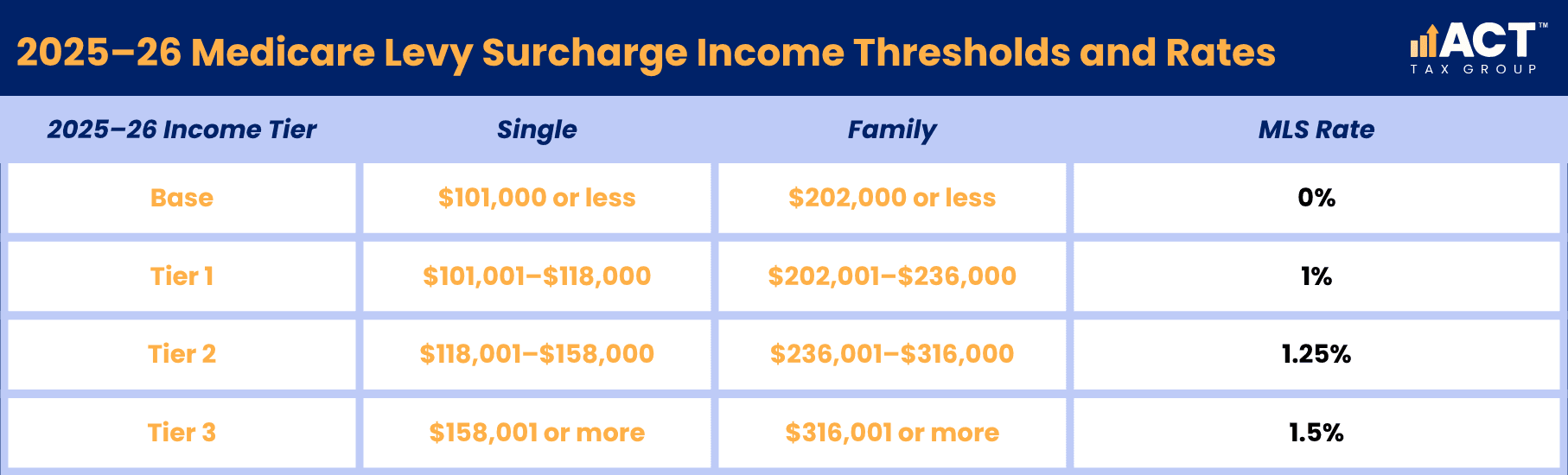
The Medicare Levy Surcharge is an extra tax that may apply when your income for MLS purposes is above the relevant threshold and you, your spouse or your dependants do not have appropriate private patient hospital cover. It is separate from the standard Medicare levy, so holding private health insurance does not normally mean you avoid paying the Medicare levy itself. For the 2025–26 financial year, the MLS base income thresholds are $101,000 for singles and $202,000 for families. Above the relevant family income threshold or single threshold, the surcharge rate can be 1%, 1.25% or 1.5%, depending on your income for MLS purposes.
Private Hospital Cover Must Meet the Relevant Requirements
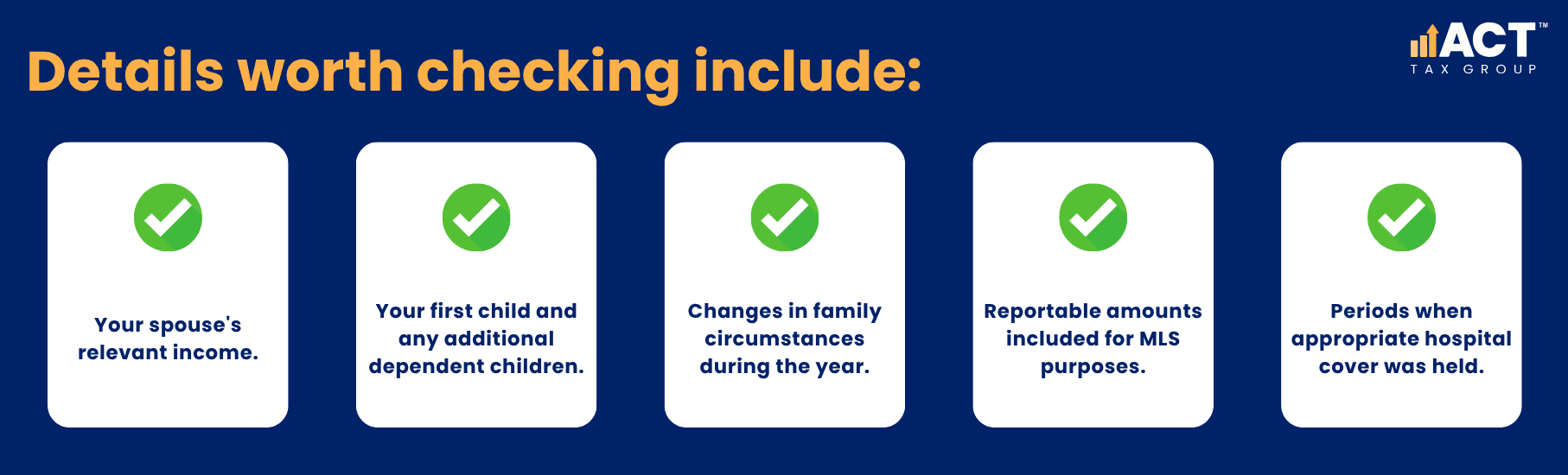
If your income exceeds the relevant threshold, simply having private health insurance may not be enough to avoid the surcharge. You generally need appropriate private patient hospital cover from a registered health insurer. The excess must be $750 or less for singles or $1,500 or less for couples or families, and extras cover alone does not qualify. Check whether you held private hospital cover for the full financial year or only part of the period. Your insurer can confirm your cover, while a Medicare levy surcharge calculator can provide an estimate, although your final tax return calculations depend on your actual circumstances.

Family Circumstances Can Change the Applicable Income Threshold
Your spouse, dependants and children can affect the family income threshold used for MLS purposes. The family threshold increases by $1,500 for each MLS dependant child after the first child, so accurate family details matter when your surcharge is calculated. Changes such as marriage, separation or becoming a single parent may also affect the calculation for part of the year. Do not estimate based only on annual income or your current circumstances when preparing your tax return.
Private Health Insurance Rebates Are Calculated Separately
The private health insurance rebate is an Australian Government contribution towards eligible private health insurance costs. The Australian Government rebate is income tested, which means the amount available can change as your annual income or family circumstances change. It is also separate from the Medicare levy surcharge. Lifetime Health Cover rules, insurance rebates and MLS requirements can interact with private health insurance, but they serve different purposes, so each should be checked separately at tax time.
Power up your business with Accounting Built for Electricians
From start-up to expansion, our accounting team supports your tax, payroll, and cash flow at every stage of growth.
Accurate Figures Help Estimate How Much Extra Tax May Apply
Online calculators can be useful when you want to estimate how much extra tax could apply, but they rely on the information entered. Your income for MLS purposes, family details, spouse income and qualifying hospital cover can all affect the result. Income for MLS purposes can include taxable income and certain other reportable amounts. For further information, the Australian Taxation Office (ATO) website provides Medicare levy, MLS and private health insurance guidance. Accurate information is important because even small differences in income or cover periods can affect the final calculation.

How ACT Tax Group Can Help with Medicare Levy Checks for Electricians
We understand that tax time competes with quoting jobs, managing staff and getting invoices paid. Our IPA-certified team can review your taxable income, Medicare levy, MLS position, private hospital cover information and other relevant tax details before your return is lodged. If you are unsure how much tax you may pay or whether your circumstances affect the surcharge, book a consultation with ACT Tax Group. We can check the calculations and provide practical advice based on your situation.

Lukasz Klekowski
Principal of ACT Tax Group, specialising in tax compliance and financial strategy for Australian small businesses.

Disclaimer: All information provided in this publication is of a general nature only and is not personal financial or investment advice. It does not take into account your particular objectives and circumstances. No person should act on the basis of this information without first obtaining and following the advice of a suitably qualified professional. To the fullest extent permitted by law, no person involved in producing, distributing or providing the information in this publication (including ACT TAX GROUP PTY LTD, each of its directors, councilors, employees and contractors and the editors or authors of the information) will be liable in any way for any loss or damage suffered by any person through the use of or access to this information. The Copyright is owned exclusively by ACT TAX GROUP PTY LTD (ABN 31634338088)