

How Electricians Can Estimate Medicare Levy Without Confusing It With Income Tax
Published on September 30, 2026
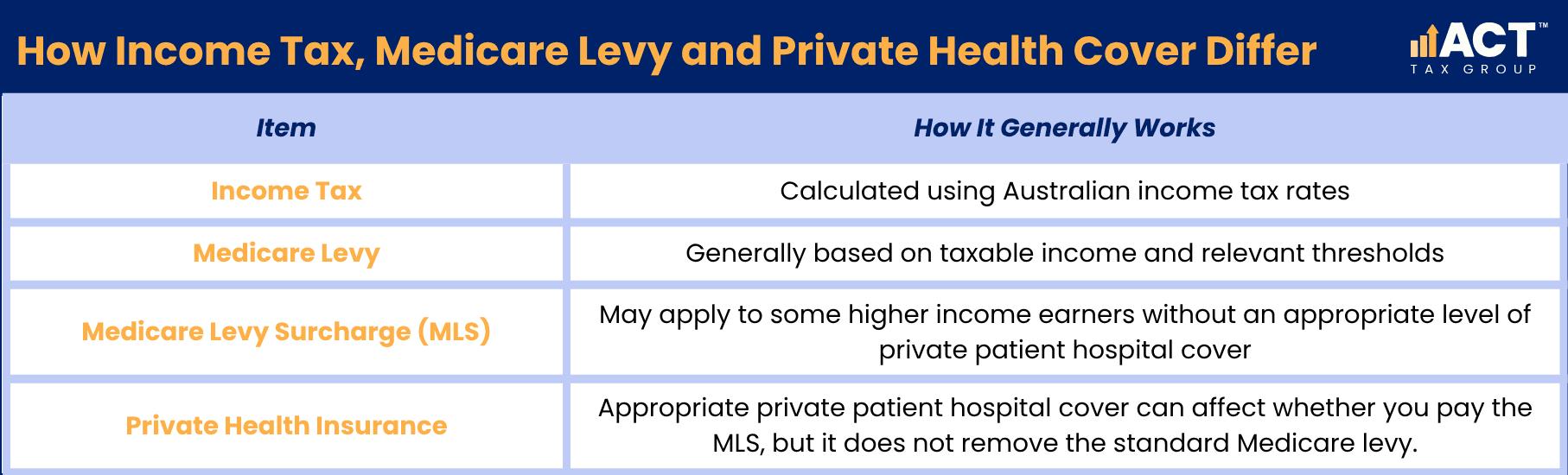
How Electricians Can Estimate Medicare Levy Without Confusing It with Income Tax starts with understanding that the Medicare levy and ordinary income tax are separate calculations. Most Australian taxpayers contribute to the public health system through the Medicare levy, which is generally calculated at 2% of taxable income, although low-income thresholds, reductions and exemptions can change the final amount. Understanding the Medicare levy before tax time can help you estimate your tax outcome more accurately and avoid confusing the standard levy with income tax or the Medicare Levy Surcharge (MLS).
Understanding the Medicare Levy and How Much You May Pay
The Medicare levy helps fund Australia’s public healthcare system and is generally calculated separately from income tax. If you are an Australian resident for tax purposes and your taxable income exceeds the relevant low-income threshold, you may pay a reduced Medicare levy before the standard 2% rate applies. A Medicare levy exemption may also apply in some circumstances. A simple starting point is to multiply taxable income by 2% where the full standard Medicare levy applies. However, your final amount can depend on your income year, family circumstances, dependent children, tax residency and whether you qualify for a full exemption or partial reduction.
Unsure how much Medicare levy to set aside this year?
Schedule a complimentary consultation with us today to estimate your levy from your taxable income.
Medicare Levy and Income Tax Use Different Calculations
Income tax uses different tax rates across income bands, while the standard Medicare levy generally applies as a separate percentage of taxable income. This means the tax-free threshold, tax brackets and Medicare levy should not be treated as one combined rate. Your taxable income is usually worked out after considering assessable income and allowable deductions. Depending on your circumstances, income sources can include wages, business income, capital gains and investment income, which can all influence your overall tax outcome.
Estimating the Medicare Levy for Electricians
Start by estimating taxable income for the entire financial year rather than applying 2% to total invoices or business turnover. For a sole trader electrician, taxable income can differ substantially from business revenue once allowable business expenses and other relevant amounts are taken into account. A practical process is:
Estimate your income. Include relevant wages, business earnings and other income sources.
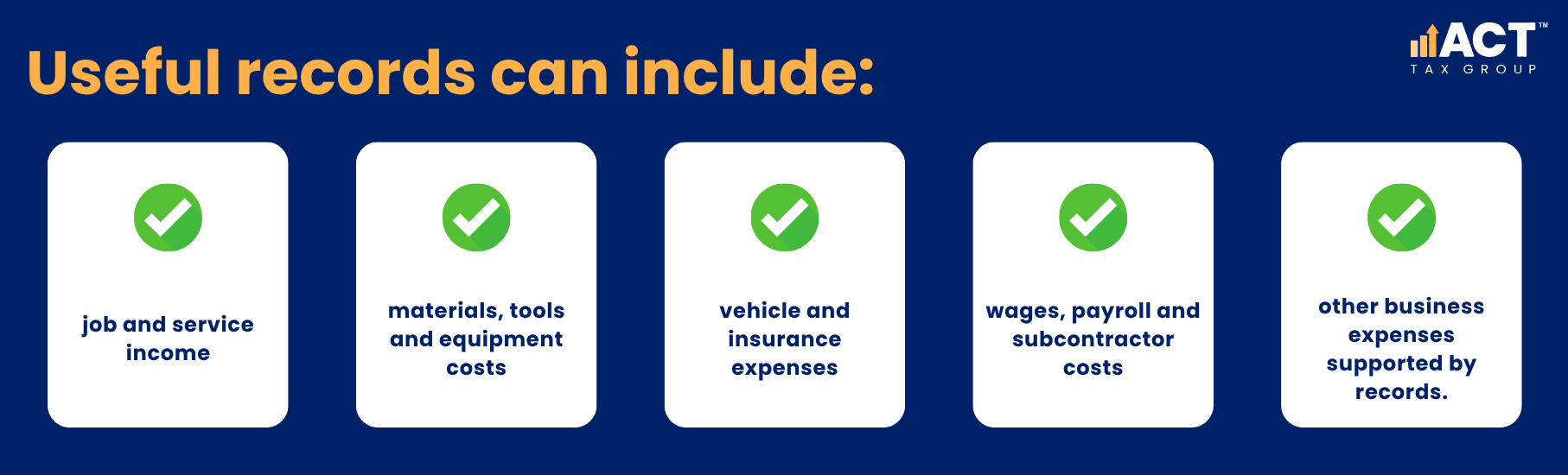
Review allowable deductions. Include expenses that satisfy the applicable tax rules and are supported by appropriate records.
Estimate taxable income. This is the figure generally used when estimating the standard levy.
Check the income threshold. Low-income earners may qualify for a Medicare levy reduction or may not need to pay the Medicare levy.
Check for an exemption. Some circumstances may result in a medical exemption, full exemption or another Medicare levy exemption.
Estimate the levy separately. Do not mix it into the income tax calculation.

Taxable Income Matters More Than Electrical Business Turnover
Business turnover is not the same as taxable income. Applying the Medicare levy rate directly to total electrical business revenue can therefore give you an inaccurate estimate and make your expected tax bill look much higher than it may actually be.
Example: An electrical contractor invoices $180,000 during the financial year but has legitimate business expenses that result in taxable income of $110,000. If the full standard levy applies, the basic Medicare levy estimate would be $2,200, rather than 2% of the full $180,000 turnover.
Do Not Confuse the Medicare Levy with the Medicare Levy Surcharge
The Medicare Levy Surcharge (MLS) is an additional tax that may apply to higher income earners if they, their spouse or dependent children do not have an appropriate level of private patient hospital cover. Surcharge rates vary based on the relevant income tier, so the amount can depend on income for MLS purposes and the applicable MLS threshold. Income for MLS purposes can include more than taxable income alone. Depending on your circumstances, reportable fringe benefits, reportable super contributions and your net investment loss may also be included when checking whether income exceeds the relevant income threshold.
Private health insurance also needs to meet the required conditions. Extras only cover; travel insurance and some other forms of private health cover are not the same as appropriate private patient hospital cover for MLS purposes.
Example: A higher income electrician without suitable private hospital insurance may need to consider the MLS as well as the standard Medicare levy. This does not mean private health insurance allows someone to avoid paying the ordinary Medicare levy.
Power up your business with Accounting Built for Electricians
From start-up to expansion, our accounting team supports your tax, payroll, and cash flow at every stage of growth.
Private Health Cover Does Not Automatically Remove the Medicare Levy
Private hospital cover can be relevant when considering the Medicare Levy Surcharge, but the levy and Medicare surcharge are different obligations. Holding private health insurance generally does not mean an Australian taxpayer stops contributing to the public system through the standard Medicare levy. The Lifetime Health Cover loading is also separate from the Medicare levy and MLS. It relates to private hospital insurance rather than being part of the levy calculation itself, which is why it helps to keep private healthcare rules and tax calculations clearly separated.
Medicare Levy Exemptions and Reductions in Certain Circumstances
A Medicare levy reduction may apply when taxable income falls within the relevant low-income thresholds. Depending on individual circumstances, some taxpayers may also qualify for a full exemption or partial exemption for part or all of the income year. If you were a foreign resident for tax purposes, a Medicare levy exemption may apply for the relevant period. Certain temporary visa holders who were not entitled to Medicare benefits generally need a Medicare Entitlement Statement from Services Australia before claiming an exemption, and dependant rules may also apply.

How ACT Tax Group Can Help with Medicare Levy Planning for Electricians
We help electricians understand the difference between income tax, the Medicare levy and the Medicare Levy Surcharge without making tax unnecessarily complicated. Our IPA-certified team can review your business records, taxable income, deductions and other relevant amounts so you have a clearer estimate of your expected tax position.
If you want to understand what you may need to set aside before the end of the financial year, book a consultation with ACT Tax Group. We can help you review your taxable income, understand whether relevant thresholds, reductions or exemptions may apply, and plan for tax time with fewer surprises.

Lukasz Klekowski
Principal of ACT Tax Group, specialising in tax compliance and financial strategy for Australian small businesses.

Disclaimer: All information provided in this publication is of a general nature only and is not personal financial or investment advice. It does not take into account your particular objectives and circumstances. No person should act on the basis of this information without first obtaining and following the advice of a suitably qualified professional. To the fullest extent permitted by law, no person involved in producing, distributing or providing the information in this publication (including ACT TAX GROUP PTY LTD, each of its directors, councilors, employees and contractors and the editors or authors of the information) will be liable in any way for any loss or damage suffered by any person through the use of or access to this information. The Copyright is owned exclusively by ACT TAX GROUP PTY LTD (ABN 31634338088)