

What Electricians Should Check When Their Tax Return Result Is Lower Than Expected
Published on November 18, 2026
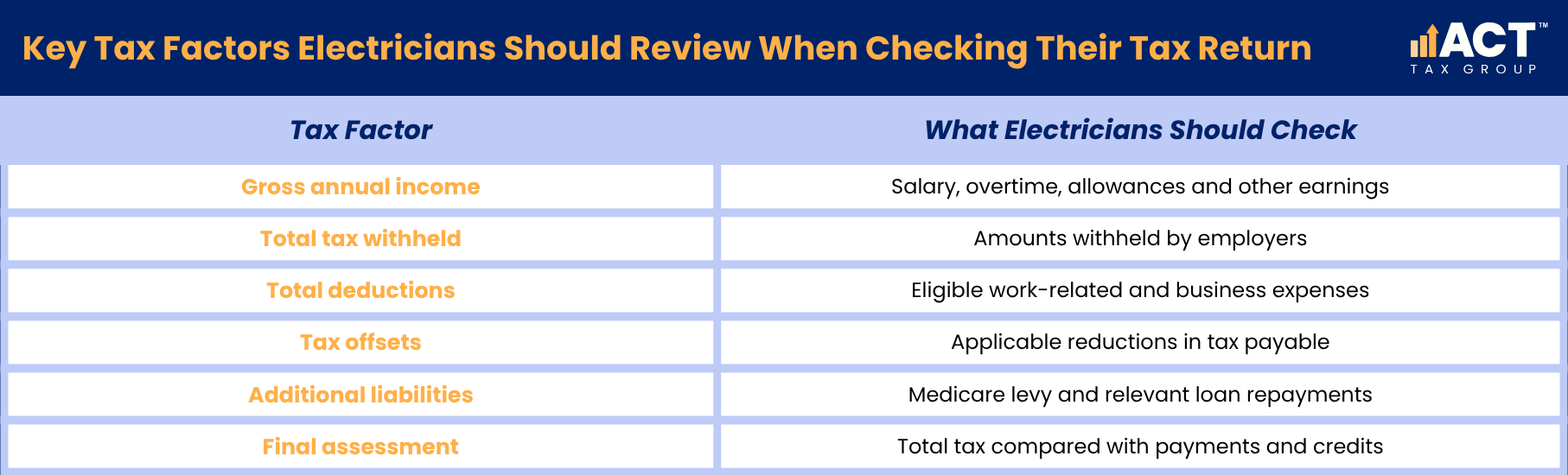
What Electricians Should Check When Their Tax Return Result Is Lower Than Expected begins with reviewing your taxable income, tax withheld, eligible deductions and outstanding tax obligations. Your tax return result depends on your total income, tax paid, work-related expenses and other adjustments. Understanding these factors can help you identify discrepancies, avoid overlooking legitimate tax deductions and make informed financial decisions before the next tax year.
Common Reasons Electricians Receive a Lower Tax Refund
A lower tax refund often means your total tax withheld was closer to your final income tax liability than expected. Other reasons include increased earnings, fewer eligible deductions, additional repayment obligations or adjustments made by the Australian Taxation Office (ATO). Electricians who receive a pay rise, work overtime or earn other income may have a different tax result from previous years. Understanding how much tax you owe starts with comparing your income statement, deductions and notice of assessment.
Missing eligible deductions for your electrical work?
Schedule a complimentary consultation with us today to check your eligible work expenses.
Understanding How Income Tax Affects Your Refund
Your tax refund generally reflects the difference between your final tax liability and tax already paid, after applicable credits and adjustments. If your employer withheld less tax than required, you could receive a smaller refund or owe tax when your assessment is completed. For the 2025–26 income year, Australian residents generally have an $18,200 tax-free threshold, while taxable income between $45,001 and $135,000 attracts a 30% marginal tax rate. The standard Medicare levy is generally 2%, although reductions or exemptions may apply.
Reviewing Eligible Electrician Tax Deductions
Missing eligible deductions can increase your taxable income and reduce your expected tax refund. Electricians frequently purchase tools, protective equipment and work-related supplies that may qualify for deductions when they meet ATO requirements. To claim work-related deductions, you generally must have paid the expense yourself, received no reimbursement and used the purchase to earn employment income. Where an expense has both work and private purposes, only the eligible work-related portion can be claimed. Common deductions for electricians include:
Electrical tools and testing equipment.
Safety boots, protective glasses and eligible protective clothing.
Eligible electrical licence renewal fees.
Work-related phone and internet expenses.
Relevant self-education and training.
Eligible vehicle and travel expenses.
Professional memberships and eligible tax agent fees for managing your tax affairs.
Real Example: In published ATO guidance, electrician Esme purchases safety glasses costing $165 exclusively for work. Because they protect her against workplace injury, the full expense qualifies as a deduction.
Checking Tools, Equipment and Vehicle Expenses
Tools and vehicle expenses can significantly affect an electrician’s total deductions, but purchases do not always qualify for immediate write-offs. Employees generally claim depreciation on work tools costing more than $300, including sets or similar items exceeding $300 combined. Different rules apply to business owners. Vehicle claims depend on the purpose of the journey, the vehicle classification and supporting records. Ordinary travel between home and a regular workplace is generally private, although specific exceptions may apply.
Review these records:
Tool invoices and purchase dates.
Equipment depreciation calculations.
Vehicle logbooks and business-use records.
Fuel, repairs, insurance and registration costs.
Employer reimbursements and allowances.
Real Example: The ATO provides an example of employee Tim, who records 60% work-related vehicle use. With eligible expenses of $5,400, his calculated work-related deduction is $3,240.

The Impact of Overtime and Pay Rises on Taxable Income
A pay rise, overtime or additional employment income can change how much tax you pay throughout the financial year. Australia uses progressive tax rates, meaning your marginal tax rate applies to the relevant portion of taxable income rather than your entire salary. Electricians working for multiple employers should check whether each employer withheld enough tax from their earnings. Incorrectly claiming the tax-free threshold with more than one employer can also result in insufficient withholding.
Example: An electrician receives a regular salary and earns additional income from weekend electrical work for another employer. If the combined tax withheld does not cover the final income tax liability, their refund may be lower than expected.
Medicare and Loan Repayments That Affect Your Tax Refund
The Medicare Levy, Medicare Levy Surcharge (MLS) and compulsory loan repayments can affect your final tax return result. The MLS may apply to higher-income taxpayers without appropriate private hospital cover, depending on their circumstances. Electricians with a Higher Education Loan Program (HELP) debt or an Australian Apprenticeship Support Loan, formerly a Trade Support Loan, should also check their repayment income. For 2025–26, compulsory study and training loan repayments generally begin when repayment income exceeds $67,000. Other factors worth checking include:
Private health insurance and hospital cover.
Spouse income and dependent children.
Reportable fringe benefits.
Relevant loan repayment thresholds.
Additional employment or investment income.

Differences Between Estimated and Final Tax Refunds
A tax return calculator or tax refund calculator provides an estimate based on the information entered. Calculator estimates may differ from your assessment when deductions, income details, tax offsets or repayment obligations are incomplete. If you searched for “how much tax will I get back”, remember that an estimated tax refund is for guidance purposes only. The ATO calculates your final result after considering the relevant income and tax information.
Reviewing Business Income and Expenses for Self-Employed Electricians
Self-employed electricians should reconcile their business income, expenses and tax payments before assuming their tax return is incorrect. Delayed payments, unpaid job variations and unexpected equipment costs can create differences between available cash and taxable profit. Business owners registered for Goods and Services Tax (GST) should also check their Business Activity Statement (BAS) records and Pay As You Go (PAYG) instalment credits. Accurate bookkeeping helps identify reporting differences and supports appropriate tax calculations.
Real Example: In an ATO example, electrician Colin estimates his trading stock increases from $6,800 to $7,820. Under the simplified trading stock rules, he can choose not to account for the change because it is less than $5,000.
Power up your business with Accounting Built for Electricians
From start-up to expansion, our accounting team supports your tax, payroll, and cash flow at every stage of growth.
The Importance of Accurate Records for Electrician Tax Returns
Keeping organised records makes it easier to identify deductions, confirm income and explain differences in your assessment. Digital receipts, accurate bookkeeping and regular account reviews can make tax time more manageable. Most employees need written evidence when their total work-related expense claims exceed $300, subject to specific exceptions. Reviewing your records throughout the year also helps your accountant identify missing information before lodgement.
Steps to Take When Your Tax Return Result Looks Incorrect
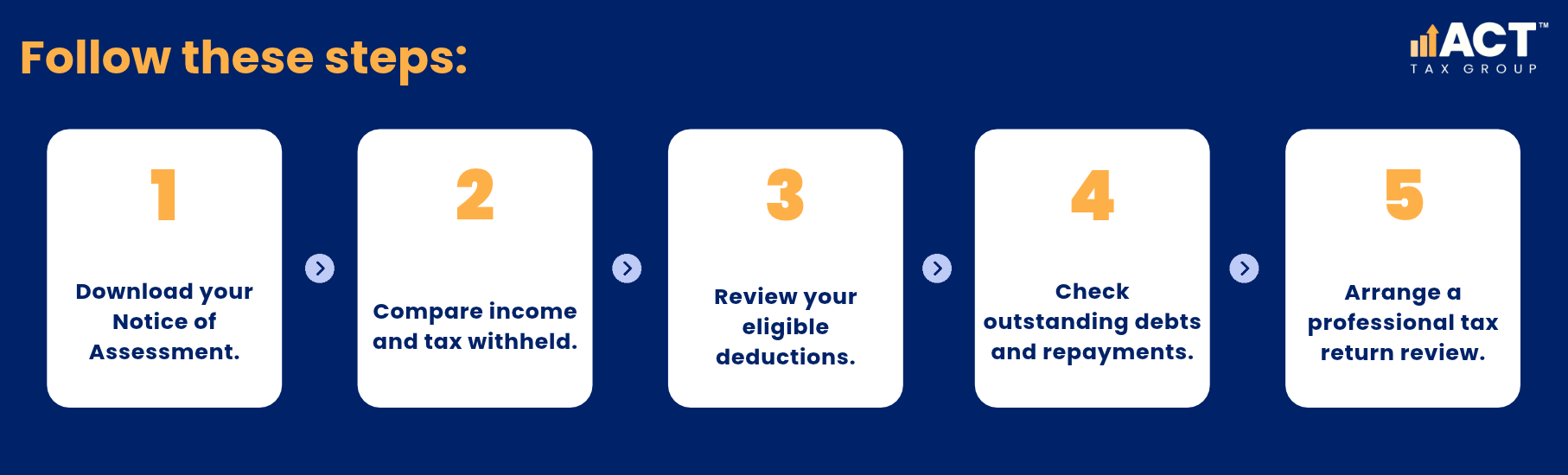
Start by comparing your income statement, deductions and tax withheld against your notice of assessment. Check whether outstanding debts, reporting differences or missing information explain the lower refund. If you identify an error after you lodge your tax return, you may need to request an amendment. A registered tax agent can review your assessment, explain the available options and help determine whether a correction is necessary.
How ACT Tax Group Can Help with Electrician Tax Return Reviews
At ACT Tax Group, we understand the challenges electricians and electrical contractors face, from irregular project income to rising equipment expenses and ongoing tax obligations. Our friendly, IPA-certified accounting team provides practical support with tax returns, deduction reviews, business accounting and tax planning. If your tax refund is lower than expected, book a consultation with our team to review your assessment, discuss potential discrepancies and understand your tax position. We provide tailored accounting advice to help electricians manage their financial responsibilities with greater clarity.

Lukasz Klekowski
Principal of ACT Tax Group, specialising in tax compliance and financial strategy for Australian small businesses.

Disclaimer: All information provided in this publication is of a general nature only and is not personal financial or investment advice. It does not take into account your particular objectives and circumstances. No person should act on the basis of this information without first obtaining and following the advice of a suitably qualified professional. To the fullest extent permitted by law, no person involved in producing, distributing or providing the information in this publication (including ACT TAX GROUP PTY LTD, each of its directors, councilors, employees and contractors and the editors or authors of the information) will be liable in any way for any loss or damage suffered by any person through the use of or access to this information. The Copyright is owned exclusively by ACT TAX GROUP PTY LTD (ABN 31634338088)