

Tax Rate vs Take-Home Pay: A Practical Guide for Electricians
Published on October 7, 2026
Tax Rate vs Take-Home Pay: A Practical Guide for Electricians explains how much tax can come out of your income and why your highest tax rate is not applied to everything you earn. Whether you are an employee, contractor or sole trader, understanding Australian income tax brackets can make it easier to estimate your take-home pay and plan for future tax payments. This matters for electricians because income can change with overtime, allowances, larger projects and periods of stronger business activity. Jobs and Skills Australia reports around 197,300 electricians in Australia, with about 94% working full-time, so understanding taxable income, income tax and take-home pay is relevant to a large part of the trade workforce.
Tax Rates on an Electrician’s Income
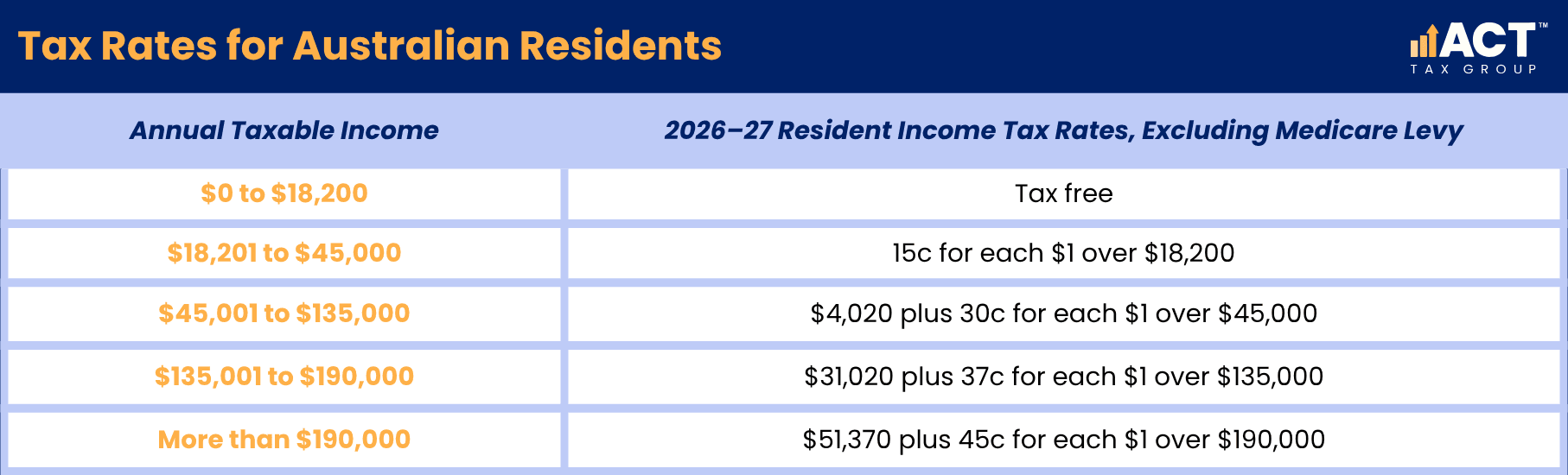
There is no single tax percentage that applies to every electrician because Australia uses a progressive tax system. Australian residents generally pay income tax at different marginal tax rates as their taxable income increases, rather than one percentage applying to all income earned. Your taxable income is broadly your assessable income less allowable deductions. Your final tax payable can also be affected by the Medicare levy, tax offsets, private health insurance, other income and your residency status.
Unsure how much of your electrician income you can keep?
Schedule a complimentary consultation with us today to estimate your take-home pay.
The Difference Between Tax Rate and Take-Home Pay
Your marginal tax rate tells you the rate applying to the next part of your taxable income. It does not show how much tax you pay across your entire income, which is why your highest tax bracket alone cannot tell you your actual take-home pay. For example, an electrician with annual taxable income of $140,000 does not pay 37% income tax on the full $140,000. Only the portion above $135,000 falls into the 37% bracket, while the earlier parts of the income remain subject to the lower applicable rates.
Take-Home Pay At Different Income Levels
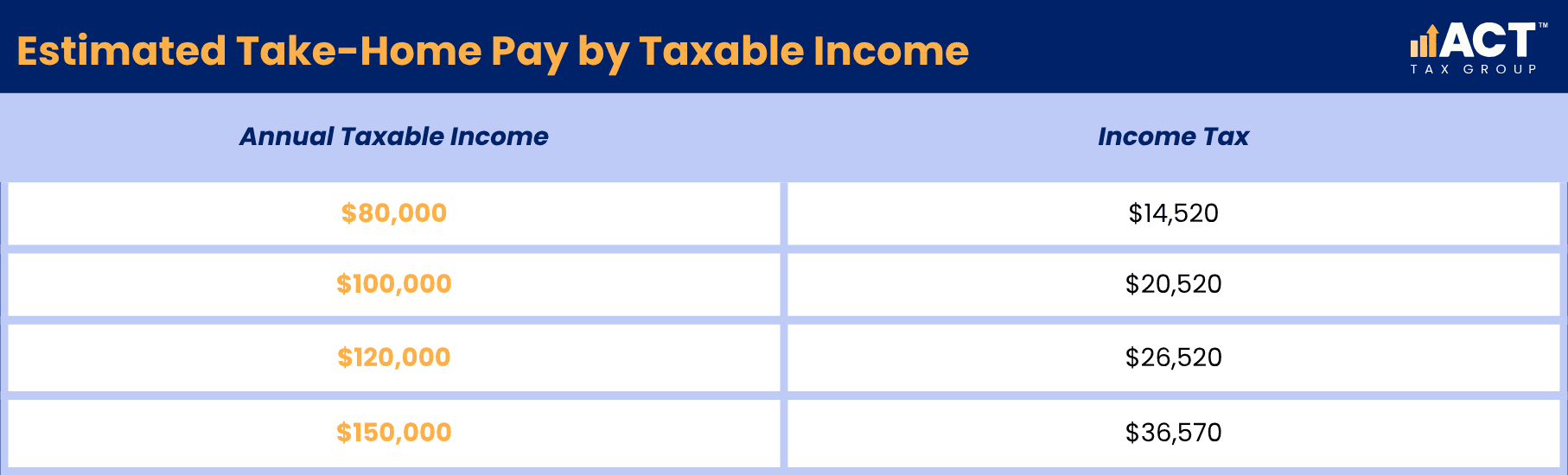
Take-home pay is the amount left after income tax and other applicable deductions from your pay. The examples below use the 2026–27 rates for Australian residents and include the standard 2% Medicare levy, but they do not include individual tax offsets, study loan repayments or the Medicare levy surcharge. Your actual tax paid can differ because your tax affairs depend on your own circumstances. These examples are useful for understanding the relationship between taxable income and take-home pay rather than predicting an exact tax refund or amount payable.
Overtime and Higher Tax Brackets
Electricians sometimes worry that working overtime will cause all of their earnings to be taxed at a higher rate. Australian tax brackets do not work that way because only the part of your income that moves into the next bracket attracts the higher marginal tax rate. Your employer may withhold more tax from a larger weekly or fortnightly payment, so the change can look significant on your payslip. The Australian Taxation Office (ATO) ultimately assesses income tax using your taxable income for the full income year.
Example: An electrician’s annual taxable income rises from $132,000 to $138,000 after overtime. Only the $3,000 above $135,000 falls into the 37% tax bracket.
Tax Arrangements for Employee Electricians and Sole Traders
An employee electrician generally has Pay as You Go (PAYG) withholding taken from wages during the financial year. The employer withholds these amounts from pay and pays them to the ATO, with the final income tax position worked out when the tax return is assessed. A sole trader has different cash-flow responsibilities because business income is not the same as personal take-home pay. Business expenses, allowable deductions and future tax obligations need to be considered before deciding how much money is genuinely available for personal spending.
Example: A sole trader electrician receives $160,000 in business income and has $50,000 in allowable business expenses. Before considering other adjustments, the business profit would be $110,000 rather than $160,000.

Tax Deductions and Taxable Income
Tax deductions can reduce taxable income when an expense meets the relevant rules. For employees, you generally need to pay the expense yourself without reimbursement, it must directly relate to earning income, and you need records to support the claim. A deduction does not mean you receive the full purchase price back as a tax refund. It reduces the amount of income on which tax is calculated, so spending money purely for tax purposes will usually not leave you financially better off.
Example: An electrician with $120,000 of taxable income claims a valid $2,000 deduction. The deduction reduces taxable income by $2,000 rather than producing a $2,000 refund.
The Tax-Free Threshold and Tax Offsets
The tax-free threshold means Australian resident taxpayers generally do not pay income tax on the first $18,200 of taxable income. When income reaches $18,201, only the amount above the threshold begins to attract income tax under the applicable resident tax rates. Some low income earners may also qualify for the Low Income Tax Offset, depending on their annual taxable income. Unlike tax deductions, tax offsets reduce tax payable rather than reducing taxable income. The maximum offset available can reduce as income increases, so your final result should be based on the full year’s figures.
The Medicare Levy and Final Tax Payable
Most taxpayers need to consider the Medicare levy when estimating how much tax they may pay. The standard Medicare levy is generally 2% of taxable income, although reductions and exemptions can apply depending on individual circumstances. Higher income earners without appropriate private patient hospital cover may also need to consider the Medicare levy surcharge. Whether it applies depends on your income for Medicare levy surcharge purposes, family circumstances and hospital cover. Professional advice can help if your income or family circumstances make these calculations more complex.
Power up your business with Accounting Built for Electricians
From start-up to expansion, our accounting team supports your tax, payroll, and cash flow at every stage of growth.
Tax Reserves and Spendable Cash for Sole Traders
For a sole trader electrician, a healthy business bank balance does not necessarily mean all of that money is available as take-home pay. Goods and Services Tax (GST), PAYG instalments, supplier bills, wages and other business obligations may all need to be paid from that balance. This becomes especially important when business income is uneven. A strong month can create the impression that there is plenty of available cash, but spending money reserved for future tax or Business Activity Statement (BAS) obligations can create unnecessary pressure later. A simple cash-flow system can separate money for:
GST
expected income tax or PAYG instalments
wages and superannuation
suppliers and operating costs
owner drawings and working capital.
Example: An electrical contractor receives several large payments in one month. If the owner withdraws most of that cash without allowing for GST and income tax, the next BAS or tax payment can become difficult to manage.
Total Income Beyond Electrical Work
Your tax return can include more than wages or business income from electrical work. Depending on your circumstances, assessable income can include other income, government payments, investment returns or foreign income. Reportable fringe benefits and some superannuation amounts can also affect particular income tests, even when they are treated differently from ordinary wages for income tax purposes. Keeping your tax affairs organised helps you identify what needs to be reported before lodging your return.
A Practical Method for Estimating Tax
The most useful starting point is your expected annual taxable income, not simply your weekly pay or business bank balance. From there, you can apply the Australian resident tax rates progressively, include the Medicare levy where applicable and consider allowable deductions and tax offsets. Reviewing your estimate during the financial year can be particularly useful when overtime, new contracts or business income increases. This can help you reserve enough money for tax before the end of the year rather than dealing with an unexpected payment later. A practical process is:
Estimate your total income for the financial year.
Subtract allowable deductions to estimate taxable income.
Apply the relevant marginal tax rates progressively.
Allow for the Medicare levy and relevant tax offsets.
Compare the result with tax already paid or reserved.
Example: An electrician wins several profitable projects late in the financial year. Updating the tax estimate before 30 June can show whether more money should be reserved before the tax return is prepared.

How ACT Tax Group Can Help with Tax Planning and Take-Home Pay
At ACT Tax Group, we help electricians understand taxable income, income tax rates, deductions and business cash flow in straightforward language. Our IPA-certified team can review your circumstances, explain how much tax you may need to allow for and help you stay organised throughout the financial year. If your income has increased, you are taking on more work or you are unsure how much of your business income is genuinely available to spend, book a meeting with our team. We can help you plan for tax, stay on top of your Australian Taxation Office obligations and make financial decisions that support your personal objectives.
Frequently Asked Questions
How Much Percent Is Tax for Australian Taxpayers?
There is no single answer to how much percent is tax because Australian taxpayers pay tax at progressive rates. For 2026–27, taxable income from $18,201 to $45,000 is taxed at 15c for each $1 over $18,200, before the Medicare levy and other factors that may apply.
Does Private Hospital Cover Affect Tax?
It can. Higher income earners may need to pay the Medicare levy surcharge if they and their family do not have private hospital cover that meets ATO requirements, depending on their income and family circumstances.
Can Charitable Donations and Superannuation Contributions Reduce Tax?
Eligible charitable donations of $2 or more to an organisation approved to receive tax-deductible gifts may be deductible. Some personal superannuation contributions may also be deductible if ATO requirements are met, including giving your super fund the required notice and receiving its acknowledgement before claiming the deduction.

Lukasz Klekowski
Principal of ACT Tax Group, specialising in tax compliance and financial strategy for Australian small businesses.

Disclaimer: All information provided in this publication is of a general nature only and is not personal financial or investment advice. It does not take into account your particular objectives and circumstances. No person should act on the basis of this information without first obtaining and following the advice of a suitably qualified professional. To the fullest extent permitted by law, no person involved in producing, distributing or providing the information in this publication (including ACT TAX GROUP PTY LTD, each of its directors, councilors, employees and contractors and the editors or authors of the information) will be liable in any way for any loss or damage suffered by any person through the use of or access to this information. The Copyright is owned exclusively by ACT TAX GROUP PTY LTD (ABN 31634338088)