

From Accounting Profit to Taxable Income: A Step-By-Step Bridge Every Electrician Can Use at Year-End
Published on July 28, 2026
From Accounting Profit to Taxable Income is the process electricians can use to understand why the profit in their accounting records may differ from the amount used for tax purposes. Your accounting profit is the starting figure, but tax rules determine which income must be declared, which expenses are allowable deductions and how much tax may be payable.
Is Taxable Income Before or After Tax?
Taxable income is calculated before income tax is applied. It is generally the amount remaining after assessable income is reduced by eligible deductions, with further adjustments made where accounting and tax treatments differ. Once taxable income has been calculated, the relevant tax rates are used to calculate income tax. For an individual or sole trader, tax offsets may directly reduce income tax, while the Medicare levy, Medicare levy surcharge, private health insurance rebate and tax already withheld may affect the final tax payable or tax refund.
Confused why profit doesn’t match your taxable income?
Schedule a complimentary consultation with us today to reconcile your accounts with ATO tax rules.
Accounting Profit Is Only the Starting Point
Accounting profit is usually calculated by subtracting business expenses from gross income in your accounting system. It helps you understand business performance, but it may include income or expenses that receive different treatment when preparing tax calculations.
Assessable Income Must Be Reviewed Carefully
Assessable income can include money earned from electrical work, service calls, installations, maintenance contracts and other business activities. Certain allowances, prizes, benefits, grants or other payments may also need to be declared, depending on what the payment relates to.

Allowable Deductions Can Reduce Your Taxable Income
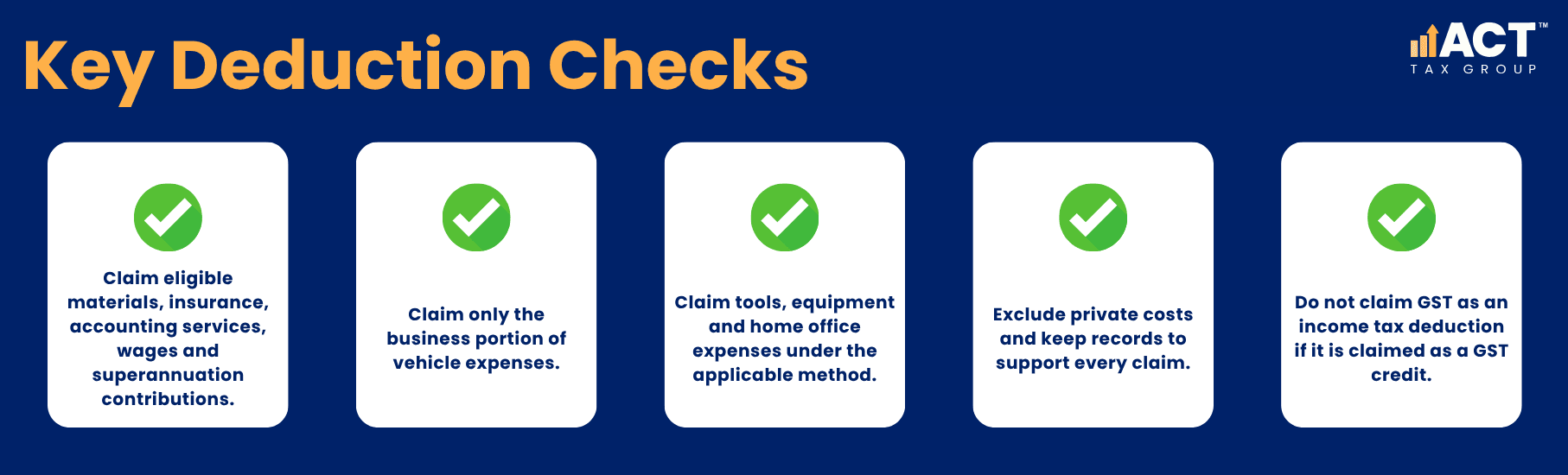
Allowable deductions are eligible business expenses that may reduce your taxable income. These may include materials, insurance, accounting services, eligible wages and superannuation contributions, the business portion of vehicle expenses, and allowable deductions for tools and equipment, as well as home office expenses claimed using the fixed rate method. An expense does not automatically become deductible because it was paid from a business account. It must relate to the business, any private portion must be excluded, and you must keep records that support the claim. If you can claim the Goods and Services Tax (GST) amount as a GST credit, you generally cannot also claim that amount as an income tax deduction.
Year-End Adjustments Create the Taxable Income Bridge
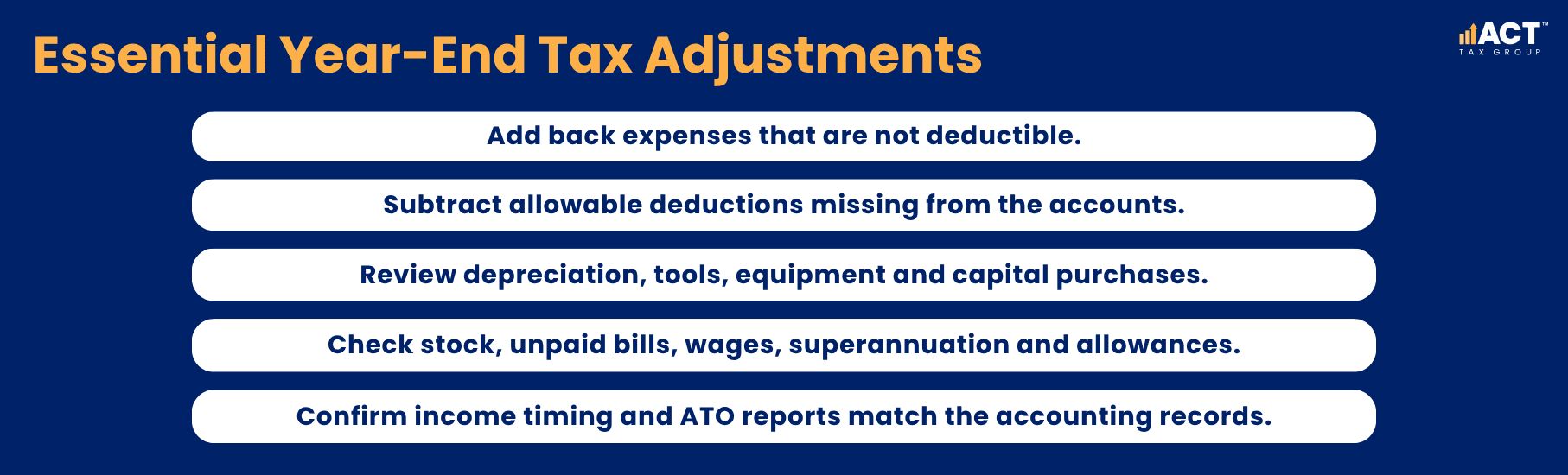
The bridge from accounting profit to taxable income is created by adding back amounts that are not deductible and subtracting allowable deductions not already reflected correctly in the accounts. Accounting depreciation, tax deductions for tools and equipment, prepaid expenses, private costs and capital purchases may require separate adjustments. The calculation may also involve checking stock, unpaid bills, employee wages, superannuation, business allowances and the timing of income, along with ensuring your instalment activity statements and other ATO reports correctly reflect these amounts. These adjustments help your accountant calculate the correct taxable figure rather than relying directly on the profit shown in your software.
Tax Payable Depends on More Than Business Profit
How much income tax is calculated depends on your taxable income, business structure and the applicable tax rates. Payments and tax already withheld affect the remaining amount you pay or your tax refund. A sole trader who is an Australian resident for tax purposes may also need to consider the tax-free threshold, Medicare levy and personal tax offsets, while a company follows separate tax rules and must also manage ASIC late fees and compliance penalties. An income tax calculator can provide a general estimate, but it may not account for every deduction, offset, contribution or business adjustment. The Australian Taxation Office (ATO) website also provides general information, although professional advice is important when your records or circumstances are more complex.
Power up your business with Accounting Built for Electricians
From start-up to expansion, our accounting team supports your tax, payroll, and cash flow at every stage of growth.
How ACT Tax Group Can Help with Taxable Income Calculations
We can review your income statement, identify applicable adjustments and calculate the difference between accounting profit and taxable income. Our friendly, IPA-certified team can also help you understand deductions, tax payments, cash flow and the amount you may need to set aside. Book a consultation with ACT Tax Group before lodging your tax return. We will help you organise your records, work through the calculations and prepare your business information with greater confidence.

Turn Your Year-End Figures into Clear Decisions
Moving from accounting profit to taxable income requires more than subtracting expenses from income. You need complete records; correct classifications and a clear review of the tax treatment applied to each amount.

Lukasz Klekowski
Principal of ACT Tax Group, specialising in tax compliance and financial strategy for Australian small businesses.

Disclaimer: All information provided in this publication is of a general nature only and is not personal financial or investment advice. It does not take into account your particular objectives and circumstances. No person should act on the basis of this information without first obtaining and following the advice of a suitably qualified professional. To the fullest extent permitted by law, no person involved in producing, distributing or providing the information in this publication (including ACT TAX GROUP PTY LTD, each of its directors, councilors, employees and contractors and the editors or authors of the information) will be liable in any way for any loss or damage suffered by any person through the use of or access to this information. The Copyright is owned exclusively by ACT TAX GROUP PTY LTD (ABN 31634338088)