

Electricians Working for Charities and Hospitals: How NFP Salary Packaging Changes Your Payslip
Published on June 2, 2026
Electricians Working for Charities and Hospitals: How NFP Salary Packaging Changes Your Payslip is about understanding how NFP salary packaging can change your take home pay, taxable income, and payslip when you work for eligible not for profit organisations. In simple terms, salary packaging is an arrangement where you agree to give up part of your future salary or wages in return for approved benefits of a similar value, which may reduce the amount of income tax withheld from your cash pay.
How Does NFP Salary Packaging Change an Electrician’s Payslip?
NFP salary packaging changes your payslip by redirecting part of your future salary or wages toward approved benefits instead of paying all of it as ordinary cash salary. This may reduce the taxable cash salary shown in payroll and result in less income tax being withheld each pay cycle, although salary sacrifice amounts must still be reported correctly and some benefits may affect income tests.
Your payslip may show your salary, salary sacrifice amount, pre-tax earnings, reduced cash salary, Pay As You Go (PAYG) withholding, superannuation, and net take home pay. Some employers also show salary packaging benefits separately, especially where a salary packaging provider processes rent or mortgage payments, everyday living expenses, meals and entertainment, or a meal entertainment card.
Confused by salary packaging on your payslip?
Schedule a complimentary consultation with us today to explain PAYG, deductions, and net pay changes.
Salary Packaging Works Best When You Understand the Employer Type
Salary packaging options depend heavily on the employer’s tax status. Eligible public benevolent institutions, health promotion charities, public hospitals, not-for-profit hospitals, and public ambulance services may receive Fringe Benefits Tax (FBT) exemptions or concessions up to ATO capping thresholds. This does not mean every not-for-profit employer offers the same benefits. A charity, hospital, or other not-for-profit organisation with a different tax status may have different limits, different employee benefits, and different rules around whether the employer must pay FBT.
Employer Type | Common Packaging Position | What It May Mean for Electricians |
|---|---|---|
Public Benevolent Institutions | Often broader capped benefits | May allow more everyday expenses to be packaged |
Health Promotion Charities | Often eligible for generous concessions | May support general living expenses and other benefits |
Public Or NFP Hospitals | Common salary packaging arrangements | Often relevant for facilities and maintenance electricians |
Other Not for Profit Employers | Depends on tax status | Benefits and limits should be checked carefully |

What Expenses Can Electricians Commonly Package?
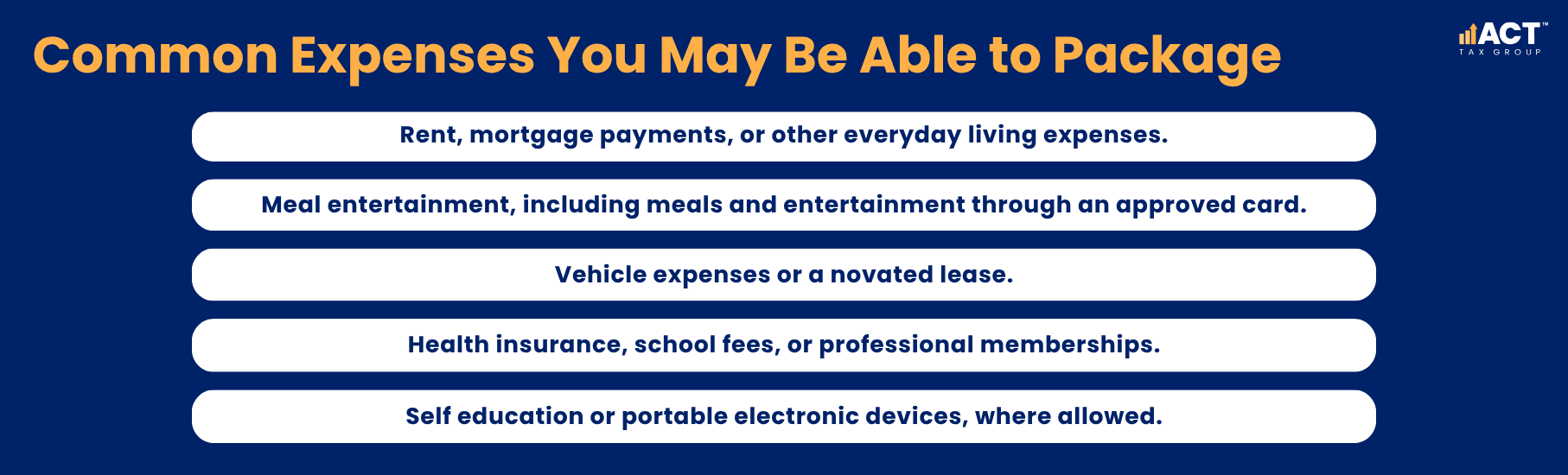
Electricians may be able to package approved everyday expenses such as rent or mortgage payments, depending on the employer’s eligibility, the packaging provider’s rules, and the benefit categories available under the arrangement. Some arrangements may also include meal entertainment, holiday accommodation, vehicle expenses, or a novated lease. Certain benefits may be capped, while other benefits may be treated differently for FBT purposes. Before choosing benefits, check whether there is an extra cost, provider fee, card fee, or additional cost that reduces the overall value.
Why Taxable Income Decreases but Your Total Package Still Matters
Salary packaging may reduce the taxable cash salary on which income tax is withheld because part of your future salary or wages is exchanged for approved benefits before payroll tax withholding is calculated. This can mean less tax is withheld from your cash pay, but some benefits may still be reportable and may affect income tests, study loan repayments, or other obligations, as well as how you manage PAYG instalments and keep up with obligations.
However, your total remuneration packaging still matters. Your annual gross salary, future entitlement, superannuation treatment, leave loading, allowances, and employment contract should all be reviewed before assuming your lower taxable income is the only figure that matters.

What Is Fringe Benefits Tax and Why Does It Matter?
Fringe Benefits Tax (FBT) is a tax paid by employers on certain benefits they provide to employees or their associates instead of, or in addition to, ordinary wages. Some eligible not-for-profit employers receive FBT exemptions or concessions up to ATO capping thresholds, which is why electricians in hospitals and charities may see salary packaging benefits that are not commonly available in private electrical businesses.
This does not mean benefits are always tax free or non-reportable for every employee or every employer. Some capped benefits can be useful, but reportable fringe benefits may affect income tests, study loan repayments, child support, Medicare levy surcharge, or other obligations, so they should be reviewed before you change jobs or enter a salary packaging arrangement.
Power up your business with Accounting Built for Electricians
From start-up to expansion, our accounting team supports your tax, payroll, and cash flow at every stage of growth.
What Makes an Effective Salary Sacrifice Arrangement?
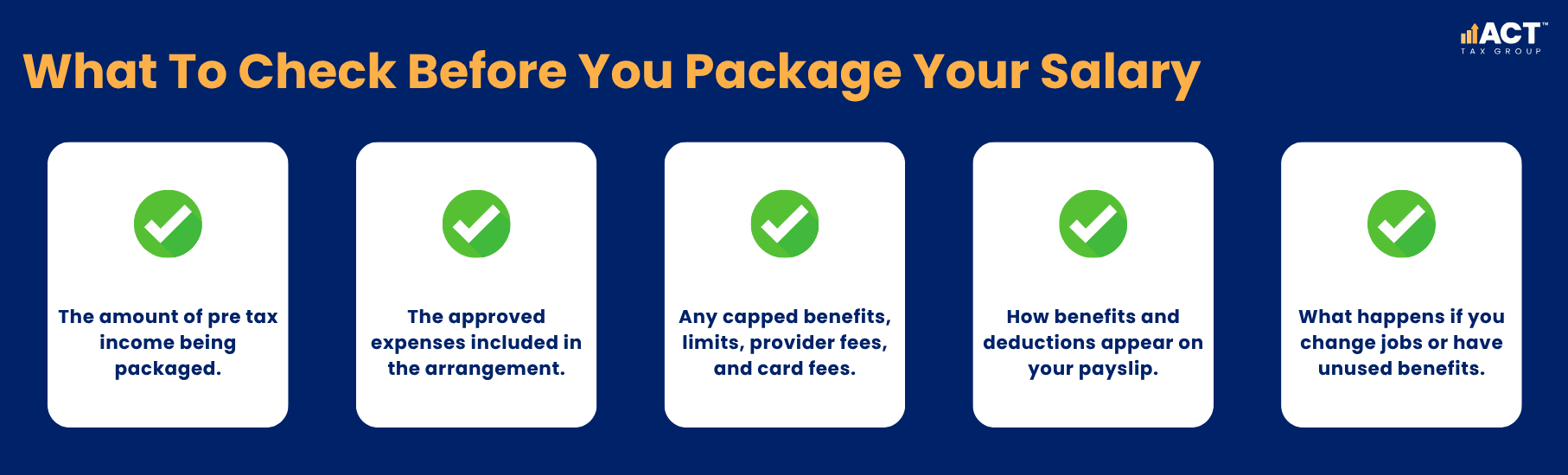
An effective salary sacrifice arrangement should be agreed before you perform the work, clearly set out the amount of salary or wages being sacrificed, and explain which benefits will be provided. It should also show that you have no access to the sacrificed salary and that both you and your employer understand the payroll, tax, and reporting treatment. This matters because salary sacrifice arrangements can be confusing when electricians also receive overtime, on-call payments, tool allowances, vehicle use, or site allowances. Clear records help reduce stress and make it easier to check whether the salary packaging arrangement is working as intended.
Why Professional Advice Matters Before You Choose Benefits
Professional advice matters because salary packaging can affect taxable income, income tax, fringe benefits, family income tests, loan applications, and year-end reporting. ACT Tax Group can provide taxation advice based on your employment details, family position, and the specific benefits available through your employer.
How ACT Tax Group Can Help with NFP Salary Packaging for Electricians
We help electricians working in hospitals, charities, public benevolent institutions, health promotion charities, and other not for profit employers understand how salary packaging affects their payslip and tax position. Our team can review your salary packaging arrangement, explain the difference between pre-tax salary and taxable income, and help you understand whether benefits such as rent, mortgage payments, meal entertainment, or a novated lease suit your circumstances.
If your payslip has changed, or you are comparing jobs, you can book a consultation with ACT Tax Group. We can help you arrange clear taxation advice, check the practical effect of salary packaging, and support you with straightforward guidance before you commit to new employee benefits.
Conclusion
NFP salary packaging can help electricians use future salary or wages for approved benefits, which may reduce taxable cash salary and increase take home pay. The real benefit depends on your employer’s tax status, the benefits available, provider fees, capped benefits, and your personal income tax position. Before signing up, review your payslip, annual gross salary, salary sacrifice arrangement, provider costs, FBT cap, and possible reportable fringe benefits. With the right advice, salary packaging can be a practical way to manage everyday costs while staying clear on your tax responsibilities.

Lukasz Klekowski
Principal of ACT Tax Group, specialising in tax compliance and financial strategy for Australian small businesses.

Disclaimer: All information provided in this publication is of a general nature only and is not personal financial or investment advice. It does not take into account your particular objectives and circumstances. No person should act on the basis of this information without first obtaining and following the advice of a suitably qualified professional. To the fullest extent permitted by law, no person involved in producing, distributing or providing the information in this publication (including ACT TAX GROUP PTY LTD, each of its directors, councilors, employees and contractors and the editors or authors of the information) will be liable in any way for any loss or damage suffered by any person through the use of or access to this information. The Copyright is owned exclusively by ACT TAX GROUP PTY LTD (ABN 31634338088)