

Using Marginal Tax Rates to Decide Whether to Pay Yourself More Wages, More Dividends, Or Leave Profits in Your Electrical Company
Published on August 18, 2026
Using marginal tax rates to decide whether to pay yourself more wages, more dividends, or leave profits in your electrical company can help you balance personal income tax with the cash your business needs. The right decision depends on your taxable income, company profit, marginal tax position and how much money you need personally. For electrical business owners, taking more money from the company is not simply a matter of choosing the lowest tax rate. Your total income, business income, cash flow, franking credits, payroll obligations and financial situation can all affect the actual tax outcome.
Marginal Tax Rates Shape Your Personal Tax Position
Australian income tax operates through a progressive tax system for a resident individual, which means different marginal tax rates apply as taxable income increases. The marginal rate applies to the next portion of income earned, rather than applying the highest tax bracket to every dollar earned during the income year. From 1 July 2026, the resident tax rates for 2026–27 include a tax-free threshold from $0 to $18,200, followed by progressively higher rates. These rates do not include the Medicare levy, which also needs to be considered when estimating the final tax payable.
Could higher wages push up your personal tax?
Schedule a complimentary consultation with us today to compare wages, PAYG withholding and your marginal tax rate.
Taxable Income Matters Before Increasing Your Wages
Paying yourself more wages generally increases your assessable income and may increase your taxable income and income tax payable after allowable tax deductions are taken into account. If your taxable income increases enough to cross an income threshold, only the income within the higher tax bracket is taxed at the new higher marginal rate. For tax purposes, it is useful to focus on the tax applying to your last dollar rather than assuming all income attracts the same rate. Tax deductions, work-related expenses, capital gains, unearned income and any available tax offset can also affect your taxable income and final income tax calculation.
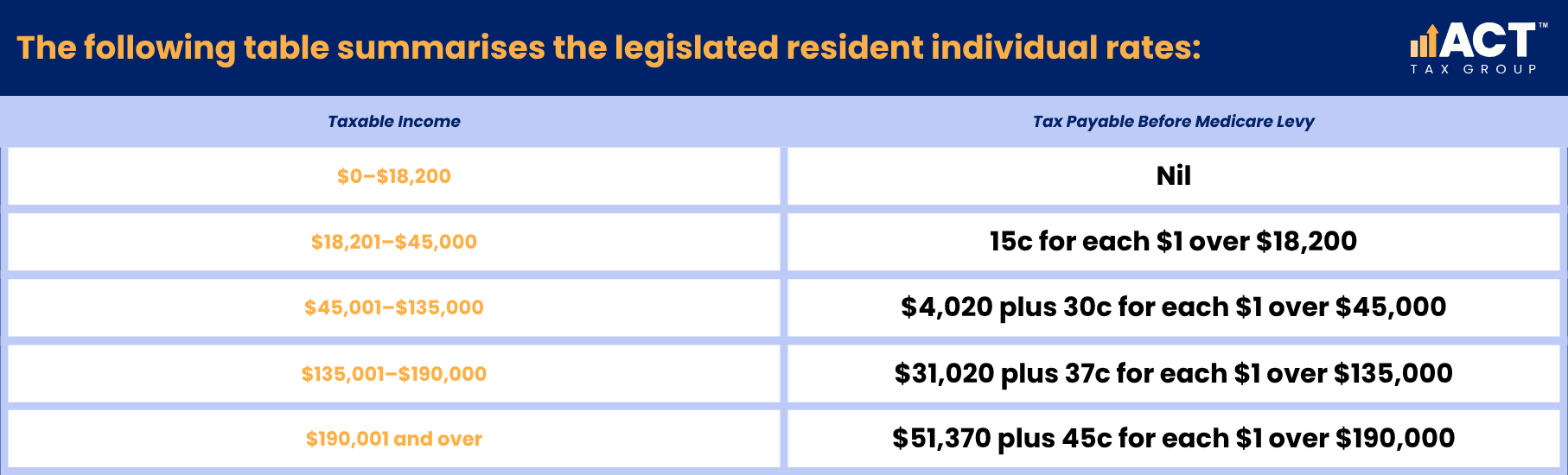
These tax brackets show how marginal tax rates work. Moving into a new bracket does not mean your entire income is taxed at the higher rate.
More Wages Can Provide Predictable Personal Cash Flow
Regular wages can make it easier to separate your household finances from company money. If your electrical company pays you salary, wages or directors’ fees, it generally needs to meet applicable Pay as You Go (PAYG) withholding, Single Touch Payroll (STP) reporting and superannuation requirements, including the 12% Superannuation Guarantee rate and Payday Super rules applying from 1 July 2026. However, increasing wages should not be based only on what is sitting in the company bank account. Before deciding how much to pay, we look at expected company profit, your marginal tax rate, available working capital and whether the business can still comfortably cover employees, materials, vehicles, suppliers and other costs.
Dividends Treat Company Profits Differently
Dividends generally come from profits that have already been earned by the company. For an eligible Australian resident shareholder, a franked dividend generally requires both the dividend and attached franking credit to be included in assessable income, with the franking credit generally providing a tax offset. This means company tax and personal tax should be considered together. A simple comparison between a 25% company rate and a higher personal marginal rate can give an incomplete picture because the dividend imputation system can recognise tax already paid by the company.
The Parliamentary Budget Office has explained that Australia’s dividend imputation system is designed to give eligible shareholders credit for company tax already paid when profits are distributed. This interaction is why professional modelling is useful before deciding between wages and dividends.

Leaving Profits in the Company Can Support the Business
Leaving profits in your electrical company may be appropriate when the business needs working capital for tools, vans, stock, apprentices, supplier accounts or larger upcoming projects. Electrical businesses can have uneven cash flow, particularly when project invoices take longer to be paid. A company is generally a base rate entity if its aggregated turnover is less than $50 million and no more than 80% of its assessable income is base rate entity passive income. Base rate entities use the 25% company tax rate, while other companies generally pay tax at 30%. This flat rate does not mean retained profits can later be withdrawn personally at the same rate.
The Medicare Levy Also Affects Personal Tax
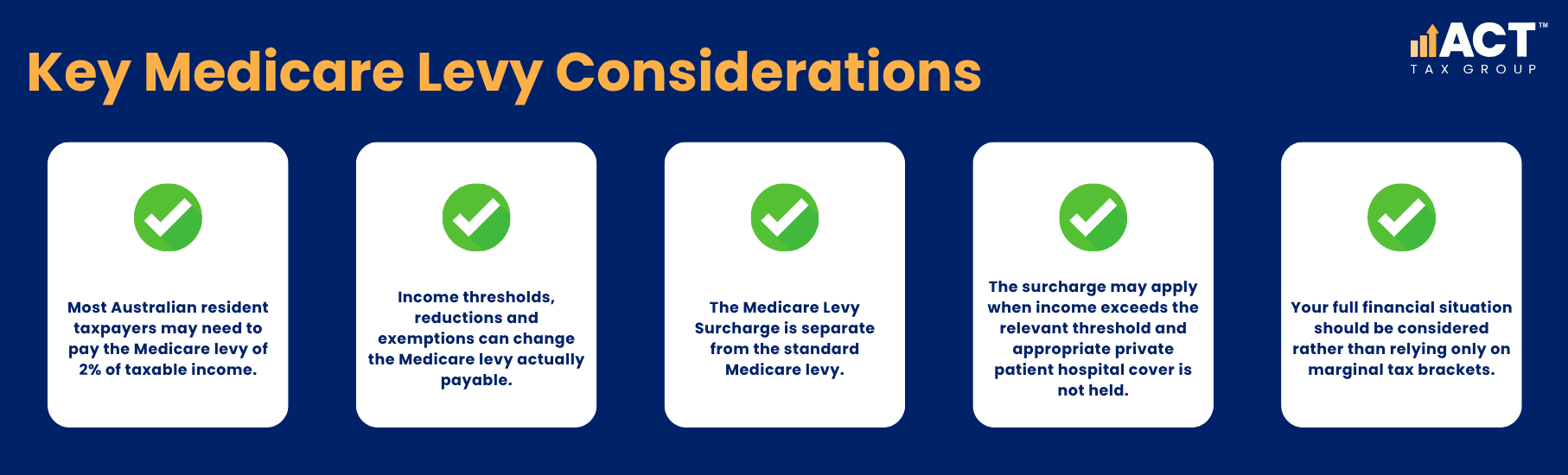
The resident tax rates above do not automatically show your complete tax liability. Most Australian resident taxpayers also need to consider the Medicare levy of 2% of taxable income, subject to thresholds, reductions and exemptions that can change the amount actually payable. The Medicare Levy Surcharge is separate and may apply if your income for surcharge purposes exceeds the relevant threshold and you do not have the required private patient hospital cover, subject to your circumstances. For this reason, general advice based only on marginal tax brackets should not replace a calculation using your full financial situation.
Residency Can Change the Tax Rates That Apply
The above rates apply to Australian resident taxpayers, but foreign residents, non-residents and working holiday makers can face different or special rates. Foreign residents generally cannot use the Australian resident tax-free threshold, and the rate applying to their Australian taxable income may therefore be different. Working holiday makers also have specific tax rules rather than simply using the standard resident tax table in every situation. If your residency status changes, or you earn income overseas, seek advice before applying resident tax rates because the Australian income tax treatment can depend on your individual circumstances.
Diverting Income Is Not a Substitute for Tax Planning
Choosing between wages, dividends and retained profits must reflect genuine company transactions. Diverting income simply to try to move taxable income between people or entities can create tax problems if the arrangement does not reflect the commercial and legal position. The aim should be to determine how profits are appropriately used rather than trying to avoid paying tax that properly applies. Good planning considers income earned, available company money, personal requirements and the tax consequences before a transaction occurs.
Power up your business with Accounting Built for Electricians
From start-up to expansion, our accounting team supports your tax, payroll, and cash flow at every stage of growth.
Company Money Should Remain Clearly Accounted For
The company’s bank account should not be treated as an extension of your personal account. Certain payments, loans or forgiven debts from a private company to a shareholder or their associate can be treated as an unfranked dividend under Division 7A unless an exception applies. Record wages, dividends, genuine repayments and any company loans correctly, and seek advice before taking company money for private purposes. Clear records make it easier to understand your actual tax position and reduce uncertainty at year-end. They also help you see whether the company has enough cash to meet its own tax, payroll and operating commitments before additional money is taken personally.

How ACT Tax Group Can Help with Marginal Tax Planning
We can review your expected business income, personal taxable income, marginal tax rates, company tax position and available franking credits before you decide whether to pay more wages, declare a dividend or retain profits. This gives you clearer information about both the tax payable and the amount of cash that remains available in your electrical company. Our friendly, IPA-certified team provides practical advice tailored to Australian business owners. You can book a consultation with ACT Tax Group to review your current financial situation and arrange a tax planning discussion before making your next major company payment.

Lukasz Klekowski
Principal of ACT Tax Group, specialising in tax compliance and financial strategy for Australian small businesses.

Disclaimer: All information provided in this publication is of a general nature only and is not personal financial or investment advice. It does not take into account your particular objectives and circumstances. No person should act on the basis of this information without first obtaining and following the advice of a suitably qualified professional. To the fullest extent permitted by law, no person involved in producing, distributing or providing the information in this publication (including ACT TAX GROUP PTY LTD, each of its directors, councilors, employees and contractors and the editors or authors of the information) will be liable in any way for any loss or damage suffered by any person through the use of or access to this information. The Copyright is owned exclusively by ACT TAX GROUP PTY LTD (ABN 31634338088)