

How Electricians Can Understand the Tax-Free Threshold Without Misjudging Tax Payable
Published on September 1, 2026
How Electricians Can Understand the Tax-Free Threshold Without Misjudging Tax Payable starts with understanding that the tax-free threshold is not a promise that your overall tax bill will be small. If you are an Australian resident for tax purposes for the full income year, the first $18,200 of your taxable income is generally tax free, but income above that amount is subject to the applicable Australian income tax rates. Understanding how your total income, deductions, tax withheld, tax offsets and Pay as You Go (PAYG) instalments work together can help you estimate how much tax you may need to pay and reduce the chance of an unexpected amount at tax time.
How Much Can You Earn Before You Pay Tax as an Electrician?
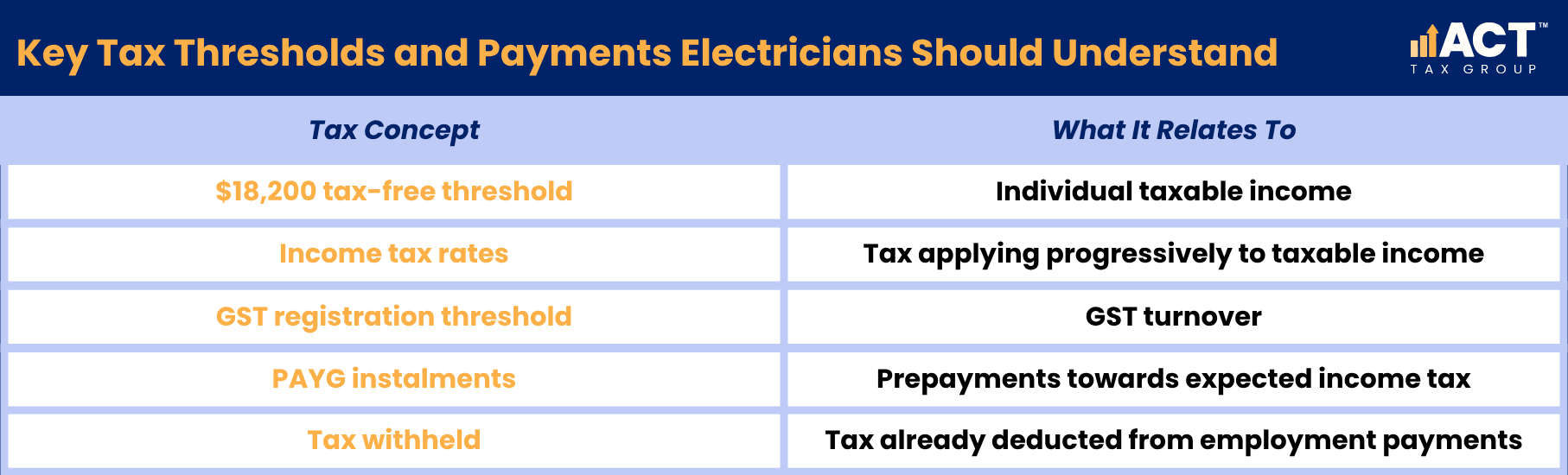
For the 2026–27 income year, an Australian resident for tax purposes for the full year can generally have taxable income of up to $18,200 before basic income tax starts to apply. The threshold is the amount of taxable income that is generally taxed at zero, rather than a separate tax-free allowance for every job or source of income. Australian income tax works progressively, which means only the portion of your taxable income that falls within each bracket is taxed at the relevant marginal tax rate. For the 2026–27 financial year, the rate applying between $18,201 and $45,000 is 15%, with higher rates applying as taxable income increases.
Are You Reserving Enough for Income Tax?
Schedule a complimentary consultation with us today to estimate tax from your actual business profit.
2026–27 Taxable Income | Basic Resident Income Tax |
|---|---|
$0 to $18,200 | Nil |
$18,201 to $45,000 | 15% of the amount over $18,200 |
$45,001 to $135,000 | $4,020 plus 30% of the amount over $45,000 |
$135,001 to $190,000 | $31,020 plus 37% of the amount over $135,000 |
More than $190,000 | $51,370 plus 45% of the amount over $190,000 |
These tax rates do not include amounts such as the Medicare levy or other adjustments that may affect how much you ultimately pay.
The Tax-Free Threshold Does Not Determine Your Final Tax Bill
Your final tax payable depends on much more than whether you can claim the tax-free threshold. When you lodge your tax return, the Australian Taxation Office (ATO) considers your taxable income for the year, applies the relevant tax rates and takes into account amounts already paid or withheld. This is why two electricians with similar earnings can have different tax outcomes. Your circumstances may include employment income, business income, other income, investments, capital gains, private health insurance or deductions that change the final amount of tax payable.
Five common factors that can affect the calculation include:
employment income and business income
tax withheld from wages
PAYG instalments already paid
eligible deductions and tax offsets
the Medicare levy and other applicable adjustments.
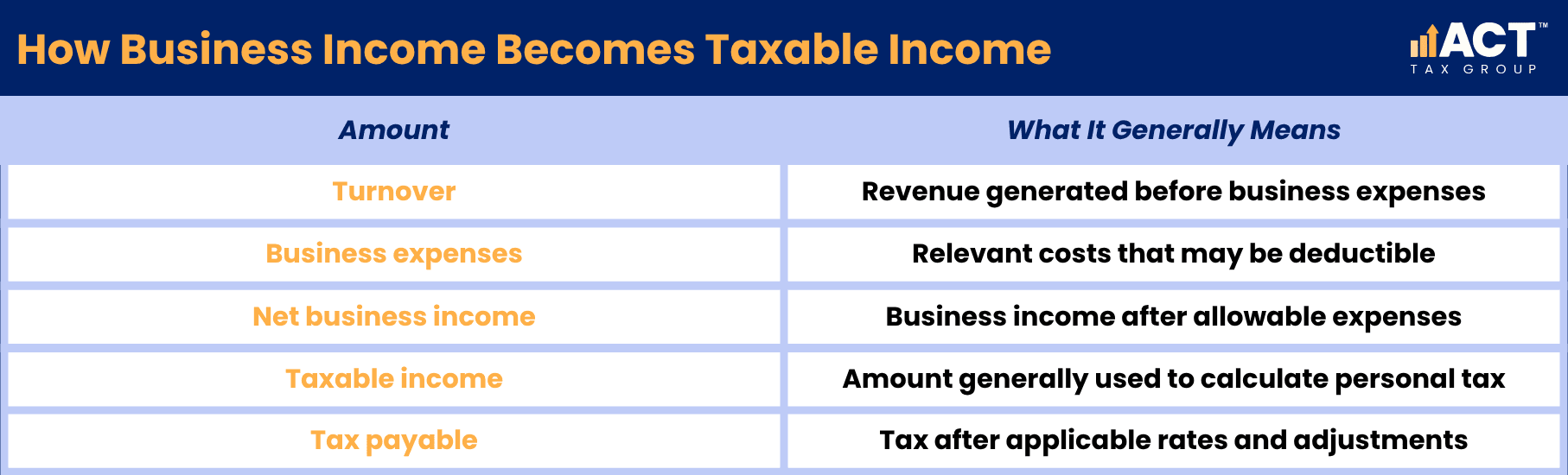
Turnover and Taxable Income Are Different Numbers
An electrician might invoice $150,000 during the year, but that does not automatically mean they have $150,000 of taxable income. Business turnover is the money generated before relevant costs, while net business income generally takes allowable expenses into account before the result is included in your individual tax return as a sole trader. Understanding this difference is essential when deciding how much money to reserve for paying income tax. Using total invoices, bank balances or GST collected as a substitute for taxable income can give you a misleading estimate of how much tax you may eventually need to pay.
Multiple Jobs Can Change How Much Tax You Pay
If you have two jobs, work for more than one payer, or keep a second job while building your electrical contracting business, your income is generally combined when you lodge your tax return. You do not receive the first $18,200 tax free separately for your first job, second job and sole trader income. Where you have multiple employers, you will generally claim the tax-free threshold from one employer if your total income will exceed $18,200. Claiming it incorrectly from more than one employer can mean not enough tax is withheld during the year, potentially leaving you with a larger tax bill.
Example: An electrician finishes their first job, and starts work with a new employer halfway through the financial year. Claiming the tax-free threshold with the new employer after the first employment has ended is different from simultaneously claiming the threshold from two jobs.
Tax Withheld from Wages Is Only a Prepayment
When you work for an employer, tax is generally withheld from your wages and sent to the ATO. The amount of tax withheld is a prepayment towards your eventual Australian income tax liability, rather than a guarantee that enough tax has already been paid. This matters when you have business income, other investments, a second job or other taxable amounts your employer does not know about. Your employer calculates withholding based on the information available to them, so additional income can mean you have to pay more tax when your final tax return is prepared.

PAYG Instalments Can Help Sole Traders Prepare for Tax
Electricians operating as sole traders often receive customer payments without personal income tax being deducted first. PAYG instalments allow eligible taxpayers to make regular payments towards expected income tax rather than potentially dealing with the full amount after lodging an annual return. The ATO may automatically enter you into PAYG instalments based on information in your latest tax return. Whether you need to pay PAYG instalments depends on your business income, tax position and the information the ATO holds for your account. Whether you need to pay PAYG instalments depends on your circumstances and the information the ATO holds for your account.
Real Example: The ATO provides an example involving a sole trader Harmander changes a PAYG instalment rate after business conditions reduce expected profit. It demonstrates why the amount paid during the year may need reviewing when income or profitability changes.
Other Income Can Affect Your Overall Tax Position
Your electrical business may not be your only source of Australian income. Investment income, taxable capital gains, certain government payments, foreign employment income and wages can all affect total income and potentially change your final taxable income depending on the rules that apply. For electricians with varied income sources, this is another reason not to calculate tax using one flat amount or percentage of business turnover. Your actual position depends on which amounts are assessable, which deductions you can claim and how the applicable tax rules affect your circumstances.
Examples of income that may need to be considered include:
wages and salary
sole trader business income
investment income such as interest
taxable capital gains
relevant foreign employment income.
The Medicare Levy May Increase the Final Amount Payable
The standard tax rates do not always show the complete amount of tax you may owe. The Medicare levy is generally 2% of taxable income, although a reduction or exemption may apply depending on your income and circumstances. The Medicare levy surcharge is separate and may apply if your income is above the relevant threshold and you do not have appropriate private patient hospital cover. Your private health insurance rebate can also be affected by your income, so consider these amounts separately when estimating your tax obligations.
GST and the Tax-Free Threshold Are Separate Rules
The $18,200 tax-free threshold relates to individual income tax and should not be confused with the Goods and Services Tax (GST) registration threshold. A business generally needs to register for GST when its current or projected GST turnover is $75,000 or more, but that threshold does not determine when you start to pay personal income tax. Keeping these obligations separate can make your financial position easier to understand. Money collected for GST, money reserved for income tax and cash needed for normal business expenses serve different purposes, even though they may temporarily sit in the same business bank account.
A Tax Refund Does Not Always Mean You Paid Less Tax
A tax refund usually means the credits and tax already paid during the income year exceeded the final amount assessed after your return was completed. It does not necessarily mean you were taxed at a lower rate or received additional tax-free income. Likewise, receiving a tax bill does not automatically mean something has gone wrong. It can simply mean you did not pay enough tax during the year through withholding or PAYG instalments relative to your final taxable income and tax obligations.
Example: An electrician with one employer may have enough tax withheld from wages to receive a small refund after deductions are included. Another electrician earning the same wages but also making substantial sole trader profit could instead have an amount payable because the additional business income increased their overall taxable income.
Power up your business with Accounting Built for Electricians
From start-up to expansion, our accounting team supports your tax, payroll, and cash flow at every stage of growth.
A Quarterly Review Can Reduce Tax-Time Surprises
Electrical businesses often experience uneven cash flow because customer payments, project variations, material purchases and larger jobs do not occur evenly throughout the financial year. Reviewing your expected taxable income regularly gives you a more useful picture than assuming the amount of money sitting in your account represents after-tax profit. Jobs and Skills Australia reported in its 2026 electrician occupation profile that Australia had approximately 197,300 electricians. The same profile, using 2025 Australian Bureau of Statistics data, reported that 94% of electricians worked full-time and median full-time earnings were approximately $2,191 per week, showing why understanding income and tax planning remains important across the trade.
A practical review can include:
Update your records. Record income and relevant expenses accurately.
Review business profit. Do not treat turnover as taxable income.
Check other income. Include wages, investments and other relevant amounts.
Review tax payments. Check tax withheld and PAYG instalments already paid.
Set money aside. Keep planned tax funds separate from everyday business spending.
How ACT Tax Group Can Help with Tax Planning for Electricians
We understand that working out how much can you earn before you pay tax is only the beginning when you run an electrical business. Our friendly, IPA-certified team can help you understand your taxable income, tax rates, deductions, PAYG instalments, tax withheld and other tax obligations without making the process unnecessarily complicated. If you want clearer figures before tax time, book a consultation with ACT Tax Group. We can review your business income, employment income, combined income and expected tax position so you can make practical decisions about how much money to set aside and reduce the risk of an unexpected tax bill.

Plan Around Taxable Income, Not Just the Tax-Free Threshold
The tax-free threshold is important, but the first $18,200 is only one part of determining how much tax an electrician may need to pay. Your taxable income, employment income, business income, other income, marginal tax rate, PAYG instalments and amounts already withheld all contribute to the final calculation. Rather than relying only on the tax-free threshold, plan around your expected taxable income and seek tailored advice when multiple jobs, business income, investments or other circumstances make your Australian income tax position less straightforward.

Lukasz Klekowski
Principal of ACT Tax Group, specialising in tax compliance and financial strategy for Australian small businesses.

Disclaimer: All information provided in this publication is of a general nature only and is not personal financial or investment advice. It does not take into account your particular objectives and circumstances. No person should act on the basis of this information without first obtaining and following the advice of a suitably qualified professional. To the fullest extent permitted by law, no person involved in producing, distributing or providing the information in this publication (including ACT TAX GROUP PTY LTD, each of its directors, councilors, employees and contractors and the editors or authors of the information) will be liable in any way for any loss or damage suffered by any person through the use of or access to this information. The Copyright is owned exclusively by ACT TAX GROUP PTY LTD (ABN 31634338088)