

Cash-Flow Habits That Help Your Arborist Company Manage ATO Debt and Insolvent Trading Risk in 2026
Published on May 19, 2026
Cash-flow habits that help your arborist company manage ATO debt and insolvent trading risk in 2026 begin with knowing whether your company can pay debts when they fall due. For arborist businesses, this means tracking wages, supplier accounts, tax, superannuation liabilities, equipment finance, insurance and fuel before financial distress becomes harder to manage.
This matters because insolvent trading can create serious pressure for company directors when a company is insolvent, or there are reasonable grounds to suspect it may become insolvent. Under the Corporations Act 2001, the law makes directors responsible for taking active steps to prevent insolvent trading, not just reacting after unpaid debts build up.
Insolvent Trading Risk Builds When Cash Flow Is Ignored
Insolvent trading occurs when a company incurs a debt while it is insolvent or becomes insolvent because of that debt. In everyday terms, this means the company’s business keeps taking on costs even though the company’s financial position shows it may not be able to pay debts on time.
For an arborist company, warning signs can include overdue taxes, unpaid employee entitlements, delayed superannuation, unpaid suppliers, incomplete financial records and collecting debts that are becoming unrecoverable loans in practice. According to the Australian Taxation Office (ATO), small business accounted for about $35.9 billion, or 66.1%, of total collectable debt on 30 June 2025, which makes cash-flow discipline especially important.
Worried your arborist business is drifting towards ATO debt or insolvent trading?
Schedule a complimentary consultation with us today to review your cash flow, ATO lodgements and director risk exposure.
Company Directors Need a Weekly View of the Company’s Financial Position
Company directors need a weekly view of the company’s financial position because cash-flow pressure can change quickly in tree services. A busy week of removals, stump grinding and emergency callouts may still leave the business short if clients pay late and company suppliers require payment first.
A useful weekly review should show the bank balance, unpaid invoices, upcoming wages, Pay As You Go (PAYG) withholding, Goods and Services Tax (GST), superannuation, loan repayments and supplier accounts, with extra attention to Payday Super changes applying from 1 July 2026. This habit gives directors a clear view of the company’s affairs and helps them seek professional advice before the business moves from temporary pressure into trading while insolvent.
Cash Reserves Protect Tax, Wages and Employee Entitlements
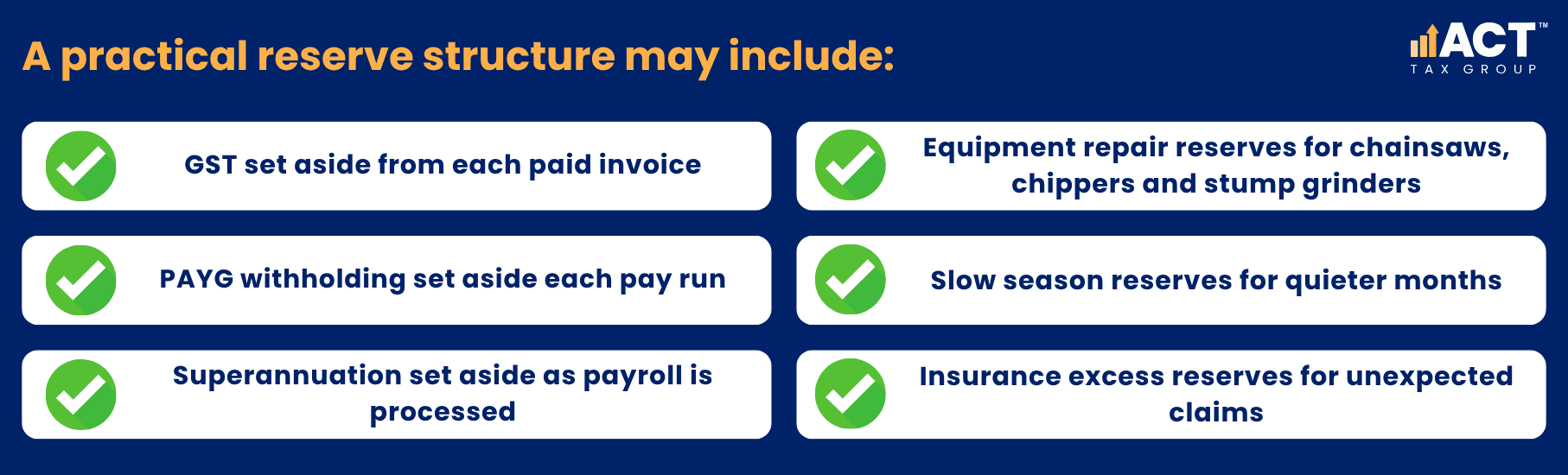
Cash reserves protect the money that should never be treated as spare operating cash. GST, PAYG withholding and superannuation should be separated from job income as soon as invoices are paid.
According to the Australian Securities and Investments Commission’s guidance for directors, maintaining adequate financial records is an important part of understanding a company’s financial situation and avoiding ASIC late fees and penalties. “Directors should ensure that they have systems in place to provide them with accurate information about the company’s financial position,” explains ASIC in its insolvent trading guidance for company directors.
Late Payments Can Turn Profitable Jobs into Financial Difficulties
Late payments can create financial difficulties even when a job is profitable on paper. Arborist companies often pay crew wages, fuel, traffic control, tip fees, subcontractors and machinery costs before money arrives from builders, property managers, insurers or commercial clients.
For example, an ACT arborist company may complete a $35,000 storm clean-up package, pay all labour and disposal costs immediately, then wait 45 days for the client to pay. Without deposits, progress claims and effective chasing money, that job can leave company suppliers unpaid and place pressure on tax and superannuation obligations.
Quoting Needs to Reflect Cash Timing and Company Debts
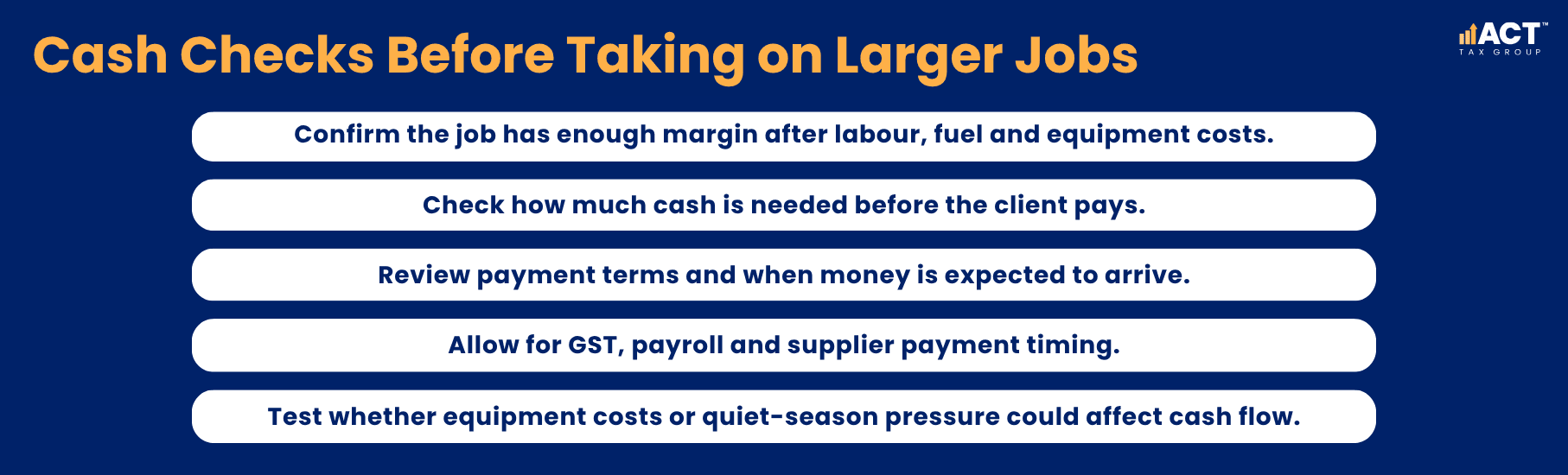
Quoting needs to reflect cash timing, not just expected profit. A job can appear profitable but still create company debts if the company pays wages, fuel, equipment hires and waste costs weeks before receiving payment.
For example, a stump grinding job with tight access may require extra labour, a smaller machine, additional transport and more time on site than expected. If the quote does not account for these costs, the debt incurred may weaken the company’s assets and place directors under pressure to keep taking new work just to cover old costs.
Incomplete Financial Records Increase Director Risk
Incomplete financial records make it harder to prove that directors understood the company’s financial situation and acted responsibly. Poor records can also make it harder to defend an insolvent trading claim if parties, creditors or unpaid suppliers later question decisions.
“Reliable financial records help directors identify solvency concerns early,” explains John Winter, Chief Executive Officer at the Australian Restructuring Insolvency and Turnaround Association. This is especially relevant for arborist companies where job costs, subcontractor payments, fuel receipts and equipment repairs can be spread across multiple systems.
Records worth keeping include, and can be streamlined by using ATO Online Services for Business:
13-week cash-flow forecasts
Aged debtor reports
Supplier payment schedules
Payroll and superannuation records
Business Activity Statement (BAS) lodgement records to support accurate BAS and GST reporting
Job profitability reports
Notes from professional advice
Payment arrangements with the Australian Taxation Office (ATO)
Director Penalty Notice Exposure Needs Early Action
A Director Penalty Notice (DPN) can make a director personally liable for unpaid Pay As You Go (PAYG) withholding, net Goods and Services Tax (GST) and superannuation guarantee charge where the company has not met its obligations.
The practical lesson is simple: lodge on time, keep records current and immediately seek professional advice if the company cannot pay debts when they fall .due. Leaving lodgements late or unpaid can reduce options and increase personal liability for directors.
Equipment Finance Should Be Tested Against Quiet Months
Equipment finance should be tested against quiet months, not peak-season income. Trucks, chippers, stump grinders, elevated work platforms and trailers can improve capacity, but repayments can create pressure when seasonal demand slows.
For example, an arborist business may buy a larger chipper after strong summer storm work, then face slower winter revenue while repayments continue. A safer habit is to test every finance decision against conservative income, existing company debts, tax reserves and the company’s future business plan, supported by cash flow tips for arborists.

Insolvency Options Should Be Considered Before Pressure Becomes Critical
Insolvency options should be considered early when the company is facing sustained financial distress. Small business restructuring, voluntary administration and a company arrangement may be available in certain circumstances, but timing and professional advice matter.
This does not mean every cash-flow problem requires formal action. It means directors should not ignore reasonable grounds for concern, especially where secured creditor pressure, unpaid debts, board disputes, associated parties, creditors or overdue taxes are already affecting the company’s affairs.
Parent Company and Holding Company Structures Need Careful Review
A holding or parent company structure can help manage risk, but it does not remove the need for directors to monitor each company’s financial position. A parent company may face risk in certain circumstances if it allows a subsidiary to keep trading while insolvent.
For example, a tree services group may operate one company for trading and another for equipment ownership. This structure can support asset protection, but it still needs proper records, clear intercompany arrangements and professional advice so company assets, company debts and each company’s business purpose remain clear.
Grow your tree care business with Accounting Built for Arborists
From start-up to expansion, our accounting team supports your tax, payroll, and cash flow — so you can focus on running your business safely and profitably.
Civil and Criminal Penalties Make Early Advice Essential
Civil penalties, compensation proceedings and possible criminal penalties may apply where directors fail to meet their duties. Criminal insolvent trading and criminal charges are serious matters, particularly where a reasonable person would have identified that the company could not pay all the person’s debts or the company equivalent of those debts as they fell due.
Directors may also be ordered to pay compensation for insolvent trading debts in certain circumstances. This is why directors should seek professional advice early, use a competent and reliable manager or adviser where needed, and avoid making decisions based only on hope that future jobs will fix old debts.
How ACT Tax Group Can Help with Cash-Flow Habits That Keep Your Arborist Company Off the ATO’s Insolvent-Trading Radar in 2026
We help arborist businesses build cash-flow habits that support compliance, tax efficiency, asset protection and growth planning, including strategies to maximise GST credits and stay ATO-compliant. Our team can review your BAS cycle, tax reserves, payroll, job margins, unpaid debts, equipment finance and business plan so you can see your position clearly and make informed decisions.
If your company is dealing with financial difficulties, ATO debt, late-paying clients or pressure from company suppliers, we invite you to book a meeting with ACT Tax Group. We can help you understand your options, improve cash-flow clarity and gain confidence before small problems become director-level risks.

Strong Cash-Flow Habits Give Directors Better Decisions
Strong cash-flow habits give company directors better decisions before pressure builds. For arborist companies, the priority is simple: keep records current, separate tax money, invoice quickly, chase debts early, protect employee entitlements and review the company’s financial position every week.
Insolvent trading leaves directors exposed when warning signs are ignored, and a director may be liable for insolvent trading if the company keeps taking on debts it cannot pay. Early action creates more options and helps directors understand where company debts may create personal exposure, including director penalties, insolvent trading claims or pressure on their own debts. Start with a 13-week forecast, review overdue invoices, protect tax and superannuation money, and seek professional advice before financial distress becomes a formal insolvent trading action.

Lukasz Klekowski
Principal of ACT Tax Group, specialising in tax compliance and financial strategy for Australian small businesses.

Disclaimer: All information provided in this publication is of a general nature only and is not personal financial or investment advice. It does not take into account your particular objectives and circumstances. No person should act on the basis of this information without first obtaining and following the advice of a suitably qualified professional. To the fullest extent permitted by law, no person involved in producing, distributing or providing the information in this publication (including ACT TAX GROUP PTY LTD, each of its directors, councilors, employees and contractors and the editors or authors of the information) will be liable in any way for any loss or damage suffered by any person through the use of or access to this information. The Copyright is owned exclusively by ACT TAX GROUP PTY LTD (ABN 31634338088)