

Arborists: Using an Hourly Pay Calculator to Make Sure Your Wage Covers Risk and Skill Level
Published on September 1, 2026
An hourly pay calculator can help arborists check whether their wage and hourly rate properly reflect their skill, responsibility and the real cost of doing the job. For an arborist business owner, using the wrong figure can mean paying wages, fuel, equipment and insurance while discovering that too little money is left after each job. A useful calculation needs to go further than gross pay or annual salary. It should consider hours worked, superannuation, payroll costs, non-billable time, equipment expenses and the amount the business needs to earn to remain sustainable throughout the current financial year.
What Should Arborists Include in an Hourly Pay Calculator?
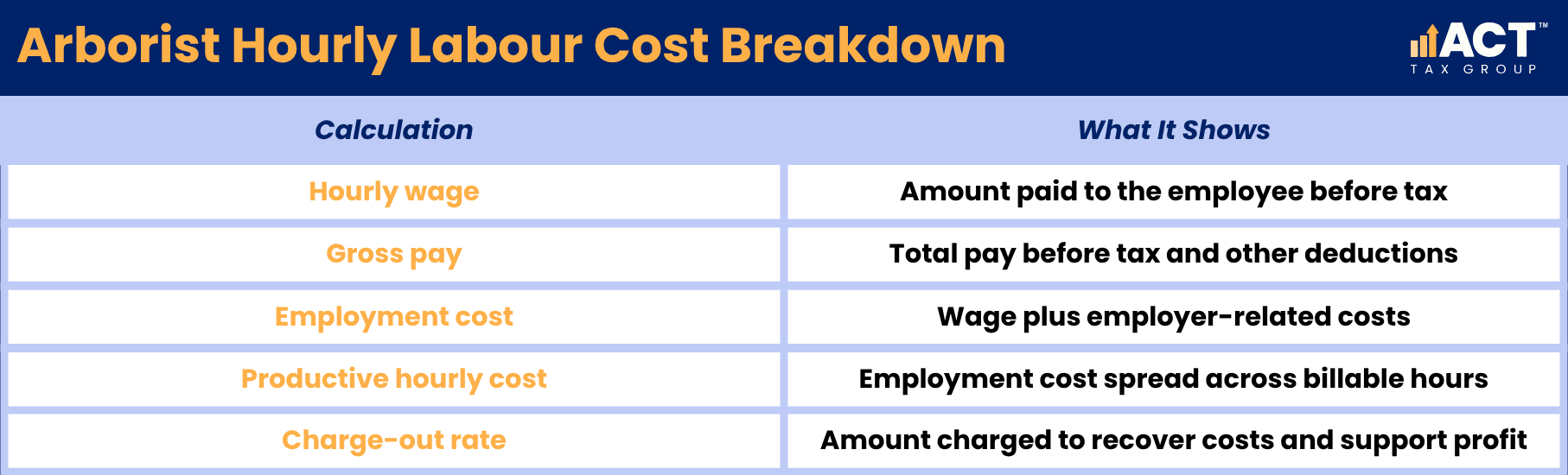
An arborist pay calculator should start with the correct wage for the employee and the number of hours per week they work. The hourly rate may depend on the applicable award, employee classification, experience, duties, overtime, penalty rates and work performed on weekends or public holidays. The calculation should then add the costs the employer carries on top of ordinary earnings. This gives the business a clearer pay breakdown and helps distinguish an employee’s wage from the actual cost of providing one hour of labour to a customer.
Are your arborist wages and job rates covering every cost?
Schedule a complimentary consultation with us today to review wages, overheads and profitable charge-out rates.
Risk and Skill Need to Be Reflected in Your Pricing
Arborist work involves skill, judgement and physical risk. Climbing trees, using chainsaws, operating chippers, managing falling limbs and working around buildings or powerlines can require a much higher level of responsibility than a basic hourly wage might suggest. That does not mean an employer can simply choose any wage because a job is difficult. The legal pay rate still depends on the applicable employment rules, but the business’s charge-out rate should reflect the real cost of employing skilled people and running work safely.
Statistic: Safe Work Australia reported that 188 workers died from traumatic workplace injuries in Australia during 2024. Falls from height accounted for 24 of those fatalities, showing why businesses that regularly perform work at height need to take safety costs seriously.
Real Example: An experienced climbing arborist who plans a complex removal, manages rigging and works around nearby buildings brings different skills and responsibilities from a new ground worker. Their wage, classification and the rate used when pricing the job should reflect those differences.
Start With the Correct Wage Before Calculating Profit
A pay calculator hourly rate is only useful if the starting wage is correct. Before using a calculator, employers should check whether an award applies and confirm the employee’s classification, hours per week, overtime arrangements and other entitlements. Gross income, annual salary and take-home pay can all describe different parts of an employee’s earnings. For business costing, gross pay is usually more useful than net pay because net pay reflects PAYGW and other deductions, while actual tax can also depend on the tax-free threshold, Medicare levy and individual circumstances.
For arborist employers, the practical point is to check current pay requirements each time wage rates change rather than continuing to use an old calculation.
Your Wage Is Different from Your Customer Hourly Rate
The wage you pay an employee is not the same as the hourly rate your business needs to charge customers. If an arborist receives $35 per hour, the employer also needs to cover superannuation, leave, payroll costs, insurance, vehicles, equipment and time that cannot be charged directly to a job. This is why a simple salary, or hourly calculator can understate the real cost of labour. A better calculation separates what the employee earns from what the business must recover through customer pricing.
Superannuation Changes the Real Cost of Labour
Superannuation is an important part of the employer’s labour cost. From 1 July 2026, the superannuation guarantee rate remains 12% and is calculated on an employee’s qualifying earnings, which include ordinary earnings and certain other payments. Superannuation guarantee payments are separate from income tax and Pay as You Go Withholding (PAYGW). From 1 July 2026, employers generally need to pay super on payday and have it reach the employee’s super fund within 7 business days, subject to limited exceptions. Salary sacrifice, salary packaging, reportable super contributions and the concessional cap can also affect an employee’s position.
Tax and Take-Home Pay Are Separate Calculations
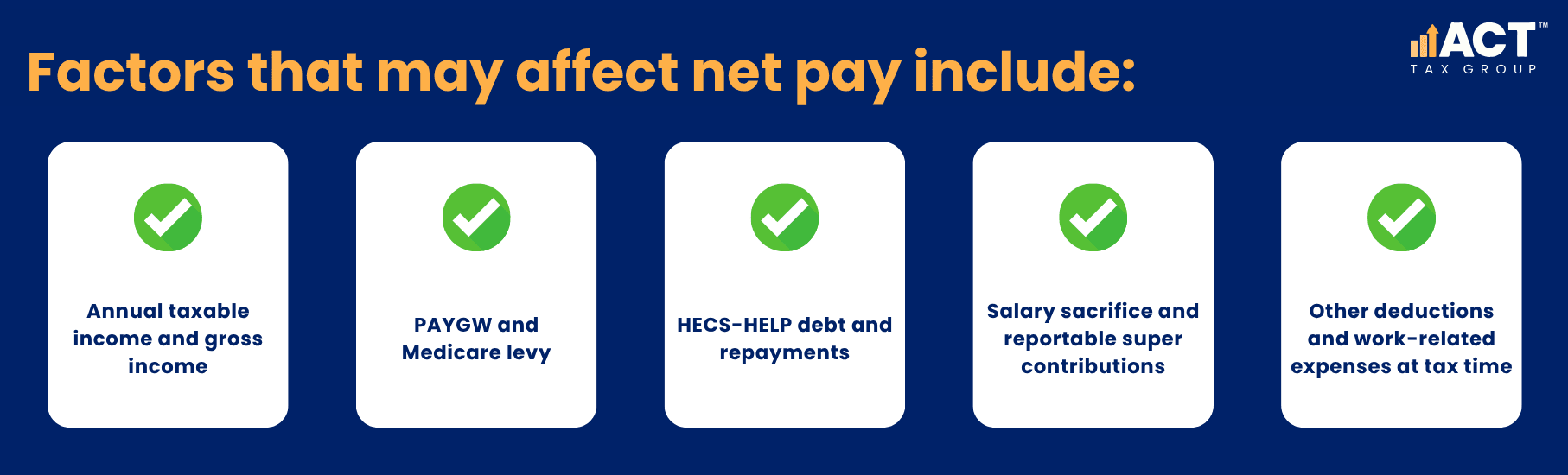
Employees often use a pay calculator to estimate take home pay, income tax and other deductions from their salary. That calculation may consider taxable income, gross income, the tax-free threshold, Medicare levy, PAYGW and, where relevant, Higher Education Loan Program (HELP) debt, including HECS-HELP debt, and other study and training support loan repayments. These personal tax calculations are different from the hourly rate an arborist business needs to charge customers. For compulsory HELP and other study and training support loan repayments, the ATO uses repayment income, which can include taxable income, reportable fringe benefits, reportable super contributions and certain other amounts.
Non-Billable Hours Can Reduce Your Margin Quickly
One of the biggest problems with using a basic hourly calculator is assuming every paid hour earns customer revenue. Arborists can spend considerable time loading equipment, travelling between jobs, quoting, cleaning up, maintaining machinery and completing safety checks. If an employee works 38 hours per week but only 28 hours are directly recovered through customer work, dividing total employment costs across 38 hours can make the business look more profitable than it really is. Using productive hours provides a clearer estimate of what each billable hour needs to recover.
Real Example: Assume total weekly labour and allocated overhead costs are $1,900. Dividing that amount by 38 paid hours produces a cost of $50 per hour, while dividing the same cost by 28 billable hours produces about $67.86 per productive hour. That difference can change whether a job makes money or loses money.
Use Your Hourly Calculation to Improve Job Quotes
Once you know the real hourly cost of labour, you can use it to make more informed decisions when preparing quotes. The calculation should sit alongside equipment, travel, disposal, insurance and job-specific requirements rather than being used as the entire job price. Arborist jobs can require different rates because the hours worked, crew skill and equipment requirements vary. A routine pruning job may need a very different cost structure from a technical removal involving climbing, rigging and several crew members. A practical quoting process can include:
Estimate the hours per job and crew size.
Apply the correct hourly rate for each employee.
Add machinery, vehicle and disposal expenses.
Allow for overheads and non-billable time.
Apply a sustainable margin and compare the estimate with the actual result.
Real Example: A two-person crew might complete light pruning in three hours. A difficult tree removal on the same property could require a full day, specialist climbing skills, extra equipment and additional ground staff, so using different rates can produce a more reliable calculation.

Payroll and Australian Tax Obligations Still Matter
A well-designed hourly calculation does not replace payroll or Australian tax responsibilities. Employers generally report salary and wages, PAYGW and super information through Single Touch Payroll (STP), report PAYGW through their activity statement where required, and meet current Payday Super obligations. Accurate payroll records can also improve job costing. When you know the actual gross pay, hours worked, overtime and employer costs for each employee, you can compare those figures with the income generated from different jobs and make more informed decisions. At tax time, useful records may include:
Employee wage and salary information
PAYGW and superannuation records
Business income and taxable income records
Business expenses and other deductions
Relevant vehicle, equipment and home office costs
Business owners should check which expenses actually qualify for deductions rather than assuming every cost can reduce income tax.
Review Your Hourly Rate as Business Costs Change
Your hourly rate should be reviewed regularly rather than set once and forgotten. Wages, insurance, fuel, machinery repairs, superannuation and award rates can change, while employees may gain qualifications or receive a pay rise. Changes in the Consumer Price Index (CPI) can also provide useful background on broader price movements, but CPI alone should not determine your hourly rate. Your calculation should be based on actual costs, actual hours worked and the margin needed to keep the business financially sound. Reviewing these factors can also help you compare different portions of the business and decide whether certain jobs, crews or services are producing better rates of return.
Grow your tree care business with Accounting Built for Arborists
From start-up to expansion, our accounting team supports your tax, payroll, and cash flow — so you can focus on running your business safely and profitably.
Personal Pay Calculators Still Have a Different Purpose
A personal pay calculator can be useful when an employee wants an estimate of monthly or weekly net pay from an annual salary. Depending on the calculator, it may consider income tax, the tax-free threshold, Medicare levy and whether repayments start for a student loan or HECS-HELP debt. The calculator applies assumptions to income and deductions, so the result may not equal actual tax or final take home pay. Higher earners, working holiday makers, people with fringe benefits or employees with different salary packaging arrangements can have different outcomes. A personal calculator may consider:
Annual salary or hourly pay
Hours per week or hours per month
PAYGW and estimated income tax
HECS-HELP or other debt repayments
Superannuation and salary packaging
For business owners, these calculations are useful for understanding employee pay, but they should not replace the separate calculation required to work out a sustainable customer hourly rate.

How ACT Tax Group Can Help with Arborist Wage and Job Costing
We can help arborist business owners understand the numbers behind wages, payroll, job costs and cash flow. Our team can review your hourly calculation, compare estimated labour costs with actual results and help you see whether your pricing is recovering the expenses involved in running your business. We can also support you with BAS, payroll, PAYGW, superannuation and tax planning so you can make informed decisions with clearer financial information. If you would like to understand what each working hour needs to earn, book a consultation with our ACT Tax Group team to review your business numbers and pricing approach.

Lukasz Klekowski
Principal of ACT Tax Group, specialising in tax compliance and financial strategy for Australian small businesses.

Disclaimer: All information provided in this publication is of a general nature only and is not personal financial or investment advice. It does not take into account your particular objectives and circumstances. No person should act on the basis of this information without first obtaining and following the advice of a suitably qualified professional. To the fullest extent permitted by law, no person involved in producing, distributing or providing the information in this publication (including ACT TAX GROUP PTY LTD, each of its directors, councilors, employees and contractors and the editors or authors of the information) will be liable in any way for any loss or damage suffered by any person through the use of or access to this information. The Copyright is owned exclusively by ACT TAX GROUP PTY LTD (ABN 31634338088)