

What Is SMSF and How Does It Work in Australia?
Published on October 14, 2026
What is SMSF and how does it work in Australia? A Self-Managed Superannuation Fund (SMSF) is a private super fund that gives you greater control over your retirement savings, investment choices and financial future. Unlike retail super funds or industry funds, SMSF members are responsible for managing investments and meeting legal obligations. For Australians seeking more investment options, SMSFs offer flexibility but involve costs, administration and compliance responsibilities. Understanding how an SMSF works helps you decide whether this approach suits your retirement goals.
Understanding SMSFs and Who Can Establish One
An SMSF is a superannuation fund managed by its members, who make investment decisions and oversee its operations. It can have up to six members, who are generally responsible for ensuring the fund complies with Australian superannuation laws.
Members generally act as individual trustees or directors of a corporate trustee company. According to the Australian Taxation Office’s (ATO) June 2026 statistics, Australia had 680,301 SMSFs, holding approximately $1.107 trillion in assets.
Unsure about your SMSF accounting and ATO obligations?
Schedule a complimentary consultation with us today to understand your fund’s compliance requirements.
How an SMSF Works in Australia
An SMSF receives superannuation contributions and invests money to provide retirement benefits. Trustees must follow and regularly review a documented investment strategy that considers investment risks, diversification, cash flow, retirement goals and insurance cover.
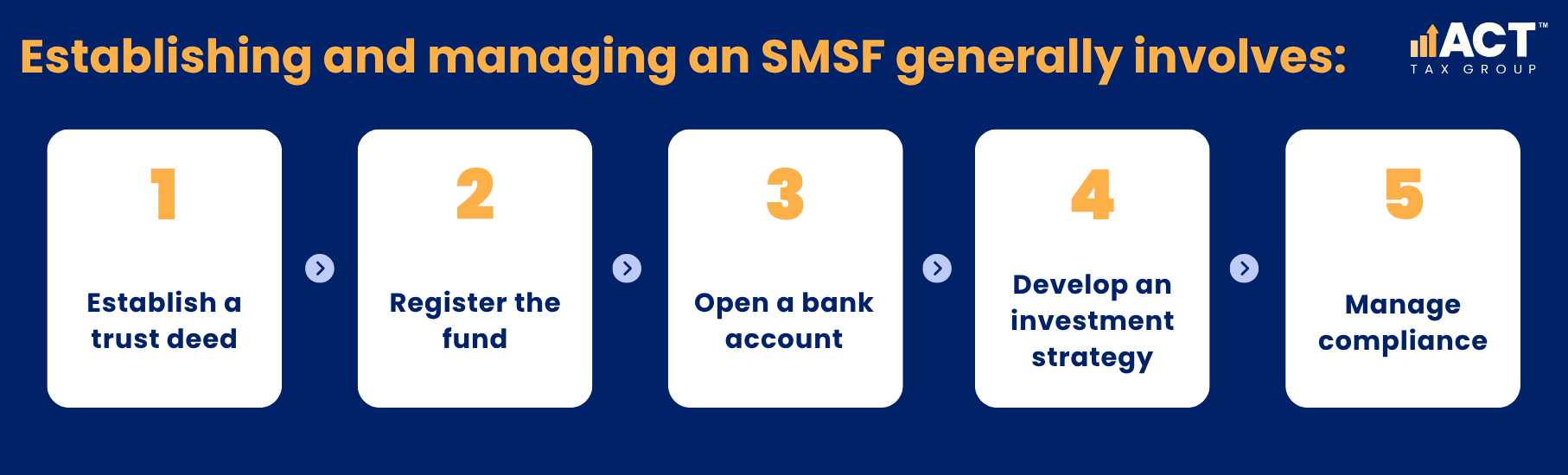
Establishing and managing an SMSF generally involves:
Establishing a trust deed: Create the document outlining the fund’s operating rules and appoint eligible trustees.
Registering the fund: Register with the ATO and obtain the required identification numbers.
Opening a bank account: Keep the fund’s money separate from personal finances.
Developing an investment strategy: Document investment choices, risks and insurance considerations.
Managing compliance: Maintain records, arrange an annual independent audit and lodge the SMSF annual return, which includes tax reporting.
SMSF Investment Options and Restrictions
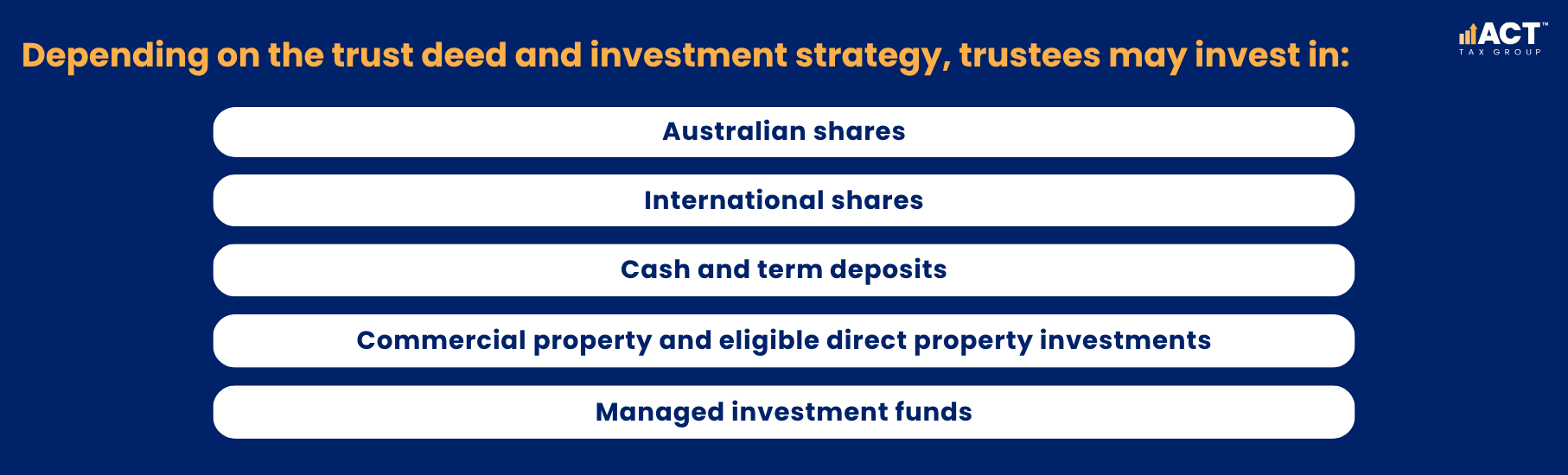
SMSFs offer a wider range of investment choices compared with some traditional super funds. However, all investments must satisfy the sole purpose test, meaning the fund must operate to provide retirement benefits rather than immediate personal advantages.
Example: A business owner may purchase eligible commercial property through an SMSF and lease it to their business if it qualifies as business real property and the lease follows market conditions. Another investor may diversify retirement savings across shares and term deposits to manage investment risk.
SMSF Tax Benefits and Trustee Responsibilities
A complying SMSF generally pays 15% tax on taxable income during its accumulation phase. A complying SMSF may receive a one-third Capital Gains Tax (CGT) discount on eligible assets held for at least 12 months, subject to applicable rules.
Trustees must ensure the fund remains compliant through accurate reporting, independent audits and keeping the fund’s assets separate from personal or business assets. As Emma Rosenzweig, Deputy Commissioner at the ATO, explained in her 2025 SMSF Association conference address, the “self” in self-managed super fund should be taken seriously.

Comparing SMSFs With Retail and Industry Super Funds
SMSFs provide greater investment control but require more active management than retail or industry funds. Comparing investment options, costs and responsibilities helps determine whether an SMSF could be cost effective. An SMSF may suit experienced investors who understand their responsibilities and can dedicate time to managing retirement assets.
Feature | SMSF | Retail and Industry Funds |
|---|---|---|
Investment control | Trustees decide | Fund-selected options |
Investment options | Broader direct choices | Available fund choices |
Management | Member responsibility | Professional management |
Costs | Administration and audit fees | Fund management fees |
Compliance | Trustee responsibility | Managed by the fund |
How ACT Tax Group Can Help with SMSF Accounting and Compliance
At ACT Tax Group, our friendly, IPA-certified accounting team can assist with SMSF accounting, tax returns, financial reporting and compliance requirements. We help you understand your obligations and work with appropriately licensed financial advisers when specialist investment advice is needed. Book a consultation with our team to discuss your SMSF accounting needs and receive practical guidance tailored to your circumstances.

Making the Right Decision for Your Retirement
An SMSF provides greater control over retirement savings but requires careful investment planning, ongoing administration and compliance with superannuation regulations. Choosing the right structure depends on your financial circumstances, management capacity and retirement objectives.
Before establishing an SMSF, compare other super funds, assess ongoing costs and seek professional advice from qualified SMSF specialists. Taking these steps can help you make an informed decision about your retirement future.

Lukasz Klekowski
Principal of ACT Tax Group, specialising in tax compliance and financial strategy for Australian small businesses.

Disclaimer: All information provided in this publication is of a general nature only and is not personal financial or investment advice. It does not take into account your particular objectives and circumstances. No person should act on the basis of this information without first obtaining and following the advice of a suitably qualified professional. To the fullest extent permitted by law, no person involved in producing, distributing or providing the information in this publication (including ACT TAX GROUP PTY LTD, each of its directors, councilors, employees and contractors and the editors or authors of the information) will be liable in any way for any loss or damage suffered by any person through the use of or access to this information. The Copyright is owned exclusively by ACT TAX GROUP PTY LTD (ABN 31634338088)