

How Arborists Can Use Bookkeeping Reports to Review Weekly Tax Obligations
Published on November 18, 2026
How Arborists Can Use Bookkeeping Reports to Review Weekly Tax Obligations starts with tracking income, expenses, wages and upcoming tax payments. Managing tree removal projects, equipment purchases and employee wages can make bookkeeping challenging. Regular financial reviews help you understand taxable income, monitor Australian income tax obligations and prepare for reporting deadlines throughout the financial year.
The Importance of Weekly Bookkeeping Reports for Arborists
Weekly bookkeeping reports provide a clearer picture of business earnings, operating expenses and outstanding tax obligations. They help arborists understand the difference between gross income and net income while monitoring cash available for wages and supplier payments. These reports also help identify irregular payments, overdue invoices and expenses that may qualify for tax deductions. Reviewing accurate figures supports better financial decisions and reduces unexpected costs.
Unsure how much tax to set aside each week?
Schedule a complimentary consultation with us today to review your weekly tax reserves.
Understanding Australian Income Tax and Weekly Tax Obligations
Australian income tax is generally calculated using annual taxable income and applicable income tax rates. For sole traders, taxable income generally includes business profit alongside other assessable income, less allowable deductions. Australian residents are generally taxed progressively, meaning different portions of taxable income attract different tax rates. Companies follow separate tax rules, while employees usually have tax withheld from wages during each pay period.
Calculating Weekly Income Tax
Business owners asking “how much tax do I pay weekly” should distinguish personal income tax from employee withholding obligations. An income tax calculator can estimate annual tax for supported financial years, while the current weekly tax table or tax withheld calculator helps employers calculate withholding amounts.
Example: An arborist earning $90,000 in annual taxable income can use an income tax calculator to estimate personal tax obligations, including applicable Medicare levy amounts, before setting aside weekly reserves.
Important considerations include:
Annual income and Australian income tax rates.
The $18,200 tax-free threshold for eligible Australian residents.
Applicable tax offsets and deductions.
Medicare levy and potential Medicare levy surcharge.
Existing tax withheld and income tax instalments.

Monitoring GST Through Weekly Bookkeeping Reports
Goods and Services Tax (GST) reports help registered arborists track GST collected from customers and eligible credits on business purchases. Reviewing invoices weekly supports accurate Business Activity Statement (BAS) preparation. The Australian Taxation Office (ATO) generally requires GST registration when projected GST turnover reaches $75,000, or current turnover reaches that amount and projected turnover is not below it. Maintaining reliable records helps calculate reporting amounts and understand upcoming payment obligations.
Example: An arborist invoices $11,000, including $1,000 GST, and records purchases containing $300 in eligible GST credits. The estimated net GST is $700, subject to other transactions and adjustments.
Reviewing Weekly Earnings and Employee Tax Withholding
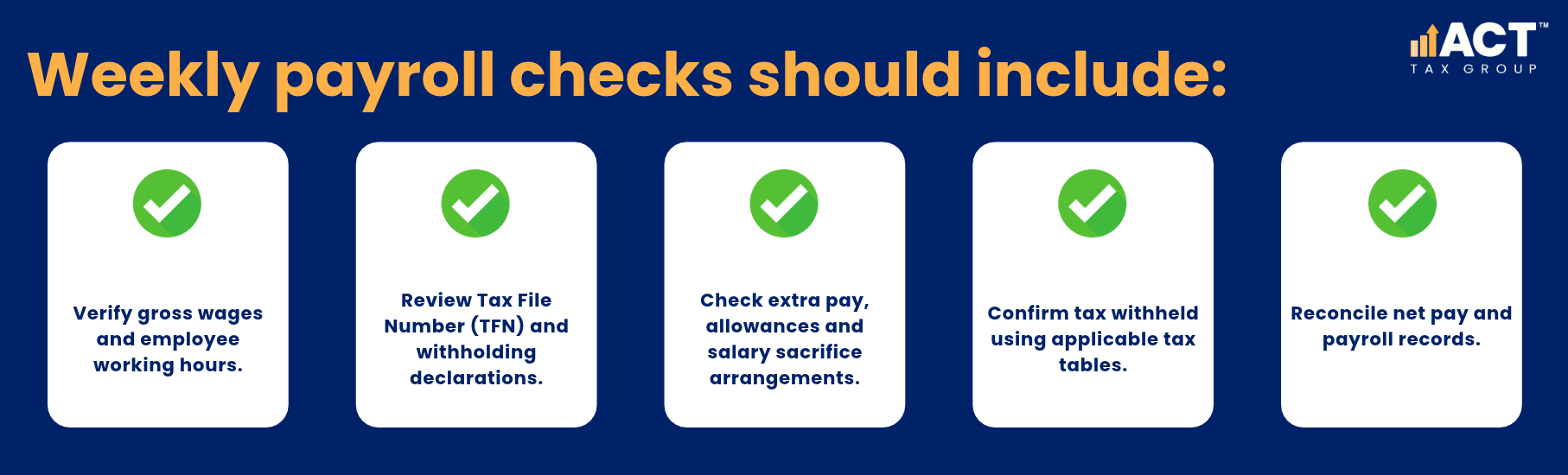
Payroll reports help arborists confirm employee wages, withholding amounts and net pay. The amount of tax withheld can vary depending on normal weekly earnings, irregular payments, leave loading and relevant employee declarations. Employers can use the ATO‘s tax withheld calculator or weekly tax table to check deductions from wages. Employee circumstances, including the tax-free threshold, Medicare levy adjustments and student loan obligations, can affect withholding calculations.
Managing Tax Offsets and Employee Withholding Adjustments
Tax offsets can reduce an eligible individual’s income tax liability, although they do not automatically change payroll withholding. Employees may need to provide a withholding declaration when claiming certain adjustments. The Low-Income Tax Offset (LITO) may reduce eligible individuals’ income tax and can affect withholding through an appropriate declaration. Medicare levy adjustments also depend on individual circumstances. Employers should follow current ATO guidance.
Tracking Superannuation and Other Payroll Responsibilities
Superannuation is an important part of payroll reporting. Since 1 July 2026, Payday Super requires contributions for each payday, generally reaching employees’ super funds within seven business days, unless a longer deadline applies. The superannuation guarantee rate is 12% of qualifying earnings for eligible workers. Arborists should check payroll and salary sacrifice arrangements, verify payments, and report qualifying earnings and superannuation liabilities through Single Touch Payroll (STP).

Managing Business Deductions and Seasonal Cash Flow
Arborists frequently purchase fuel, protective equipment, chainsaws and machinery parts. Reviewing bookkeeping reports helps distinguish deductible operating expenses from equipment purchases that may require depreciation. Seasonal income changes can affect the funds available to pay income tax and other commitments. Comparing expected customer payments with upcoming expenses helps determine a suitable weekly amount to reserve.
Example: An arborist purchases a stump grinder and records its cost, invoice and business use. Their accountant can assess the applicable tax treatment and any available deductions.
Grow your tree care business with Accounting Built for Arborists
From start-up to expansion, our accounting team supports your tax, payroll, and cash flow — so you can focus on running your business safely and profitably.
Building A Consistent Weekly Bookkeeping Review Process
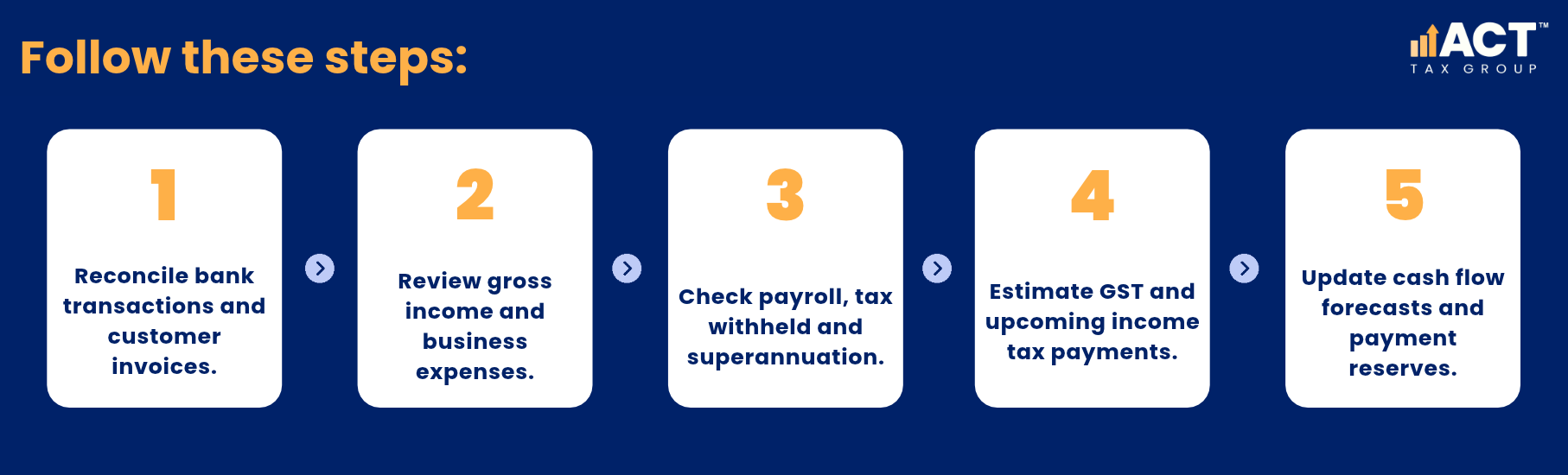
A weekly bookkeeping routine helps arborists monitor financial performance without waiting until tax reporting deadlines approach. Regular checks also make it easier to identify missing transactions and maintain reliable financial records.
Follow these steps:
Reconcile bank transactions and customer invoices.
Review gross income and business expenses.
Check payroll, tax withheld and superannuation.
Estimate GST and upcoming income tax payments.
Update cash flow forecasts and payment reserves.
How ACT Tax Group Can Help with Arborist Bookkeeping and Weekly Tax Reviews
At ACT Tax Group, we help arborists maintain accurate bookkeeping records, understand Australian tax obligations and manage payroll reporting. Our friendly, IPA-certified team provides practical accounting, BAS support and taxation advice tailored to Australian tree service businesses. Whether you need help reviewing income tax estimates, checking payroll withholding or managing seasonal cash flow, our team can assist. Book a consultation with ACT Tax Group to discuss your financial situation and develop a bookkeeping process suited to your business.
How Much Percent Is Tax for an Arborist in Australia?
The amount of tax depends on taxable income, deductions and residency status. For 2026–27, income tax rates for Australian residents range from 0% to 45%, with income taxed progressively. The Australian Taxation Office (ATO) collects income tax based on applicable tax brackets, while the final amount of tax may also include the Medicare levy and other adjustments.
How Does Gross Income Affect the Amount of Tax an Arborist Pays?
Arborists generally pay income tax on taxable income rather than gross income. Taxable income is assessable income, including business earnings, taxable government payments and other income, minus allowable deductions. The final amount of tax depends on deductions, tax rates and available offsets.
Do Reportable Fringe Benefits Affect an Arborist’s Income Tax?
Reportable fringe benefits generally do not directly increase an arborist’s taxable income or ordinary income tax payable. However, they may affect income tests used to calculate the Medicare levy surcharge, certain government payments and other obligations. Arborists receiving employer-provided benefits should check how these amounts affect their individual tax circumstances.

Lukasz Klekowski
Principal of ACT Tax Group, specialising in tax compliance and financial strategy for Australian small businesses.

Disclaimer: All information provided in this publication is of a general nature only and is not personal financial or investment advice. It does not take into account your particular objectives and circumstances. No person should act on the basis of this information without first obtaining and following the advice of a suitably qualified professional. To the fullest extent permitted by law, no person involved in producing, distributing or providing the information in this publication (including ACT TAX GROUP PTY LTD, each of its directors, councilors, employees and contractors and the editors or authors of the information) will be liable in any way for any loss or damage suffered by any person through the use of or access to this information. The Copyright is owned exclusively by ACT TAX GROUP PTY LTD (ABN 31634338088)