

Tax-Free Threshold Checks for Arborists with Wages and Side Income
Published on September 15, 2026
Tax-Free Threshold Checks for Arborists with Wages and Side Income are important when you receive wages from an employer while also earning money from private tree work, subcontracting or another job. If you are wondering how much can you earn before you pay tax, the main point is that the tax-free threshold applies to your overall taxable income rather than separately to every source of income. For most Australian residents for tax purposes for the full income year, the tax-free threshold is $18,200. Tax rates apply to taxable income above this threshold, although tax offsets and individual circumstances can affect how much tax you ultimately pay.
The Tax-Free Threshold Applies Across Wages and Side Income
The tax-free threshold generally means an Australian resident for tax purposes pays no income tax on the first $18,200 of taxable income. Australian income tax rates then apply above the threshold, with your final tax bill depending on your taxable income, tax offsets and circumstances. If you have one employer and also earn money from private arborist work as a sole trader, you do not receive another personal tax-free threshold for your business income. Your employer generally calculates tax withheld from your wages based on the information you provide when starting your job. Income from private tree work may not have tax withheld before you receive the money, which means your combined income can result in a higher tax obligation than your regular payslip suggests.
Could your side income leave you with a tax shortfall?
Schedule a complimentary consultation with us today to review wages, private income and tax withheld.
Side Income Can Increase Your Final Tax Bill
Side income can increase your taxable income even when individual payments appear relatively small. An arborist who earns wages during the week and takes on private pruning, stump grinding or tree removal jobs on weekends may need to pay tax on this income once their full financial position is calculated. The issue is usually whether enough tax has been paid during the year rather than whether an individual private job falls below a particular dollar amount. Your employer may already withhold tax from your wages, but clients paying for private arborist work generally pay your invoice without setting aside income tax for you.
Tax Statistic: For an Australian resident claiming the tax-free threshold from a payer, withholding generally starts when income from that payer exceeds approximately $363 per week, $726 per fortnight or $1,573 per month. These amounts relate to withholding calculations and are not separate tax-free limits for each source of income.
Arborist Income Can Come from Several Sources
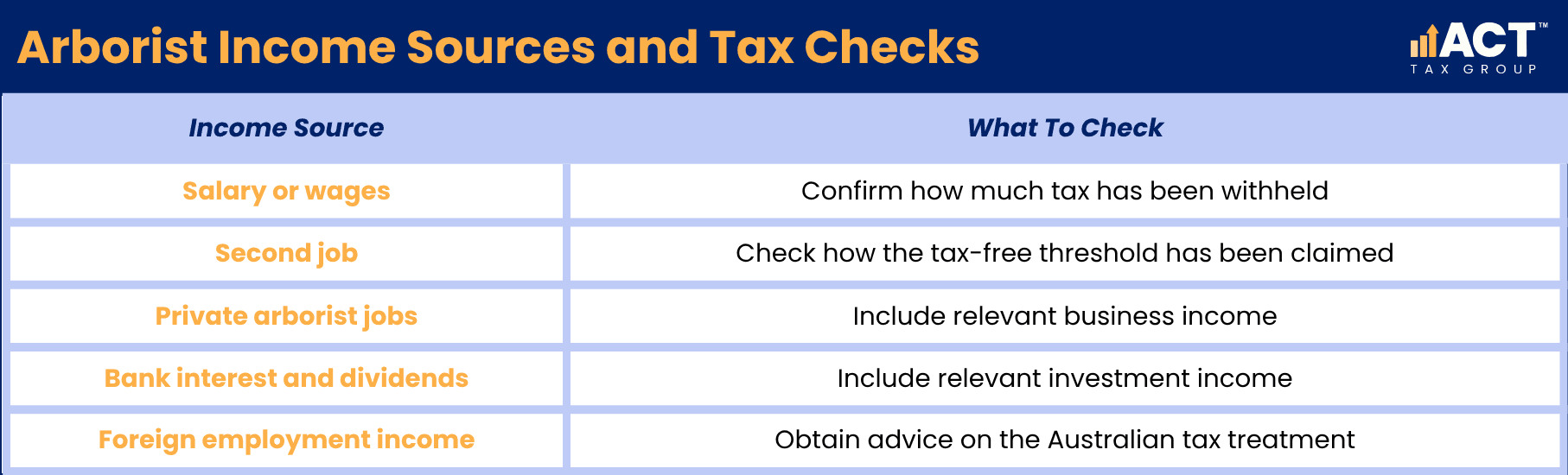
Income for tax purposes can extend beyond your regular salary or wages. Depending on your circumstances, employment income, business income, interest, dividends, investment income and other assessable amounts may contribute to your Australian income tax position. If your private arborist work is being carried on as a business and you operate as a sole trader, you generally include the business income and allowable expenses in your individual tax return. A sole trader does not receive a separate tax-free threshold from the threshold applying to the individual.
Multiple Jobs Require Careful Threshold Management
If you work two jobs or have multiple employers, you generally claim the tax-free threshold from one employer rather than every payer. This is commonly the employer paying the highest salary or wages, although the right approach can depend on your circumstances. Claiming the tax-free threshold from more than one employer can result in too little tax being withheld where your combined income exceeds $18,200. If you are certain your total income for the financial year will be $18,200 or less, you can generally claim the tax-free threshold from more than one payer.
Example: Moving To a New Job
An arborist may leave one employer halfway through the financial year and begin a new job a few weeks later. Claiming the tax-free threshold with the new employer does not normally mean you are claiming it from two employers at the same time, provided the employment periods do not overlap. Keeping your employment records current helps ensure the tax withheld during the year reflects your changing circumstances as closely as possible.
Setting Aside Tax from Arborist Side Income
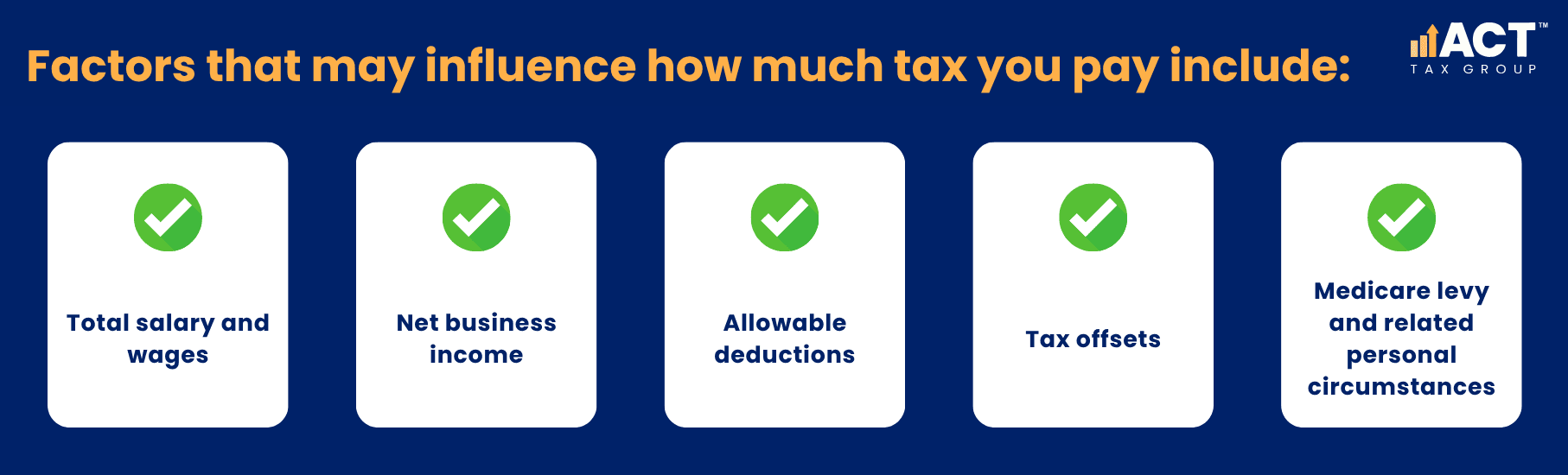
There is no single flat amount that suits every arborist earning side income. How much tax you may need to pay depends on total taxable income, allowable deductions, tax rates, relevant tax offsets, your Medicare levy position and other personal circumstances. As taxable income rises, some additional income may fall within a higher marginal tax rate. This does not mean all your income is taxed at that higher rate because Australian income tax rates apply progressively to different portions of taxable income.
Tax Statistic: The Medicare levy is generally calculated at 2% of taxable income, although reductions and exemptions may apply depending on your income and circumstances. A percentage that works for one taxpayer may not work for another. Estimating your full-year position provides a more useful basis for deciding how much money to keep aside from private arborist work.
Regular Tax Checks Help Prevent Withholding Shortfalls
Start with your expected income for the entire financial year. Add your salary and wages to your expected taxable business profit, then compare your estimated tax obligations with the amount of tax withheld and other payments already made. This check can be particularly useful for arborists because tree work often changes during the year. Storm clean-up, construction activity, seasonal pruning and strong private demand can increase income quickly, making an estimate prepared several months earlier less reliable.
Example: Private Work Expands During the Year
An employed arborist initially expects to complete only a few private jobs each month. By January, referrals have increased and the side business is producing regular income. Instead of waiting until tax time, the arborist reviews their combined income and begins keeping more money aside for tax. This provides a clearer view of the money actually available for equipment, household costs and other business expenses.

PAYG Instalments Can Support Growing Business Income
Pay As You Go (PAYG) instalments involve making payments during the year towards expected income tax. They can help taxpayers with regular business or investment income manage tax progressively rather than dealing with the entire amount after lodging the annual tax return. The Australian Taxation Office (ATO) will generally enter an individual or sole trader into the PAYG instalment system automatically when all three conditions are met: instalment income of $4,000 or more from the latest tax return, tax payable of $1,000 or more on the latest notice of assessment and estimated notional tax of $500 or more.
PAYG instalments can help with:
Spreading tax payments throughout the income year
Reducing the risk of a large tax bill
Keeping tax money separate from everyday spending
Managing seasonal business income
Planning business cash flow more consistently
Accurate Records Support Reliable Tax Calculations
Keeping business records separate from personal spending can help you understand how much income your side business is actually generating. It also makes it easier to calculate taxable income and support legitimate deductions when your tax return is prepared. This is particularly relevant for arborists because work can involve vehicles, chainsaws, climbing equipment, protective equipment, fuel, insurance and other operating costs. Whether an expense can be claimed depends on the circumstances and its connection to earning assessable income, so not every purchase connected with work will automatically be fully deductible. Accurate records also make it easier to estimate whether you could receive a tax refund or owe more tax when your return is completed.
Grow your tree care business with Accounting Built for Arborists
From start-up to expansion, our accounting team supports your tax, payroll, and cash flow — so you can focus on running your business safely and profitably.
Income Changes Should Trigger a Tax Review
A tax-free threshold check is generally more useful when completed during the financial year rather than leaving everything until tax time. Review your position if you start a second job, begin regular private arborist work, operate as a sole trader, move to a higher salary or begin receiving more investment income. Seasonal income makes these checks particularly useful for arborists. A strong period of removals, council work, storm response or private jobs can increase total income quickly, and reviewing your figures early gives you more time to prepare for the resulting tax obligations. Useful review points include:
Starting a new or second job
Beginning regular private work
Increasing business activity
Receiving a significant salary increase
Approaching the end of the financial year
Tax Planning Supports Better Arborist Cash Flow
Tax planning is closely connected to cash flow when you earn wages and side-business income. Money received from a private tree job may appear available to spend, but part of that income may eventually be needed to meet income tax and other business obligations. Setting aside money progressively can make those obligations easier to manage. It can also give you a more realistic picture of how much cash remains available for equipment replacement, insurance, fuel, wages and other costs involved in running an arborist business.

How ACT Tax Group Can Help with Tax-Free Threshold Checks for Arborists
We can review your wages, business income, other income, tax withheld and expected taxable income to help you understand whether your current arrangements are likely to leave enough tax paid by the end of the financial year. We can also help you review multiple jobs, PAYG instalments, business deductions and changes in income so you have a clearer picture of your likely tax position. Our friendly, IPA-certified team provides practical Australian tax and accounting support without making the process unnecessarily complicated. Book a consultation with ACT Tax Group to review your tax-free threshold, combined income and side-business position before an unexpected tax bill places unnecessary pressure on your cash flow.

Lukasz Klekowski
Principal of ACT Tax Group, specialising in tax compliance and financial strategy for Australian small businesses.

Disclaimer: All information provided in this publication is of a general nature only and is not personal financial or investment advice. It does not take into account your particular objectives and circumstances. No person should act on the basis of this information without first obtaining and following the advice of a suitably qualified professional. To the fullest extent permitted by law, no person involved in producing, distributing or providing the information in this publication (including ACT TAX GROUP PTY LTD, each of its directors, councilors, employees and contractors and the editors or authors of the information) will be liable in any way for any loss or damage suffered by any person through the use of or access to this information. The Copyright is owned exclusively by ACT TAX GROUP PTY LTD (ABN 31634338088)