

Should Your Plumbing Business Use a Discretionary Trading Trust? Pros and Cons Explained
Published on November 18, 2025
Running a plumbing business in the ACT brings day-to-day worries about protecting family assets, managing business risks, and facing tax obligations every financial year. Many business owners are asking if a discretionary trading trust or even a family trust structure might help take the pressure off, especially when dealing with complicated issues like income tax and succession planning.
Understanding Discretionary Trading Trusts for Plumbers
Setting up a discretionary trading trust means creating a legal relationship between you, a trustee company, or a corporate trustee and your eligible beneficiaries—often family members or trusted business partners. The trust is a legal entity, and the trustee has control over the trust assets and the bank account used for business activities.
Each year, the trustee decides how to distribute trust income and business profits. These distributions can go to different beneficiaries, helping you make the most of tax benefits and plan for the future of your business. All decisions are made within the boundaries of your trust deed, a legal document that sets the rules for how the trust runs.
Protecting your family assets from business risk?
Schedule a complimentary consultation with us today to set up the right trust structure for asset protection.
Trust Structure Basics
The trust deed is the legal agreement that outlines how trust property, assets, and trust income are managed. You start the trust with a settled sum, and ongoing compliance—like annual tax returns, business activity statements, and proper use of a dedicated bank account—keeps everything running smoothly.
Asset Protection
When your business assets—like vehicles, tools, and equipment—are held by the trust instead of in your personal name, your family assets are better protected. This asset protection strategy can help shield your family from financial loss if your business runs into legal or financial troubles. With a discretionary trust structure, plumbing businesses can keep their business assets separate from their family group assets, making it easier to manage risk and plan for the long term.
Making Sense of Business Structures and Tax Advantages
Deciding how to structure your plumbing business affects everything from tax savings to who pays tax on profits. Traditional options like sole trader, trading company, or partnership are straightforward, but a discretionary trust offers unique benefits for business owners.
Income Distribution Flexibility
Trustees can distribute trust income to family members who pay tax at lower rates. This flexibility in profit distribution can lead to real tax savings and better management of your overall tax liabilities. Using proper trust income distribution, you can also handle personal guarantees and business risks more effectively.
Capital Gains Tax Consideration
If assets held by the trust are sold after a qualifying period, eligible beneficiaries might access a discount on Capital Gains Tax. Knowing these rules is important, especially for family businesses planning succession or winding down a deceased estate.
Tax Benefits and Compliance
Setting up a trust structure means you need to register an Australian Business Number and Tax File Number just for the trust. The trust’s bank account is used only for business and trading activities, making your record-keeping cleaner and your compliance easier. For ACT plumbers, using a discretionary trust can make it simpler to keep track of paperwork, pay tax on business income, and benefit from tax advantages that may not be available to sole traders or partnerships.

Step-by-Step: Creating and Running a Discretionary Trust
Moving your plumbing business to a discretionary trust structure involves several steps. Getting this right helps your business meet legal and tax obligations year after year.
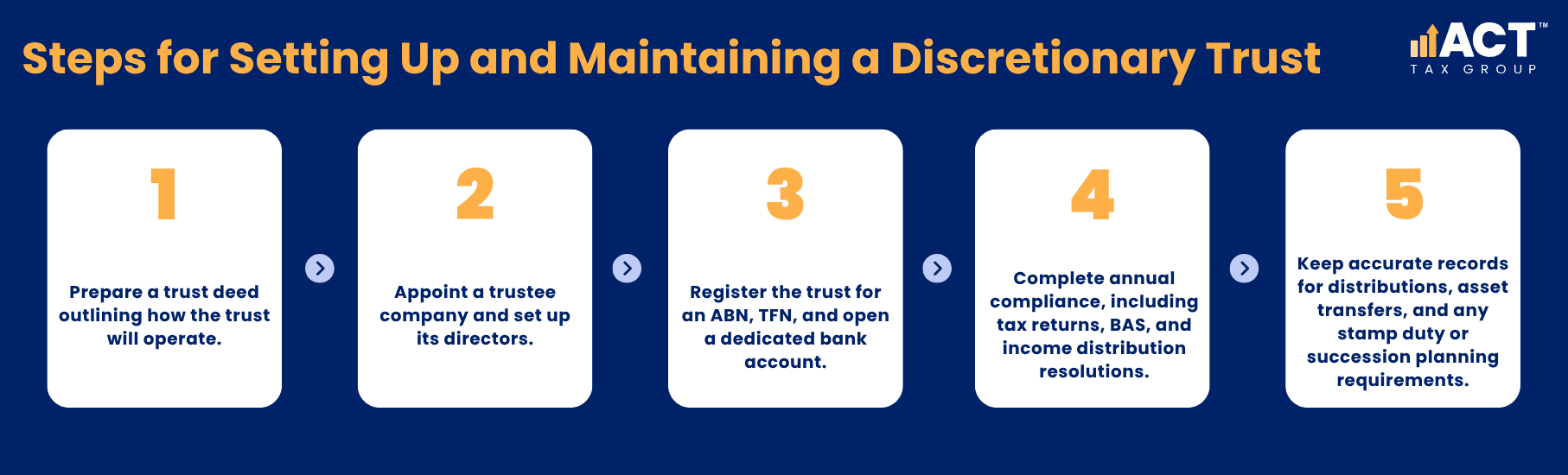
Start by preparing a trust deed that covers how fixed interest, trust property, and distributing assets will be managed. Then, appoint a trustee company (with company directors) to oversee trust assets. Register for an Australian Business Number and Tax File Number and open a dedicated bank account for trust income and business activity.
Annual compliance means you’ll need to lodge tax returns for the trust, prepare Business Activity Statements (BAS), and resolve each year how trust income is divided up. If you’re distributing trust income between family group members or considering testamentary trust options, recordkeeping is vital.
Stamp duty may apply if you transfer property into the trust, and succession planning ensures your family business can keep running smoothly if circumstances change.
Pros of Discretionary Trading Trusts for Plumbers
Business owners choose discretionary trust structures for practical reasons that go beyond paperwork. Here’s where they shine:
Protecting Family and Business Assets
Turning business assets into trust assets means greater protection for your family. If your plumbing business faces legal claims or unexpected financial loss, assets held by the trust are shielded from some risks tied to personal asset ownership.
More Control Over Income Distribution
The trustee can distribute income to beneficiaries based on the most tax-effective arrangement each year. This flexibility helps you deliver income tax savings and ensure the right family members benefit from your hard work.
Succession and Growth
A trust structure supports smoother succession planning. Whether you want to retire, help family members take over, or reorganise your business interests, the legal document underpinning your trust keeps the transition manageable.
Capital Gains Tax Benefits
Beneficiaries may receive discounts on Capital Gains Tax for assets held and sold through the trust, provided compliance steps are followed.

Cons and Considerations for ACT Plumbing Businesses
While discretionary trading trusts offer real opportunities, there are drawbacks to weigh before jumping in.
Cost and Admin Effort
Setting up and running a discretionary trust usually costs more than a sole trader or standard company. Annual tax returns, additional compliance, and legal agreements require time, attention, and professional advice.
Losses Stay in the Trust
If your business runs at a loss, you can’t immediately use that loss to offset other personal or business income. Losses remain in the trust, only useful against future trust profits.
Finance and Paperwork Challenges
Lenders may ask for personal guarantees or reject loans if business assets are held by a trust. You also have to manage ongoing compliance and paperwork, including trust resolutions by the end of each financial year.
Complexity for Small Operators
For small business owners handling limited trading activities, a discretionary trust may be more structure than you need and can complicate basic financial management.
Alternatives to Discretionary Trading Trusts for Plumbers
If a discretionary trust isn’t right for your plumbing business, there are other business structure options.
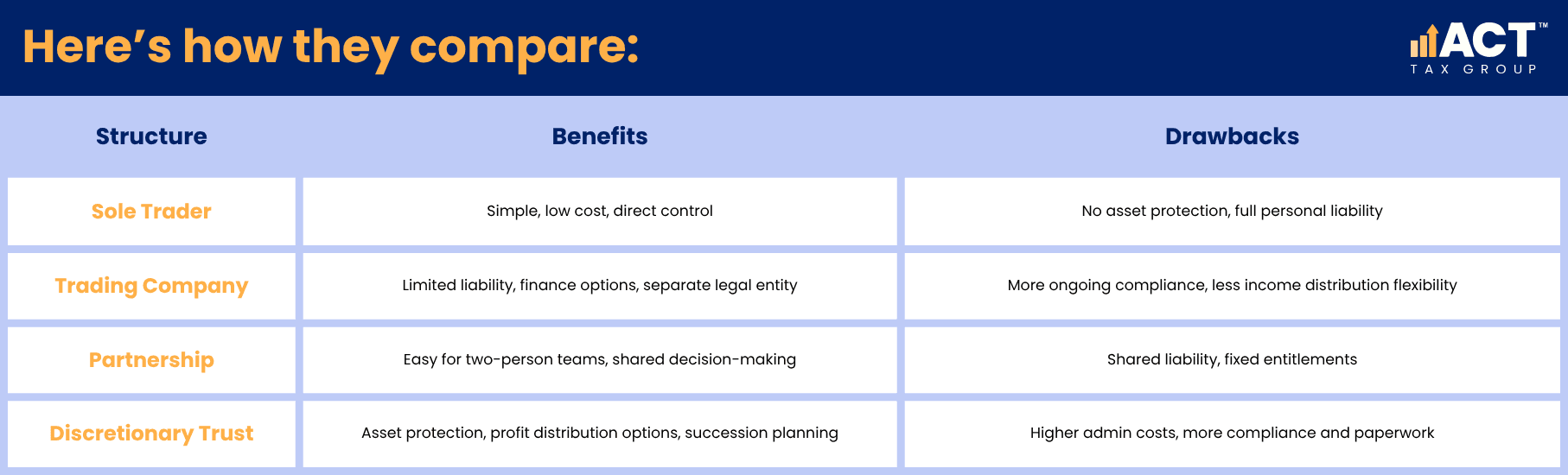
Other structures—such as fixed trust or testamentary trust—are useful in special cases, such as distributing assets after death or investment-focused businesses.
Making an Informed Decision: Key Takeaways
Deciding if a discretionary trading trust is right for your plumbing business means weighing the control it offers against the responsibilities and costs involved. Asset protection, income distribution flexibility, and succession options are clear benefits, but you’ll need to accept higher compliance, careful management, and the need for ongoing professional advice.
Seek advice from an experienced accountant or trusted adviser before making changes to your business structure and always consider whether your business activities and future goals match the features of the trust structure you choose.
Conclusion
A discretionary trust structure may offer big benefits for business owners looking to protect family assets, manage risk, and plan ahead for growth and succession. With potential tax benefits, asset protection, and profit distribution tools, it gives ACT plumbing businesses strong options for building a resilient future. But because there are real costs and complex rules to manage, speaking with an accountant ensures you make the right decision for your unique situation. By understanding your business risks, tax obligations, and operational needs, you’ll put your business—and family group—on a safer, smarter path.

Lukasz Klekowski
Principal of ACT Tax Group, specialising in tax compliance and financial strategy for Australian small businesses.

Disclaimer: All information provided in this publication is of a general nature only and is not personal financial or investment advice. It does not take into account your particular objectives and circumstances. No person should act on the basis of this information without first obtaining and following the advice of a suitably qualified professional. To the fullest extent permitted by law, no person involved in producing, distributing or providing the information in this publication (including ACT TAX GROUP PTY LTD, each of its directors, councilors, employees and contractors and the editors or authors of the information) will be liable in any way for any loss or damage suffered by any person through the use of or access to this information. The Copyright is owned exclusively by ACT TAX GROUP PTY LTD (ABN 31634338088)