

Step-by-Step Guide: How Australian Electricians Can Calculate Their Medicare Levy
Published on November 24, 2025
Knowing how to calculate your Medicare Levy gives electricians in ACT a clear path to planning for tax time and avoiding nasty surprises. When your annual taxable income changes, or personal circumstances shift with new members in your family, you want straightforward answers, so your business cash flow isn’t thrown off by how much tax you end up owing.
Why Calculating Medicare Levy Is Essential for Electricians
Working in the electrical trade, annual income often varies depending on contracts and busy periods. On top of paying income tax, it’s essential to pay the Medicare Levy as part of your tax return so you’re covered if you end up in hospital or need medical services. The levy is calculated using your annual taxable income, and it increases once you go above certain income thresholds.
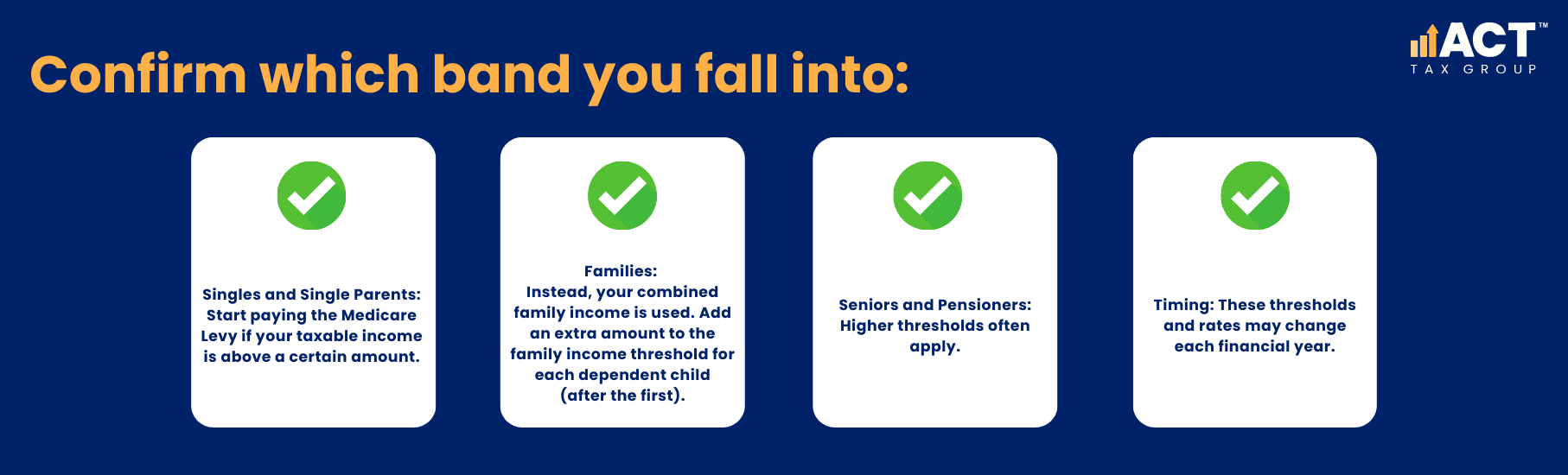
For families, the family income threshold affects the calculation. If you’re a single parent or have a spouse and dependent children, the rules change, sometimes allowing you to pay less tax or even be exempt. Staying up to date with the ATO website ensures you know how much tax to put aside and when private health insurance or hospital cover will help you avoid paying the Medicare Levy Surcharge.
Struggling to figure out if changing income or dependents affects your tax?
Schedule a complimentary consultation with us today to clarify how personal changes impact ATO obligations.
What Is the Medicare Levy Surcharge (MLS) and How Does It Affect Electricians?
Electricians whose annual income or combined family income crosses a certain amount and don’t hold private hospital cover must consider the Medicare Levy Surcharge. Calculations for the surcharge are made by the Australian Taxation Office, with rates applying on top of the levy. During periods when your private health insurance lapses or is only extras cover, how much extra tax you pay changes. Making sure you hold private hospital insurance for the full financial year at the appropriate level avoids paying extra tax.
The Australian government rebate can make private hospital cover and combined hospital plans more affordable, which helps keep costs down. To estimate your savings or liability, you can use a Medicare Levy Surcharge calculator before tax time.

Step-By-Step Medicare Levy Calculation for Electricians
In this section you’ll find a practical walk-through for sparkies wanting to avoid surprises and set aside just the right amount each quarter.
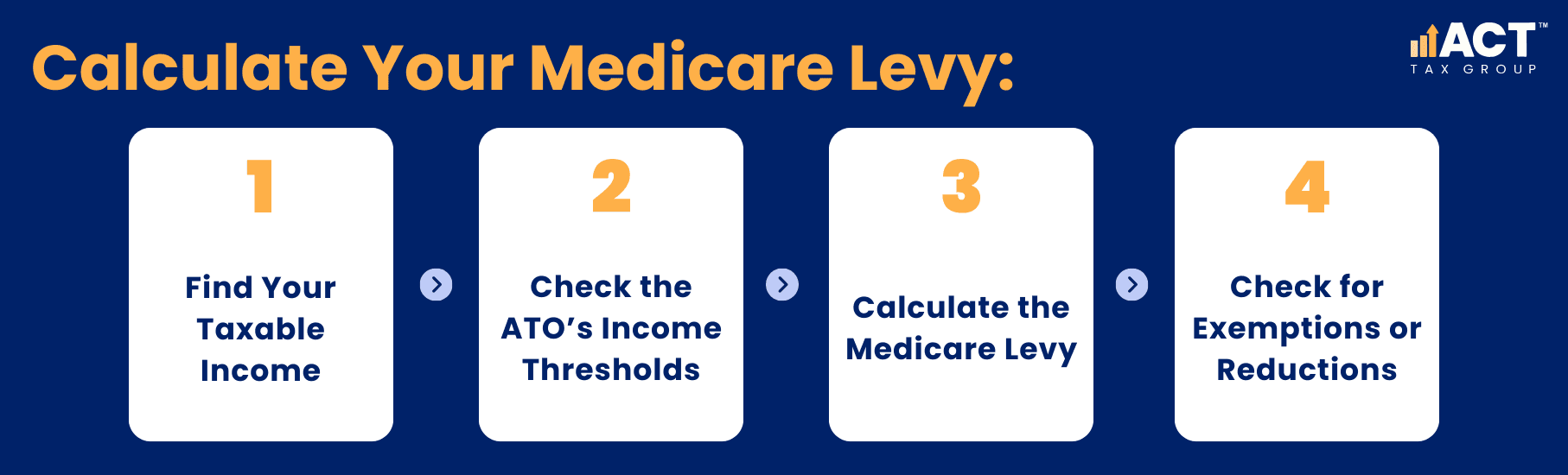
Step 1: Find Your Taxable Income
Start by adding up all income earned as an individual or business for the financial year in Australia. This includes wages or job payments, any rental or investment income, and super withdrawals or lump sums where applicable. Next, subtract all allowable deductions – transport, equipment, business insurance, and other legitimate business costs. The final number is your taxable income.
Step 2: Check the ATO’s Income Thresholds
Visit the ATO website’s Medicare Levy page and review the latest thresholds.
Step 3: Calculate the Medicare Levy
If your income is above the threshold, multiply your taxable income by the Medicare Levy rate for the year.
Medicare Levy=Taxable Income×2%
If you’re in the low-income phase-in band, ATO guidance gives a formula for those who only pay a partial levy based on the amount their income exceeds the low-income threshold.
Step 4: Check for Exemptions or Reductions
If you (or eligible members of your family) meet certain criteria, you may not have to pay the Medicare Levy (exempt), or your rate could be reduced. Look for exemptions due to foreign residency, or reductions for income below the thresholds.
If you want clearer boundaries between your personal and business assets, start the conversation today. Reach out to ACT Tax Group to talk through practical ways to improve your structure
Takeaways
If you are deciding between sole trader business structure and company business structure, consider the right business structure for not just your current needs but also your future ambitions. Ask yourself how much personal risk you are comfortable with and whether you need limited liability as your business operates and grows.
Power up your business with Accounting Built for Electricians
From start-up to expansion, our accounting team supports your tax, payroll, and cash flow at every stage of growth.
Personal Circumstances and Income Change
Income for many electricians in the ACT moves up and down with the work seasons, accidents, and business growth. It’s important to watch for changes such as having a child after the first, spouse changing jobs, or adding new members. You’ll need to recalculate for the correct tax, levy, and surcharge, making adjustments for dependent children or updates in your hospital cover.
If your situation gets more complicated, reach out for further information from your accountant or check the ATO website. Being clear on how to calculate your position, and using available calculators, helps you stay eligible for reductions or exemptions—protecting your money and your business over the long haul.

Conclusion
Electricians who understand how to calculate the Medicare Levy and Surcharge are better equipped to manage their account, forecast future costs, and keep more money as the business grows. Whether your circumstances involve single parenting, family income threshold issues, holding private health insurance or working out the cost of hospital or ambulance cover, making these calculations correctly ensures peace of mind and a more reliable outcome at tax time.
Stay current with the ATO website and official updates; use calculators when needed; and seek professional advice whenever major life changes, cover changes, or income spikes affect your position. Planning like this means fewer surprises from the ATO and a smoother ride for your electrical business.

Lukasz Klekowski
Principal of ACT Tax Group, specialising in tax compliance and financial strategy for Australian small businesses.

Disclaimer: All information provided in this publication is of a general nature only and is not personal financial or investment advice. It does not take into account your particular objectives and circumstances. No person should act on the basis of this information without first obtaining and following the advice of a suitably qualified professional. To the fullest extent permitted by law, no person involved in producing, distributing or providing the information in this publication (including ACT TAX GROUP PTY LTD, each of its directors, councilors, employees and contractors and the editors or authors of the information) will be liable in any way for any loss or damage suffered by any person through the use of or access to this information. The Copyright is owned exclusively by ACT TAX GROUP PTY LTD (ABN 31634338088)