

How Bookkeeping Helped an Electrician Stay on Top of Job Costs
Published on October 8, 2025
Running an electrical contracting business involves juggling multiple projects, tracking material costs, managing labour expenses, and staying compliant with your tax obligations. When you’re crawling through roof spaces or troubleshooting complex electrical issues, the last thing you want to worry about is whether you’re making a profit on each job or if you’ll have enough cash flow to meet your Business Activity Statement deadlines.
Facing similar challenges with your cash flow? Let us help you find a solution that keeps your electrical business running smoothly.
Job Cost Challenges for Electrical Contractors
Meet Dave (not real client’s name), a licensed electrician who had been running his contracting business as a sole trader for six years. Like many tradies across different industries, Dave was excellent at his craft but struggled with the business management side of his operations.
Dave’s primary challenge centered around accurate job costing and cash flow management. His business finances were in disarray, and he found himself in a common predicament that affects many electrical contractors across Australia.
Power up your business with Accounting Built for Electricians
From start-up to expansion, our accounting team supports your tax, payroll, and cash flow at every stage of growth.
Losing Track of Financial Transactions and Material Costs
Dave would start a job with a rough estimate in his head, but as projects progressed, he often lost track of the actual costs involved. Emergency trips to the electrical wholesaler, unexpected material requirements, and additional labour hours were eating into his profit margins without him realising it.
Every small purchase—switches, cable, circuit breakers, or even fuel for site visits—wasn’t being properly recorded as business transactions. Without proper source documents or a systematic approach to recording financial transactions, Dave couldn’t accurately determine which projects were profitable and which ones were actually costing him money.
His accounts payable were becoming difficult to manage, with supplier invoices scattered across his van, office, and kitchen table. Accounts receivable weren’t tracked systematically either, meaning Dave often forgot to follow up on overdue payments from clients.
Inadequate Financial Records and Reporting
Dave’s financial records were incomplete and disorganised. He relied on shoeboxes full of receipts and a basic spreadsheet that he updated sporadically. This poor record keeping meant he had no easy access to important financial information when he needed it most.
Without proper financial reports, Dave couldn’t assess his business’s financial performance or financial health. He had no clear picture of his balance sheet position or understanding of how different types of jobs impacted his overall profitability.
The lack of proper bookkeeping systems also made preparing tax returns a nightmare. Every year, Dave would spend weeks trying to reconstruct his financial data, often missing legitimate deductions because he couldn’t locate the necessary documentation.
BAS Deadlines Creating Cash Flow Pressure
Australia’s quarterly BAS system added another layer of complexity to Dave’s financial challenges. With BAS deadlines falling on the 28th of October, February, April, and July, Dave often found himself scrambling to gather the necessary funds to meet his tax obligations.
The problem wasn’t just about having the money—it was about timing. Dave would complete large projects but wouldn’t receive payment for several weeks, creating gaps between when his BAS payments were due and when his cash flow would improve.
Missing BAS deadlines would result in BAS penalties, and these penalties were money that could have been reinvested into growing his business. Dave realised he needed professional bookkeeping services to get his business finances under control.

How ACT Tax Group Helped: Implementing Systematic Financial Management
When Dave approached our team, we recognised that his challenges weren’t unique to his business. Many electrical contractors and small businesses face similar issues with financial management and business bookkeeping.
Our approach focused on creating bookkeeping systems that would work within the realities of running a hands-on electrical business.
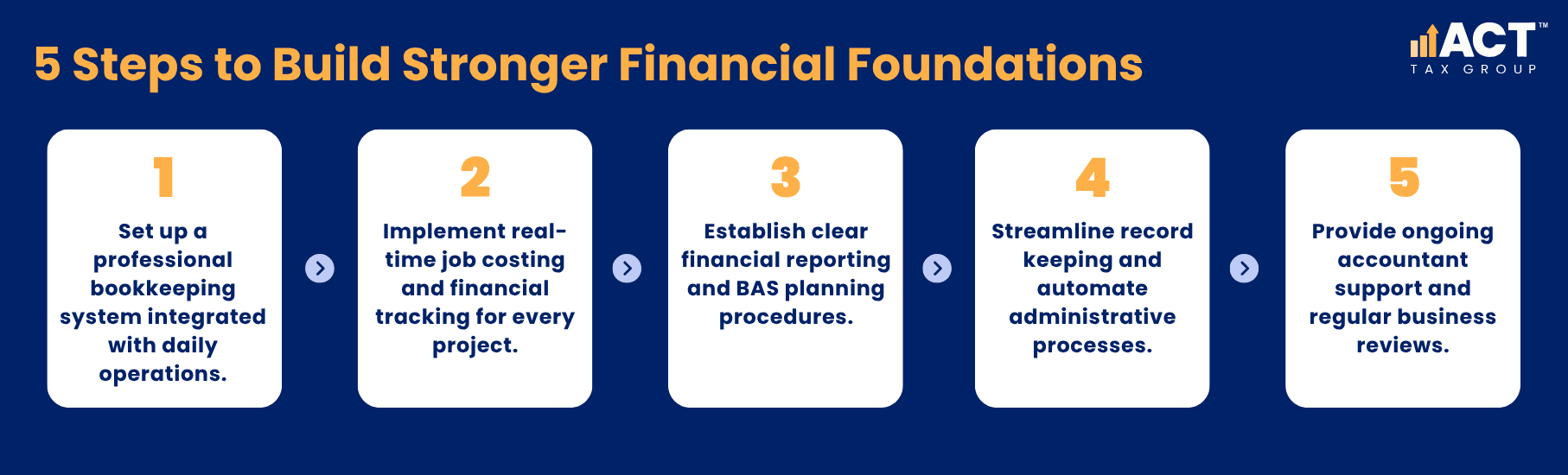
Setting Up Professional Bookkeeping Systems
We helped Dave implement a comprehensive bookkeeping system that could handle all aspects of his financial transactions. This included setting up proper source documents processes, implementing a double entry bookkeeping system, and establishing clear procedures for recording journal entries.
Our bookkeeping team worked with Dave to set up an accounting system using modern bookkeeping software that would integrate seamlessly with his business operations. The system was designed to capture all business transactions as they occurred, rather than trying to reconstruct financial data after the fact.
We established procedures for data entry that would ensure all financial information was recorded accurately and kept up to date. This included setting up systems for managing petty cash, conducting regular bank reconciliation, and maintaining proper documentation for all business expenses.
Implementing Real-Time Job Costing with Financial Controls
The new accounting system allowed Dave to track project costs in real-time, with each job treated as a separate cost center. This meant he could see exactly how much each project was costing in materials, labor, and overhead as work progressed.
We helped Dave understand the importance of recording all business transactions against specific jobs, giving him clear visibility into which types of electrical work were most profitable for his business. The system tracked everything from material purchases to travel time, ensuring nothing fell through the cracks.
The bookkeeping process now included proper journal entry procedures for allocating costs to specific projects, making it easy to generate accurate financial reports for each job upon completion.
Creating Comprehensive Financial Reporting and BAS Planning
Our registered BAS agent worked with Dave to establish a rolling cash flow forecast that looked at least three months ahead. This forecast took into account his typical project timelines, payment terms with clients, and upcoming BAS obligations.
We helped him understand the timing of his quarterly BAS requirements and plan accordingly. Instead of being surprised by tax deadlines, Dave could now anticipate these payments and ensure adequate cash reserves were available.
The new financial statements provided Dave with regular insights into his business’s financial performance, including detailed profit and loss reports, balance sheet information, and cash flow analysis.
Ready to implement this strategy? Contact ACT Tax Group today to discuss a tailored approach for your electrical business.
Simplifying Record Keeping and Administrative Processes
We established comprehensive record keeping systems that separated business and personal expenses clearly, making it easier to track deductible business costs and maintain accurate financial records. This separation was crucial for both tax compliance and understanding true business profitability.
The new system automated much of the routine bookkeeping duties, reducing the administrative burden on Dave while improving accuracy. Regular bank reconciliation procedures ensured that all financial transactions were properly recorded and matched to supporting documentation.
We also implemented systems to ensure Dave had easy access to all his financial data whenever needed, whether for tax returns, loan applications, or business planning purposes.
Working with Qualified Accountants and Professional Services
As part of our comprehensive approach, Dave now had access to qualified accountants and registered tax agents who could provide ongoing business advice and support. This included assistance with preparing tax returns, managing BAS obligations, and planning for business growth.
Our accounting firms provide ongoing support to ensure that Dave’s bookkeeping needs are met consistently, with regular reviews to identify opportunities for improvement and ensure compliance with all regulatory requirements.
The Outcome
The changes we implemented with Dave’s business created measurable improvements in both his financial management and overall business operations.
Better Project Profitability and Financial Visibility
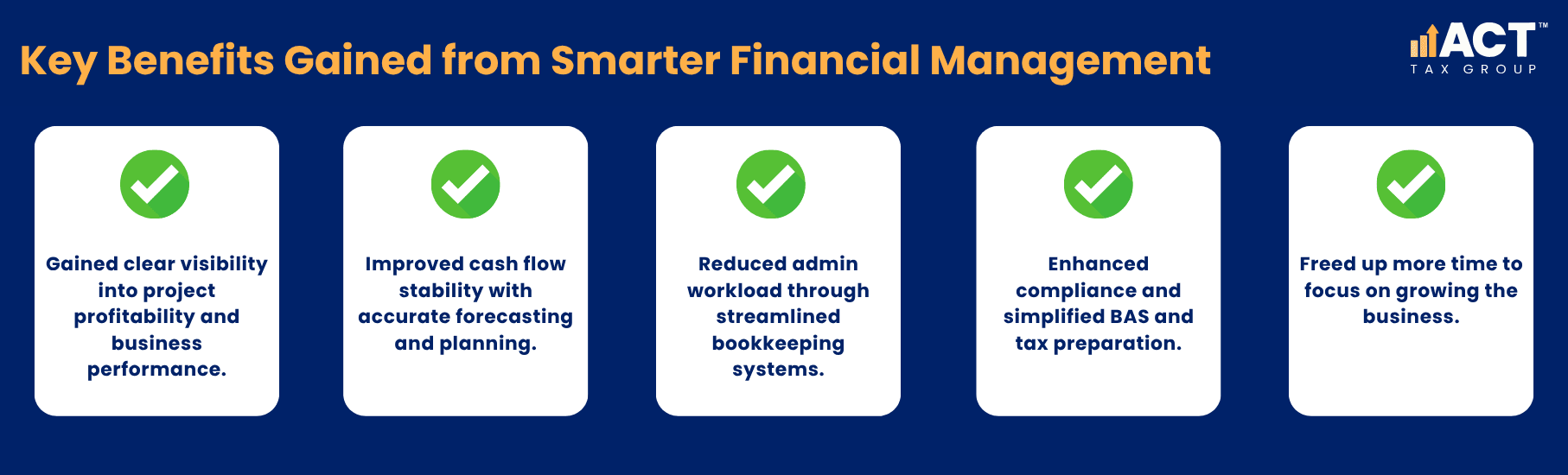
With accurate job costing in place, Dave could identify which types of projects were most profitable for his business. The detailed financial reports showed him exactly how much each job contributed to his bottom line, taking into account all direct and indirect costs.
Dave discovered that some jobs he thought were profitable were actually operating at thin margins, while others he had undervalued were generating strong returns. This visibility allowed Dave to adjust his pricing strategies and focus his marketing efforts on the most profitable types of electrical work.
The new financial statements provided regular insights into his business’s financial health, helping Dave make informed decisions about business growth and investment opportunities.
Smoother Cash Flow Management and Financial Control
The cash flow forecasting system helped Dave anticipate potential shortfalls and plan accordingly. He was no longer caught off guard by BAS deadlines or unexpected expenses, and his business finances became much more predictable and manageable.
Dave could now schedule his work and manage client payment terms in a way that supported consistent cash flow throughout the year, rather than experiencing the feast-or-famine cycles that had previously characterised his business operations.
The improved accounts receivable management meant Dave was collecting payments faster, while better accounts payable procedures helped him take advantage of early payment discounts from suppliers.
Reduced Administrative Burden and Improved Compliance
By implementing proper bookkeeping systems and procedures, Dave significantly reduced the time spent on administrative tasks. He no longer needed to reconstruct project costs or scramble to gather financial information for BAS reporting or preparing tax returns.
This efficiency gain meant Dave could focus more time on revenue-generating activities and spend less time dealing with paperwork and financial administration. The professional bookkeeping services handled much of the routine data entry and financial reporting, freeing Dave to concentrate on growing his business.
The systematic approach to recording financial transactions and maintaining proper documentation also meant that preparing tax returns became a straightforward process rather than an annual ordeal.
Take control of your cash flow today and see how professional bookkeeping services can transform your electrical contracting business.
Key Takeaways for Electrical Contractors and Small Business Owners
Dave’s experience highlights several important lessons that apply to electrical contractors and small businesses across Australia.
Implement Comprehensive Bookkeeping Systems
Tracking project costs as they occur, rather than trying to reconstruct them later, provides much more accurate profitability data. A proper accounting system with real-time financial reporting helps you make informed decisions about pricing, project selection, and resource allocation.
Professional bookkeeping services can handle the complex aspects of financial management while you focus on running your business. This includes maintaining accurate financial records, conducting regular bank reconciliation, and ensuring all business transactions are properly documented.
Maintain Accurate Financial Records and Reports
Proper record keeping is essential for understanding your business’s financial performance and ensuring compliance with tax obligations. Regular financial statements provide valuable insights into your business’s financial health and help identify areas for improvement.
Having easy access to accurate financial data makes it easier to secure business financing, plan for growth, and make strategic decisions about your business operations.
Overwhelmed by tax time and missing legitimate deductions?
Schedule a complimentary consultation with us today to ensure complete, audit-ready financial records.
Plan for BAS Obligations and Tax Requirements
Understanding your quarterly BAS deadlines and planning cash flow accordingly can prevent costly penalties and reduce financial stress. Working with registered tax agents and qualified accountants ensures you meet all compliance requirements while maximising available deductions.
Consider setting aside funds throughout the quarter rather than trying to find large amounts when payments are due. Proper cash flow management helps ensure you always have adequate resources to meet your obligations.
Utilise Technology and Professional Support
Modern bookkeeping software can automate many routine tasks and provide real-time insights into your business performance. The time invested in setting up proper systems pays dividends in reduced administrative burden and better financial control.
Working with experienced accounting firms provides access to professional expertise and ensures your bookkeeping needs are met consistently. This support is particularly valuable for sole traders and small businesses that may not have dedicated financial management resources.
Ready to transform your electrical business with professional bookkeeping support? Contact ACT Tax Group to discover how we can help you stay on top of your job costs and improve your business finances.

Lukasz Klekowski
Principal of ACT Tax Group, specialising in tax compliance and financial strategy for Australian small businesses.

Disclaimer: All information provided in this publication is of a general nature only and is not personal financial or investment advice. It does not take into account your particular objectives and circumstances. No person should act on the basis of this information without first obtaining and following the advice of a suitably qualified professional. To the fullest extent permitted by law, no person involved in producing, distributing or providing the information in this publication (including ACT TAX GROUP PTY LTD, each of its directors, councilors, employees and contractors and the editors or authors of the information) will be liable in any way for any loss or damage suffered by any person through the use of or access to this information. The Copyright is owned exclusively by ACT TAX GROUP PTY LTD (ABN 31634338088)