

How an Electrician’s HECS Debt Impacts Your ATO Tax Obligations
Published on September 11, 2025
An electrician’s HECS debt influences your compulsory repayment amount each tax return, affecting how much you’ll pay from each pay cycle. Understanding ATO processes, repayment income calculations, and the option for voluntary repayments helps you manage your loan balance and cash flow.
What Is HECS-HELP and the Higher Education Loan Program?
HECS-HELP is part of the Australian Government’s higher education loan program that lets eligible students defer tuition fees at a higher education provider. When you study or training through a program covered by HECS-HELP or a training support loan, the Australian Taxation Office (ATO) tracks your loan account. Your loan balance grows by the indexation rate each year, which is tied to the wage price index and consumer price index.
Unsure how your HECS debt affects your tax return?
Schedule a complimentary consultation with us today to ensure correct ATO repayments and avoid surprises.
How Your Repayment Income Is Calculated
When you lodge your tax return, the ATO calculates your repayment income.
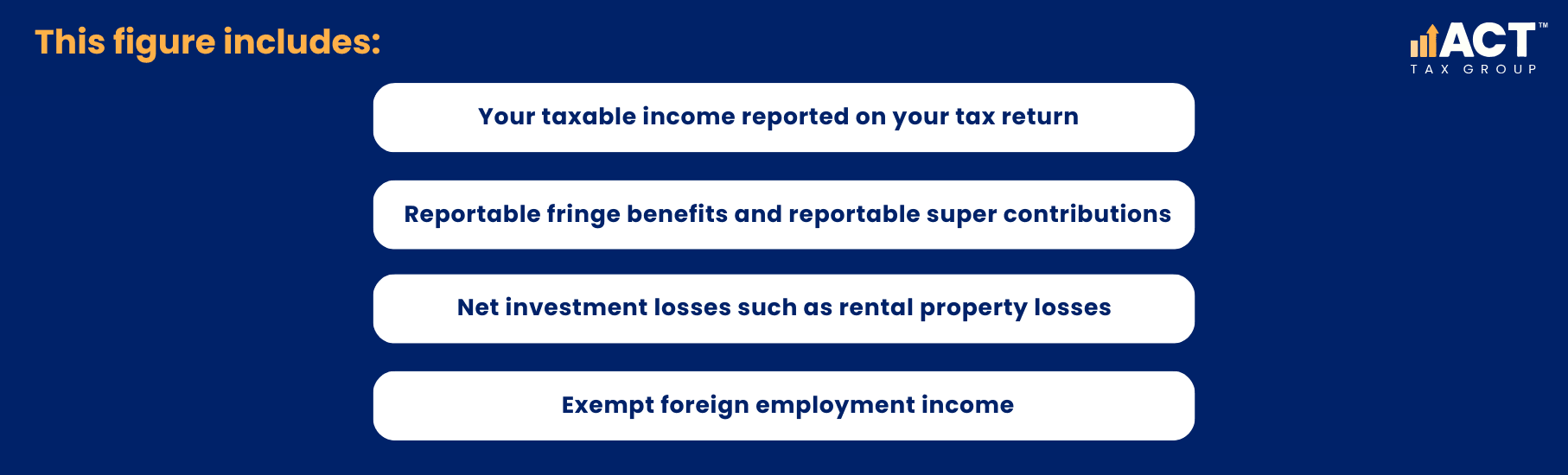
If your repayment income for June 2025 is above the threshold (currently $54,435), you must make a compulsory repayment. The rate starts at 1% and rises through the brackets up to 10% if your income is high enough.
Compulsory Repayment and Withholding by Your Employer
Once you notify your employer of your HELP debt via the TFN declaration or withholding declaration, they use ATO online services or your ATO account data to withhold extra amounts alongside PAYG tax. These withholdings cover compulsory repayments throughout your pay cycle so that by the end of the year your outstanding tax and HECS repayment are managed via your tax return.

Example Calculation for an Electrician in ACT
An electrician earning $95,800 per year has a repayment income above the threshold. At that level, the compulsory repayment rate is 5.5%. Your annual compulsory repayment would be 5.5% of $95,800, or about $5,269. Spread over 12 pays, that’s roughly $439 withheld each month.
Optional Strategies: Voluntary Repayments and Managing Loan Balance
Beyond compulsory repayments, you can make voluntary repayments through ATO online services or your myGov account. Voluntary repayments reduce your loan balance before the census date or end of financial year, saving you money on indexation. You can top up as a lump sum or set up regular transfers. These voluntary payments are applied directly to your HELP loan and reduce future compulsory repayments.

Maximising Deductions to Lower Repayment Income
As a small-business electrician, you can claim deductions for tools, vehicle expenses, training costs, and other work-related costs. By accurately tracking these expenses and entering them in your tax return, you lower your taxable income and therefore your repayment income. Use the Australian apprenticeship support and student financial supplement scheme details to find applicable deductions and ensure you access all available assistance.
Understanding Indexation and HELP Loan Limits
Each June, your loan balance is increased by an indexation rate that reflects the consumer price index. This ensures that the real value of your loan debt is maintained. Note also the HELP loan limit. If you’re supported by fee-help loans, the loan limit applies separately. Knowing these limits and the indexation rate helps you plan voluntary repayments.
Accessing ATO Online Services and Support
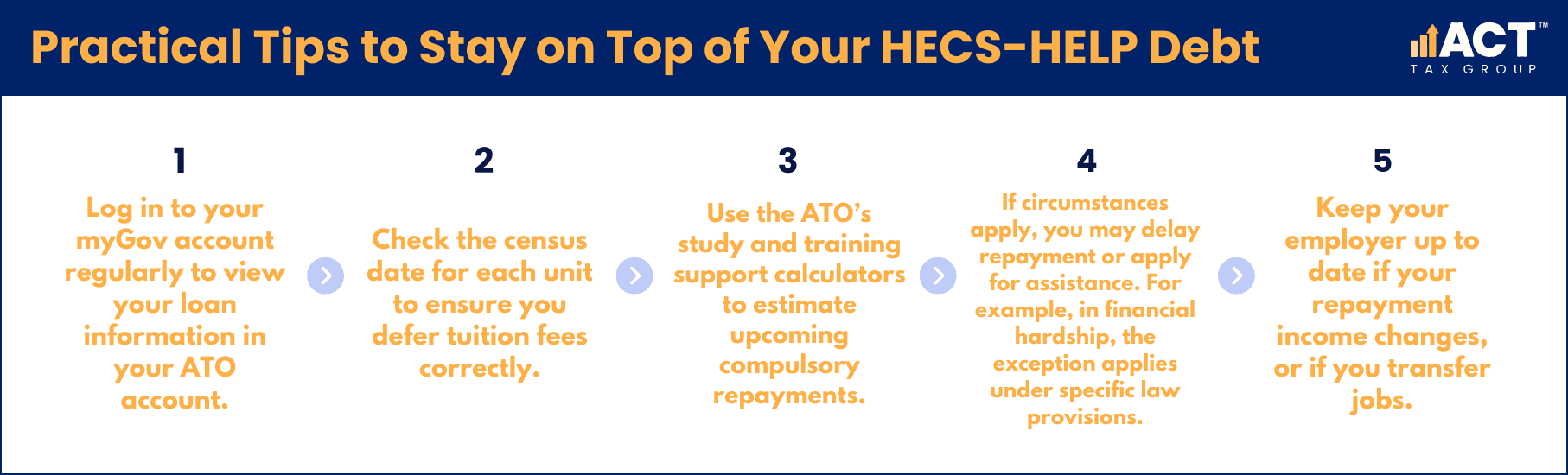
The ATO Indigenous badge on the portal shows tailored support. You can manage everything from your phone or computer: view your HELP loan, make voluntary repayments, update your details, and communicate with the ATO. If you need help, a chat option is available via web chat available press alt, or you can call for support from the Australian apprenticeship support team.
Conclusion
An electrician’s HECS debt shapes your tax return and pay cycle, determining how much you repay each month. By understanding compulsory repayments, planning voluntary repayments, and maximising deductions, you manage your loan balance effectively. Use the ATO online services and your myGov account to stay informed, keep on top of indexation, and reduce the impact of your HELP loan on your finances.

Lukasz Klekowski
Principal of ACT Tax Group, specialising in tax compliance and financial strategy for Australian small businesses.

Disclaimer: All information provided in this publication is of a general nature only and is not personal financial or investment advice. It does not take into account your particular objectives and circumstances. No person should act on the basis of this information without first obtaining and following the advice of a suitably qualified professional. To the fullest extent permitted by law, no person involved in producing, distributing or providing the information in this publication (including ACT TAX GROUP PTY LTD, each of its directors, councilors, employees and contractors and the editors or authors of the information) will be liable in any way for any loss or damage suffered by any person through the use of or access to this information. The Copyright is owned exclusively by ACT TAX GROUP PTY LTD (ABN 31634338088)