


How ASIC Late Fees Can Hurt Your Carpentry Business—and How to Avoid Them
Published on September 29, 2025
ASIC late fees can derail your cash flow faster than a broken chisels set, especially when your annual review fee slips past its due date. As a carpenter running an Australian company, missing your company’s annual review date means extra ASIC charges that eat into funds you need for timber, tools, and wages. Understanding how these fees work—and putting simple systems in place—will keep your business compliant and your bank balance in good shape.
Understanding ASIC Late Fees
Every dollar in your carpentry business has a job: to buy materials, cover insurance, or pay your apprentice. When ASIC adds late payment penalties, it reduces the funds available for these essentials. The consumer price index and fee indexation mean ASIC fees rise each financial year, so what was $85 last year is now closer to $100. Late lodgement fees on top of your annual review fee create a double hit—paying $329 for your review suddenly becomes $438 if you’re just one month late.
Worried about missing ASIC notices at the wrong address?
Schedule a complimentary consultation with us today to update and maintain accurate company details.
The Domino Effect on Job Budgets
Imagine you’ve set aside money for a deck installation, only to find your bank balance short because of ASIC charges. To cover the late fee, you might delay paying your supplier or reduce hours for your apprentice. That leaves you racing to catch up and juggling multiple payments—mailing invoices to clients, updating your company name on tools and vehicles, and chasing the next job just to stay afloat.
Simple Systems to Stay Compliant
You don’t need a fancy registered agent or specialist software. A clear schedule, routine checks, and payment options that work for you can keep ASIC off your back.
Use Calendar Alerts and Reminders
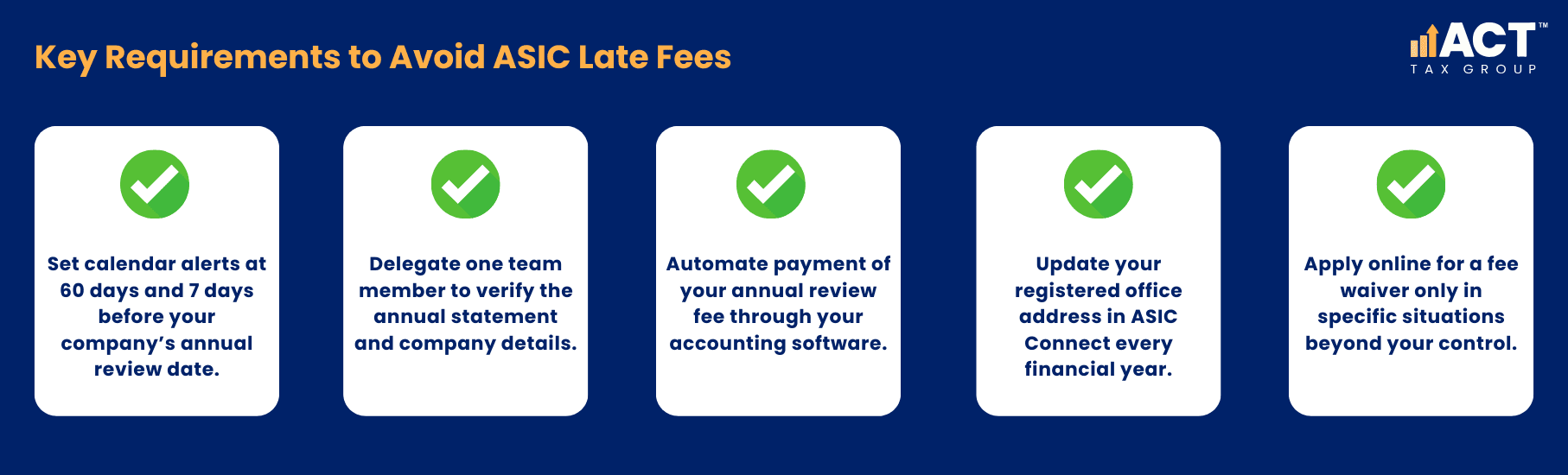
Set two reminders in your calendar: one at 60 days before your annual review date when you get the company annual statement, and another at 7 days before the due date. Whether you use Google Calendar, Outlook, or even a whiteboard in your workshop, sending reminders to yourself or your team ensures you won’t wait until it’s too late.

Delegate Responsibility
Assign one person—your bookkeeper, office manager, or a trusted crew member—to handle all ASIC correspondence. Their tasks include checking the annual statement, verifying company details, and scheduling the payment. With clear roles, no one wonders, “Who’s dealing with ASIC fees this year?” and tasks don’t slip between the cracks.
Automate Payments Through Your Accounting Software
Link your ASIC invoice to Xero or another accounting system. Create a dedicated expense account named “ASIC Annual Review Fee.” When the invoice arrives, tag it and set up an automatic payment on the due date. This cuts out human error and ensures your payment happens even if you’re on a remote job site with limited power or no internet connection.
Keep Your Registered Office Address Current
If ASIC can’t reach you because your address is old, you won’t see your annual statement until after the due date. Log into ASIC Connect at least once every financial year to confirm your address and company details. That simple check avoids extra late lodgement fees and ensures any notices arrive on time.
What to Do If You Miss a Payment
Even with the best systems, busy periods or natural disasters can cause delays. If you owe a late fee, act quickly.
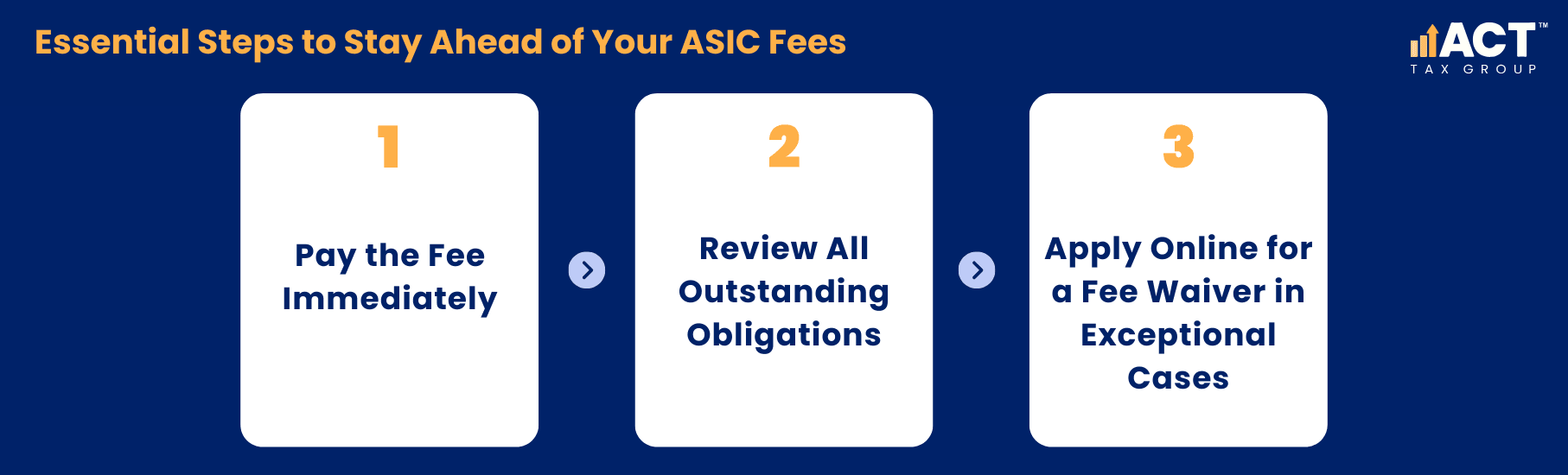
Pay the Fee Immediately
Stopping the penalty from rising from one late fee to another saves you hundreds of dollars.Review All Outstanding Obligations
Check for any other late lodgement fees—director changes, solvency resolutions, or updates to your company name—and bundle payments into a single transaction.Apply Online for a Fee Waiver in Exceptional Cases
ASIC may consider waiving a late fee for reasons beyond your control, like a natural disaster or serious illness. You can apply online, but approval is rare. Have all supporting documents ready before you ask.
Conclusion
ASIC late fees can feel like an unexpected knot in your premium hardwood, but they don’t have to slow you down. By treating your original fee and any annual review fee late charge like any other critical bill—sending reminders, delegating responsibility, automating payments, and keeping your registered office address current—you’ll avoid penalties and keep your carpentry business running without costly interruptions.


Lukasz Klekowski
Principal of ACT Tax Group, specialising in tax compliance and financial strategy for Australian small businesses.

Disclaimer: All information provided in this publication is of a general nature only and is not personal financial or investment advice. It does not take into account your particular objectives and circumstances. No person should act on the basis of this information without first obtaining and following the advice of a suitably qualified professional. To the fullest extent permitted by law, no person involved in producing, distributing or providing the information in this publication (including ACT TAX GROUP PTY LTD, each of its directors, councilors, employees and contractors and the editors or authors of the information) will be liable in any way for any loss or damage suffered by any person through the use of or access to this information. The Copyright is owned exclusively by ACT TAX GROUP PTY LTD (ABN 31634338088)