

Why an Arborist’s Tax Percentage Changes with Income, Deductions and Residency
Published on November 4, 2026
An arborist’s tax percentage changes with income, deductions and residency because Australian income tax depends on taxable income, progressive tax rates and individual tax residency status. How much tax you pay depends on your annual earnings, allowable deductions and whether you qualify for the tax-free threshold. Understanding these factors helps arborists avoid unexpected tax bills and manage their finances confidently.
For arborists across Canberra and the Australian Capital Territory (ACT), seasonal workloads, equipment costs and fluctuating business income can complicate tax planning. Whether you operate as a sole trader, work as an employee or manage a tree services business, understanding how income tax works can help you estimate tax payable, claim eligible expenses and maintain healthy cash flow.
Arborist Income Tax Rates in Australia
There is no fixed tax percentage for arborists because Australian income tax is calculated using progressive tax brackets. Australian residents pay different rates on different portions of their taxable income, meaning higher earnings may attract a higher marginal tax rate.
The Australian Taxation Office (ATO) assesses income tax based on taxable income, allowable deductions and available tax offsets. Your final tax payable may also include the Medicare levy and, in certain circumstances, the Medicare levy surcharge.
Unsure how much tax to set aside from arborist income?
Schedule a complimentary consultation with us today to estimate your tax and plan ahead.
Australian Income Tax Rates for 2026–27
Annual Taxable Income | Income Tax Payable |
|---|---|
$0–$18,200 | Nil |
$18,201–$45,000 | 15c for each $1 over $18,200 |
$45,001–$135,000 | $4,020 plus 30c for each $1 over $45,000 |
$135,001–$190,000 | $31,020 plus 37c for each $1 over $135,000 |
$190,001 and above | $51,370 plus 45c for each $1 over $190,000 |
These 2026–27 income tax rates apply to Australian residents entitled to the full tax-free threshold and exclude the Medicare levy and applicable tax offsets. The Australian Government reduced the lowest marginal tax rate from 16% in 2025–26 to 15% in 2026–27, changing the amount of income tax payable for eligible individuals.
Understanding Australian Income Tax Brackets
Australian income tax brackets determine how different portions of taxable income are taxed throughout the financial year. Income is taxed progressively, meaning entering a higher tax bracket does not cause all your earnings to be taxed at the higher rate.
For example, an arborist earning more than $45,000 pays 30c for each $1 earned above that threshold, up to $135,000. The income below $45,001 remains subject to the lower applicable rates.
Example: An Arborist Earning $85,000
A Canberra arborist earns $85,000 in taxable income during the 2026–27 financial year.
First $18,200: Tax-free
Next $26,800 at 15%: $4,020
Remaining $40,000 at 30%: $12,000
Total income tax payable: $16,020
The effective income tax rate is approximately 18.85%, excluding the Medicare levy and any applicable tax offsets. This calculation demonstrates the difference between an arborist’s marginal tax rate and the overall percentage of income tax paid.
The Impact of Tax Deductions on an Arborist’s Taxable Income
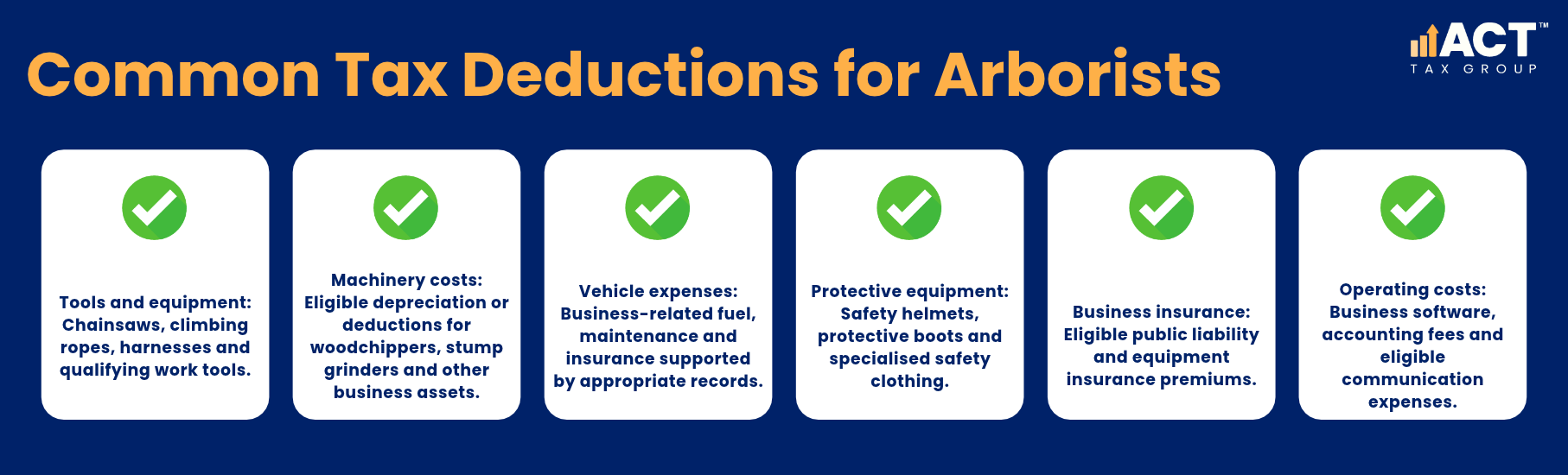
Tax deductions reduce an arborist’s taxable income when expenses meet ATO requirements. Eligible expenses may include machinery maintenance, protective equipment, vehicle costs, business insurance and work-related expenses. Only eligible work or business expenses can be claimed, with private use excluded and supporting records required. Employees cannot claim reimbursed expenses.
Taxable income is generally calculated by subtracting allowable deductions from assessable income. For a sole trader, assessable income can include business income and other taxable earnings, while eligible deductions reduce the amount on which income tax is calculated.
Example: An Arborist Claiming $15,000 in Deductions
Consider an Australian resident arborist with $100,000 in assessable income and $15,000 in allowable deductions.
Calculation | Amount |
|---|---|
Assessable income | $100,000 |
Allowable deductions | $15,000 |
Taxable income | $85,000 |
Income tax before deductions | $20,520 |
Income tax after deductions | $16,020 |
Income tax reduction | $4,500 |
These amounts exclude the Medicare levy and tax offsets. The example shows that deductions reduce taxable income rather than reimbursing the full expense. Equipment purchases may also be subject to depreciation rules, so professional advice can help determine the correct tax treatment.
The Impact of Tax Residency on Arborist Income Tax Rates
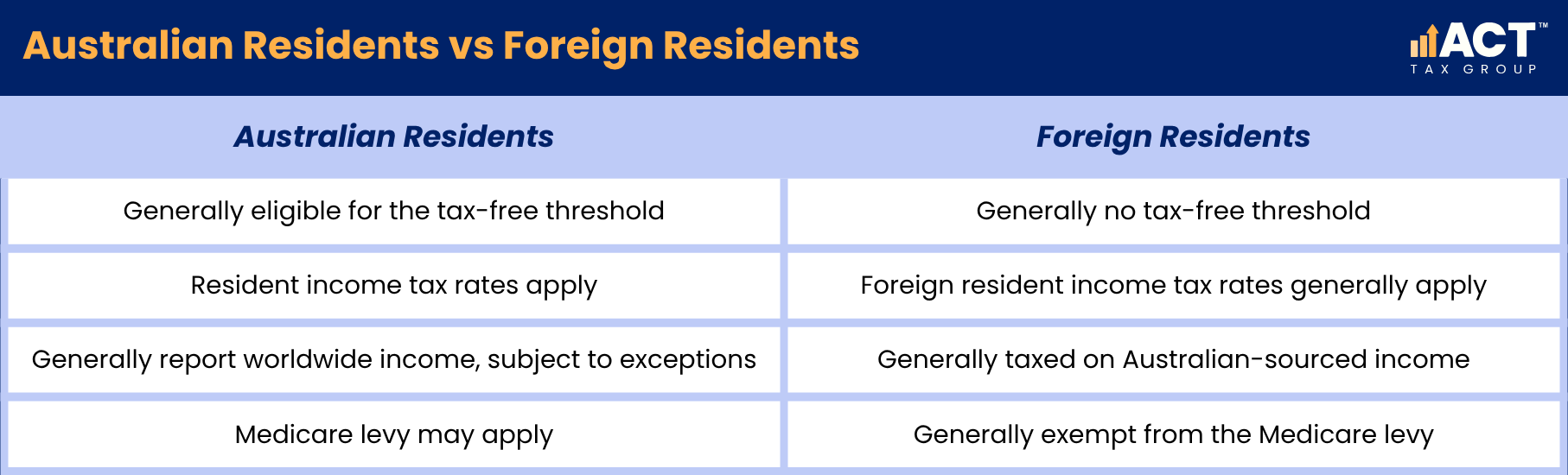
Tax residency affects an arborist’s income tax rates because Australian residents and foreign residents generally follow different taxation rules. Australian residents may qualify for the $18,200 tax-free threshold, while foreign residents generally pay tax from their first dollar of Australian taxable income.
Residency for tax purposes depends on individual circumstances, including living arrangements, personal connections and intentions regarding time spent in Australia. Citizenship or visa status alone does not determine your income tax residency.
Example: An Overseas Arborist Working in Canberra
An arborist relocating from overseas to complete temporary tree maintenance contracts may have a different tax position from an Australian resident. The correct treatment depends on their circumstances, including whether special working holiday maker rules apply. Arborists earning foreign income or receiving other taxable payments should review their reporting obligations. The ATO’s tax residency guidance explains the factors used to determine residency.
Medicare Levy and Private Health Insurance Considerations
The Medicare levy generally adds 2% of taxable income to the tax payable by most eligible Australian residents, although reductions and exemptions can apply. Arborists estimating their annual tax should include the Medicare levy where applicable rather than calculating income tax alone.
Higher-income individuals without eligible private hospital cover may pay the Medicare Levy Surcharge of 1% to 1.5%. The amount depends on income and family circumstances. Cover must generally include eligible dependants for the full financial year to avoid the surcharge for the entire year.
Factors Affecting the Medicare Levy Surcharge
Your income calculated under the surcharge rules.
Whether you hold appropriate private health insurance.
Your level of eligible private hospital cover.
Your spouse’s income, where applicable.
The number of dependent children in your family.
An income tax calculator can help estimate tax and take-home pay, but individual circumstances may affect the final assessment.

Low-Income Tax Offset for Eligible Arborists
The Low-Income Tax Offset (LITO) may reduce income tax payable for eligible Australian residents with lower taxable incomes. The maximum offset is $700 for taxable income of $37,500 or less, with the available amount gradually decreasing at higher income levels. The offset can reduce income tax payable to zero but cannot create a refund beyond the income tax liability. Low-income earners should consider applicable tax offsets when estimating their annual tax rather than relying on marginal tax rates alone.
The Impact of Seasonal Income on Arborist Tax Planning
Seasonal workloads can significantly affect an arborist’s annual taxable income, particularly when storm damage, emergency tree removal or commercial maintenance contracts increase earnings. Although monthly revenue may fluctuate, personal income tax generally depends on total taxable income for the financial year.
Arborist businesses must also manage fuel expenses, equipment finance, insurance and staff wages during quieter periods. Forecasting business income and maintaining sufficient tax reserves can help reduce unexpected financial pressure.
Business Structure and Arborist Tax Obligations
An arborist operating as a sole trader generally reports taxable business profits in an individual tax return and pays tax using personal income tax rates. Companies follow separate corporate tax rules, while partnerships and trusts have different arrangements for reporting income and allocating tax obligations. Selecting a business structure involves considering profitability, administration costs, asset protection and personal objectives. Arborists expanding their operations may benefit from reviewing whether their existing structure remains suitable.
Grow your tree care business with Accounting Built for Arborists
From start-up to expansion, our accounting team supports your tax, payroll, and cash flow — so you can focus on running your business safely and profitably.
Accurate Record Keeping for Arborist Tax Compliance
Accurate financial records help arborists identify eligible deductions, calculate taxable income and prepare their tax returns correctly. Maintaining invoices, receipts and business-use records also help substantiate expenses when required by the ATO. In a 2024 announcement, the ATO reported more than 8 million work-related expense claims in the preceding year. Assistant Commissioner Rob Thomson highlighted the importance of maintaining records throughout the year:
Important Financial Records for Arborists
Customer invoices and payment records.
Equipment receipts and maintenance expenses.
Vehicle logbooks and business travel records.
Payroll information and superannuation contributions.
Insurance premiums and operating expenses.
Records supporting eligible charitable donations and other deductions.
Business records generally need to be retained for at least five years, although longer periods apply in some circumstances.
GST and Income Tax Obligations for Arborist Businesses
Goods and Services Tax (GST) generally applies at 10% to taxable sales and is separate from personal income tax. Arborist businesses generally must register when their GST turnover reaches or is expected to reach $75,000 over the relevant 12-month period, subject to ATO rules. Registration is generally required within 21 days. GST-registered businesses report relevant amounts through a Business Activity Statement (BAS), while income tax is assessed separately. Understanding the distinction helps prevent business owners from confusing GST collected from customers with taxable business profits or personal tax payable.

How ACT Tax Group Can Help with Arborist Tax Planning
At ACT Tax Group, we understand the challenges arborists face when managing seasonal income, equipment expenses and changing tax obligations. Our friendly, IPA-certified team provides tailored accounting, tax planning and business advisory services to help you understand your taxable income, identify eligible deductions and manage your tax affairs with greater confidence.
Whether you’re an independent arborist or managing a growing tree services business, we can help you review your financial position and plan for upcoming tax obligations. Book a consultation with ACT Tax Group to discuss your business circumstances, tax responsibilities and practical options for improving financial management.
Frequently Asked Questions
How Much Percent Is Tax for an Arborist in Australia?
The amount of tax depends on taxable income, deductions and residency status. For 2026–27, income tax rates for Australian residents range from 0% to 45%, with income taxed progressively. The Australian Taxation Office (ATO) collects income tax based on applicable tax brackets, while the final amount of tax may also include the Medicare levy and other adjustments.
How Does Gross Income Affect the Amount of Tax an Arborist Pays?
Arborists generally pay income tax on taxable income rather than gross income. Taxable income is assessable income, including business earnings, taxable government payments and other income, minus allowable deductions. The final amount of tax depends on deductions, tax rates and available offsets.
Do Reportable Fringe Benefits Affect an Arborist’s Income Tax?
Reportable fringe benefits generally do not directly increase an arborist’s taxable income or ordinary income tax payable. However, they may affect income tests used to calculate the Medicare levy surcharge, certain government payments and other obligations. Arborists receiving employer-provided benefits should check how these amounts affect their individual tax circumstances.

Lukasz Klekowski
Principal of ACT Tax Group, specialising in tax compliance and financial strategy for Australian small businesses.

Disclaimer: All information provided in this publication is of a general nature only and is not personal financial or investment advice. It does not take into account your particular objectives and circumstances. No person should act on the basis of this information without first obtaining and following the advice of a suitably qualified professional. To the fullest extent permitted by law, no person involved in producing, distributing or providing the information in this publication (including ACT TAX GROUP PTY LTD, each of its directors, councilors, employees and contractors and the editors or authors of the information) will be liable in any way for any loss or damage suffered by any person through the use of or access to this information. The Copyright is owned exclusively by ACT TAX GROUP PTY LTD (ABN 31634338088)