

Essential Updates: Current Tax Rates Every Australian Arborist Should Know
Published on February 10, 2026
Essential Updates: Current Tax Rates Every Australian Arborist Should Know are not just technical numbers; they shape your cash flow, your wages, and your take home pay across the financial year. When you are juggling seasonal business income, crew wages and equipment costs, understanding how much tax is being calculated on your taxable income can stop nasty surprises at tax return time.
When Current Tax Rates Hit Your Cash Flow
You might have a big month of tree removal and stump grinding, the business account looks healthy, and then income tax, GST and superannuation contributions clear a big chunk of that money in one go. If you do not know which income tax rates apply to your taxable income and company earnings, it is easy to under estimate the amount of tax payable and leave yourself short when payments fall due.
For Australian residents running arborist businesses, the Australian Taxation Office publishes a clear table of current tax rates for each financial year on the ATO website. These rates apply to your assessable income, which can include salary, wages, business income, interest, dividends and other income such as some benefits or gains from foreign sources. Knowing which band your income sits in is the first step to working out how much tax you should set aside.
Struggling to keep up with ATO tax rates on your arborist income?
Schedule a complimentary consultation with us today to map out your income bands, offsets and Medicare levy.
Understanding Australian Income Tax as an Arborist
If you are a sole trader or pay yourself wages from your company, your personal tax is based on Australian income tax scales for residents. First, your assessable income is added up for the financial year, including business income, wages from an employer, interest on savings, dividends from investments and some capital gains. From there, allowable deductions such as eligible work expenses and charitable donations reduce this to your taxable income.
The tax rate that applies to each slice of that taxable income then determines your tax payable for the year. There is a tax free threshold at the bottom, then several bands with increasing tax rates as your income grows. On top of these above rates for income tax, most residents also pay a Medicare levy of 2 per cent of taxable income, and some higher earning taxpayers may face a Medicare levy surcharge if they do not have suitable private health cover.
Low and Middle Incomes, Offsets and Levy
If you are one of the many low-income earners in the trades, it is important to know that some taxpayers can access a low-income tax offset that reduces their tax payable once the main calculation is done. This does not change the income tax rates themselves but can reduce the final amount of tax you pay for the year if your earnings sit in the lower bands.
At the same time, the Medicare levy and any Medicare levy surcharge are calculated on your taxable income and can feel like extra tax if you have not planned for them. Temporary residents and non-residents are generally subject to different income tax scales and rules, so if you have crew members who are not Australian residents for tax purposes, you need to make sure their tax affairs and withholding are handled correctly through payroll.

Company Tax Rates When You Trade Through a Pty Ltd
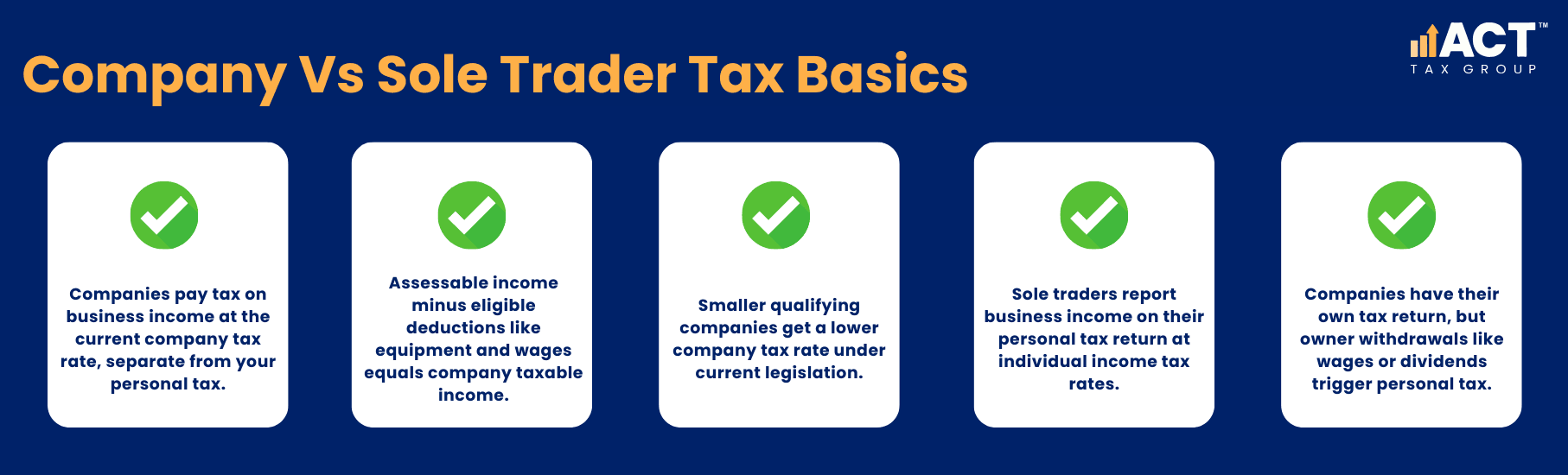
Once your arborist business grows beyond a single crew, many owners trade through a company to keep business and personal money separate. In that case, the company pays its own tax on business income at the current company tax rate, separate from your own tax on wages or dividends. The company starts with assessable income from tree work and related services, claims deductions for eligible expenses like equipment, fuel, and wages to employees, and pays company tax on the resulting taxable income.
For most smaller arborist companies that qualify under current legislation, a lower company tax rate applies compared to the rate for larger businesses. This can affect how much profit you leave in the company for future equipment purchases versus how much you take out as salary, wages or dividends. The key is to remember that taking money out of the business for yourself usually triggers tax somewhere, either income tax on your own return or company tax at the company level, so every payment has a tax story attached.
Sole Trader Versus Company – What Changes?
If you operate as a sole trader, your business income is simply part of your personal tax return and taxed at individual income tax rates for Australian residents. You still work out assessable income, minus deductions and expenses, to arrive at taxable income, but there is no separate company tax. That means the amount of tax you pay rises more directly with the success of the business, which can catch you off guard in a very strong year.
With a company, the business has its own tax return and pays tax on its taxable income, and then you are taxed again on what you receive personally in wages or dividends. The right structure depends on your situation and needs professional advice, but whichever way you go, current tax rates still decide how much tax is payable at each step.
Instant Asset Write Off and Arborist Equipment
When you are planning to buy a chipper, stump grinder, truck or other major gear, the Instant Asset Write Off can have a big impact on your tax for that financial year. Under current rules, eligible small businesses with an aggregated turnover of less than $10 million can claim an immediate deduction for the business portion of eligible assets costing less than $20,000 each, instead of depreciating them over several years. This threshold applies for the 2024-25- and 2025-26-income years.
This can help when business income is high and you want to reduce taxable income in that particular year, but there are conditions. The asset must be installed and ready for use, it must be used mainly for business in Australia, and some vehicles are subject to the car cost limit, which caps the amount you can claim as a deduction regardless of the purchase price. If the cost is $20,000 or more, the asset cannot be immediately written off but can be placed into the small business simplified depreciation pool and depreciated at 15% in the first income year and 30% each year after that.
A Practical Example for Arborist Gear
Imagine you buy a stump grinder for less than $20,000 that sits under the current Instant Asset Write Off threshold. If your arborist business is eligible, you may be able to claim the full business portion as a deduction in that year. That reduces your taxable income and the amount of tax you pay for that financial year, which can free up some cash to cover wages and super contributions in a quieter winter.
If you instead buy a large truck above the cap, only part of the cost might be deductible in the first year, with the rest spread across future years. In that case, it is important to plan so the timing of the deduction lines up with your other expenses and earnings. This is where clear records of the purchase price, business use, interest on finance and running costs become vital to support your claim.

Superannuation Contributions and Crew Costs
Your crew are the backbone of your business, and Superannuation contributions are a big part of the true cost of their wages. On top of gross salary or wages, you must pay employer superannuation contributions at the Super Guarantee (SG) rate for eligible employees. For the 2024-25 financial year, the SG rate is 11.5% of ordinary time earnings, rising to 12% from 1 July 2025 for the 2025-26 year. These payments are generally deductible to the business when made on time.
When you are working out how much to charge for a job, your labour rate needs to cover not just wages but also super, allowances, leave, workers compensation and other on costs. If you forget to factor in super contributions at quoting time, the business ends up paying that cost out of profit, which reduces the money left over for you and increases the pressure when tax and levy payments are due.
Grow your tree care business with Accounting Built for Arborists
From start-up to expansion, our accounting team supports your tax, payroll, and cash flow — so you can focus on running your business safely and profitably.
Keeping Your Tax Affairs Under Control Throughout The Year
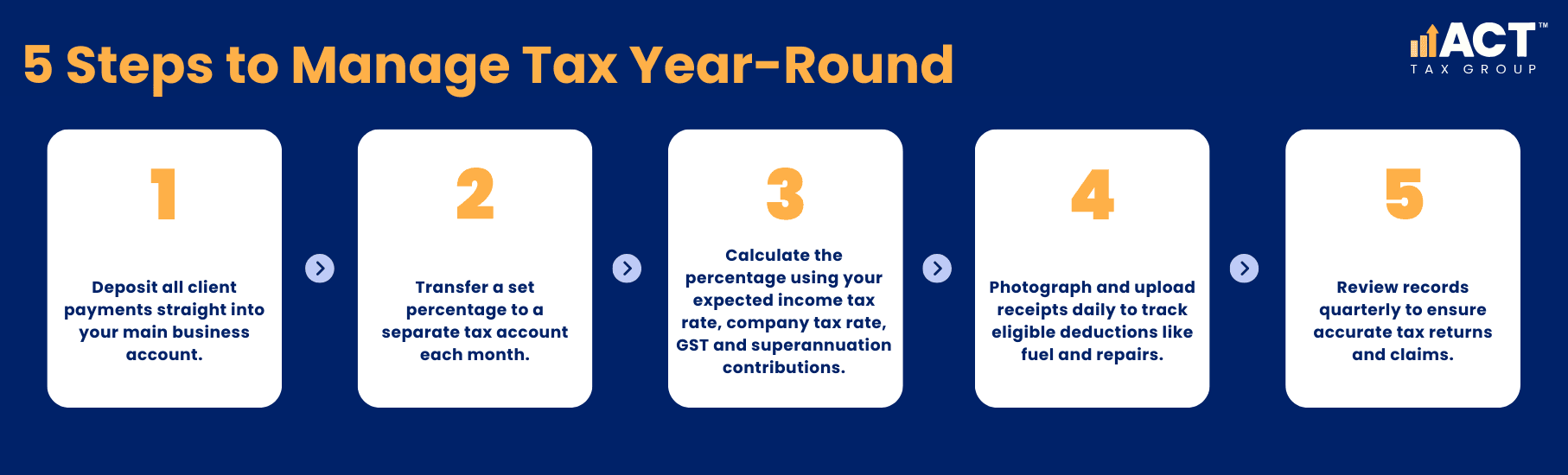
Trying to sort out a whole year of tax affairs in one hit at tax return time is a sure way to feel overwhelmed. A better approach is to treat tax as an ongoing part of the business, just like fuel or equipment servicing. That starts with having a simple system where every payment from clients goes into your main business account, and a set portion is transferred regularly into a separate tax account.
You can base the percentage you move aside on your expected income tax rate, company tax rate if applicable, GST obligations, and superannuation contributions for employees. The aim is to have the correct amount waiting when it is time to pay your BAS, income tax, or other payables. This reduces the risk of falling behind or having to scramble for credit when the Australian Taxation Office takes its share.
Deductions, Records and Claiming the Right Amount
Good records are the backbone of claiming eligible deductions without stress. Every invoice, fuel receipt, equipment repair bill and insurance payment is part of the story that turns your raw income into taxable income. If you throw paperwork into a glovebox or leave it in the truck, you miss expenses you could claim and end up paying more tax than necessary.
Set up a simple digital system where you photograph receipts on the day and upload them against the right category, fuel, repairs, protective gear, marketing and so on. This helps you and your accountant see the full picture of income, expenses and gains, and makes it easier to complete an accurate tax return for the business and for you personally.
How ACT Tax Group Helps You Make Sense of It All
As an arborist, your focus is on safe, efficient work at height, not on memorising every income tax rate and levy rule. Our role at ACT Tax Group is to translate the legislation, tables and rules into clear, practical steps that fit the way your business actually runs. We help you match your invoicing, payroll and equipment planning to the current tax settings so you can pay tax on time, keep your crew looked after and still have money left for your own goals.
We look at your income, expenses, superannuation contributions, investments and any capital gains together, then help you put systems in place so payments are made on time and the correct amount is set aside through the year. When you are unsure about how a new piece of equipment, extra employees or a change in business structure will affect the amount of tax you pay, we can guide you through the operational side and point you to professional advice where needed.
If you want support to understand how current tax rates apply to your arborist business, and to put simple systems around your tax, super and deductions, reach out to ACT Tax Group for a conversation that stays grounded in your day-to-day reality.

Lukasz Klekowski
Principal of ACT Tax Group, specialising in tax compliance and financial strategy for Australian small businesses.

Disclaimer: All information provided in this publication is of a general nature only and is not personal financial or investment advice. It does not take into account your particular objectives and circumstances. No person should act on the basis of this information without first obtaining and following the advice of a suitably qualified professional. To the fullest extent permitted by law, no person involved in producing, distributing or providing the information in this publication (including ACT TAX GROUP PTY LTD, each of its directors, councilors, employees and contractors and the editors or authors of the information) will be liable in any way for any loss or damage suffered by any person through the use of or access to this information. The Copyright is owned exclusively by ACT TAX GROUP PTY LTD (ABN 31634338088)