

Tree Services Firm Builds Rainy-Day Buffer for Wet Season Delays
Published on October 1, 2025
Effective cash flow planning is a make-or-break skill for any arborist business in Australia, especially when the wet season wreaks havoc on your work schedule. Let’s look at how a typical tree service owner, let’s call him Jamie (not real client’s name), faced these real-life challenges—and how our team at ACT Tax Group helped him build a financial buffer for those inevitable rainy weeks.
Struggling to keep up with your business outgoings when bad weather strikes? Let us help you find a path forward so you can focus on your trade, not just your cash balances.
The Challenge: When Weather Controls Your Cash Flow
Tree service businesses face unique cash flow management challenges that many other industries don’t experience. Your ability to generate income depends entirely on weather conditions, council restrictions, and seasonal demand, while your business expenses remain constant regardless of external factors.
The pressure builds quickly when work stops but money keeps going out. Equipment financing, vehicle costs, insurance, wages, and other bills don’t adjust for weather delays. Many arborists find themselves watching their cash position drop daily while hoping for clear skies, creating stress that can impact business decisions and long-term planning.
Struggling to meet ATO deadlines when income drops?
Schedule a complimentary consultation with us today to plan your BAS payments well in advance.
How Our Team at ACT Tax Group Supported Jamie
We worked with Jamie to help him understand and manage his cash flow in practical, everyday ways. Here’s a look at the kinds of general strategies and support our team can offer to tree service businesses facing similar struggles.
Ready to get your cash flow planning on track? Contact ACT Tax Group today to see how we can work together.
Creating a Simple Cash Flow Plan
First, we helped Jamie create a simple cash flow projection using his existing sales history and monthly income and expenses. This meant Jamie could look ahead a few months and anticipate likely cash positions—helping him identify periods of strong cash inflow and times when outgoing cash might outpace incoming payments.
By estimating his future sales, tracking incoming payments from customers, and monitoring his actual cash balance, Jamie could get a real picture of his business’s health. This wasn’t about complicated accounting—just a clear view of his working capital, so he could make more informed decisions.

Building Emergency Reserves During Good Months
One of the most effective ways to manage cash flow is to set aside surplus funds during the good months. Jamie began moving a portion of his monthly income into a separate account whenever he had a strong month. This “rainy day” buffer meant he always had enough cash on hand to cover fixed costs and variable costs for several weeks, even if a wet spell led to a drop in work and incoming payments.
We also encouraged Jamie to keep an eye on bank fees, payment terms with suppliers, and other expenses, so nothing caught him off-guard. The goal wasn’t to guarantee results, but to help Jamie build a disciplined habit: better cash flow management today means more financial stability tomorrow.
Simplifying Tax Planning and Cash Management
We showed Jamie how he could plan ahead for BAS and other tax obligations by putting aside small payments throughout the quarter—so the sting of a big bill was spread out. This simple cash flow planning tactic helped Jamie avoid cash shortages at tax time and kept his business in good standing.
Examining Ways to Bring In Cash
We talked with Jamie about ways he could generate income even when climbing wasn’t possible. Offering storm assessments, tree health checks, or consulting services during slower periods helped bridge the gap and brought in some extra cash, keeping Jamie’s business operations moving.
Outcome: Financial Stability Through All Seasons
Over time, Jamie’s approach to cash flow planning took the stress out of those unpredictable wet seasons. Instead of worrying about having enough cash to pay his crew or cover unexpected expenses, Jamie could look ahead with confidence.
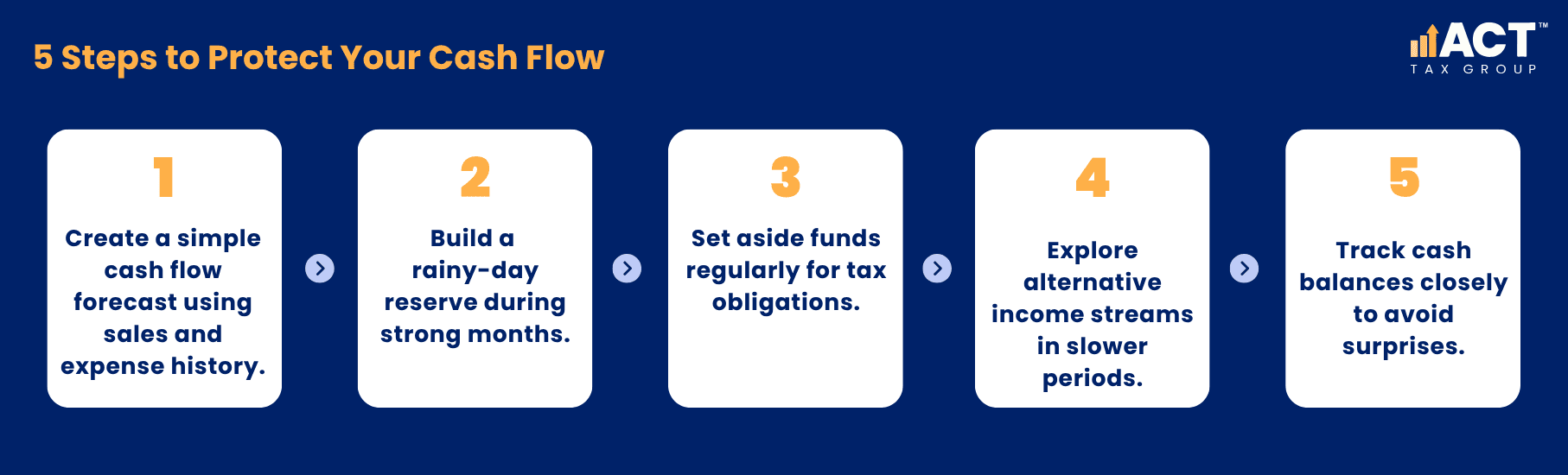
His buffer account meant fewer sleepless nights when the rain started, and fewer last-minute rushes to cover bills. He noticed several benefits—lower bank fees, less reliance on business loans, and the peace of mind that comes from knowing his current cash positions could handle whatever came next.
Jamie also found that tracking his cash flow projection regularly helped him spot opportunities to negotiate better deals with suppliers, invest in quality tools, and even grow his team when the time was right.
Want to build similar financial resilience for your tree service business? Book a consultation to discuss your specific situation and challenges.
Key Takeaways: What You Can Do
Here’s what we learned from Jamie’s experience—and what might help your tree service business, too:
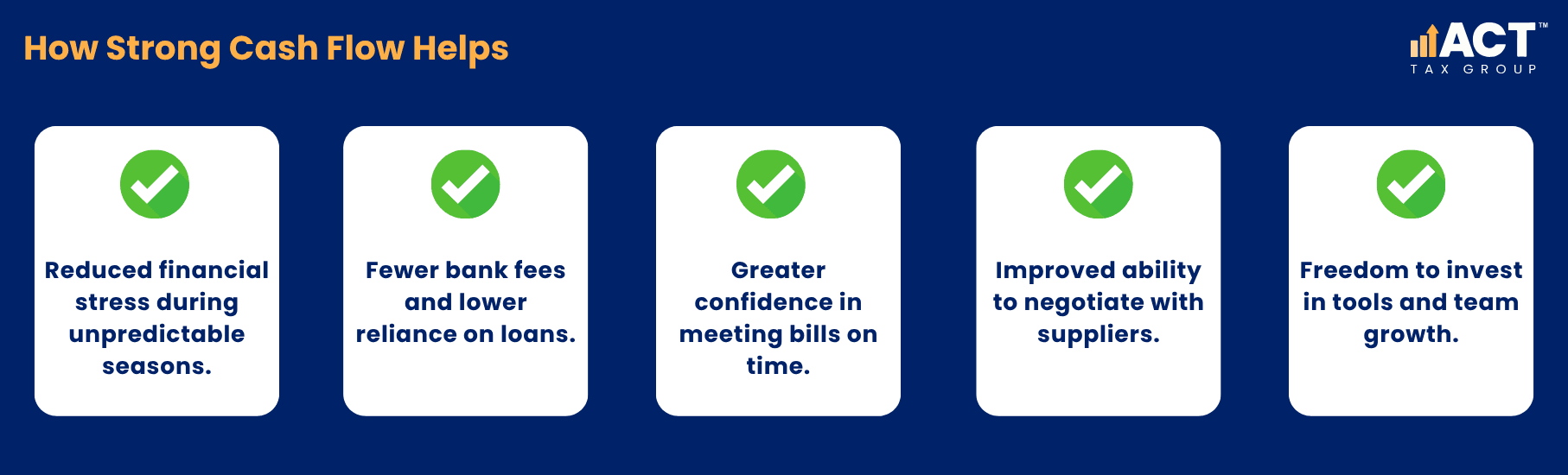
Create a simple cash flow forecast—use your sales history and expense records to estimate your likely cash needs for the next several months.
Set aside surplus funds in busy times so you have a buffer for those inevitable quiet weeks. Even small regular amounts add up.
Plan for your tax obligations by setting aside funds monthly—spreading out the pain of those big bills.
Look for ways to generate income when climbing isn’t possible—consulting, assessments, or maintenance work can all help keep some cash coming in.
Stay on top of your current cash positions so you never get caught short by unexpected expenses or sudden business needs.

Take control of your business cash flow—get in touch with ACT Tax Group today to examine how effective cash flow management can help you steer clear of potential cash shortages and keep your business strong, no matter the weather.

Lukasz Klekowski
Principal of ACT Tax Group, specialising in tax compliance and financial strategy for Australian small businesses.

Disclaimer: All information provided in this publication is of a general nature only and is not personal financial or investment advice. It does not take into account your particular objectives and circumstances. No person should act on the basis of this information without first obtaining and following the advice of a suitably qualified professional. To the fullest extent permitted by law, no person involved in producing, distributing or providing the information in this publication (including ACT TAX GROUP PTY LTD, each of its directors, councilors, employees and contractors and the editors or authors of the information) will be liable in any way for any loss or damage suffered by any person through the use of or access to this information. The Copyright is owned exclusively by ACT TAX GROUP PTY LTD (ABN 31634338088)