

What Do Annual SMSF Accounting and Audit Fees Cover?
Published on October 28, 2026
Annual SMSF Accounting and Audit Fees cover the financial reporting, tax preparation and independent auditing required to manage a Self-Managed Superannuation Fund (SMSF) in Australia. These services help trustees maintain accurate records, meet compliance obligations and understand their fund’s financial position. Knowing what’s included also helps you avoid unexpected costs. An SMSF provides greater control over retirement savings and investment options, but it also brings responsibilities under superannuation and tax laws.
Annual SMSF Accounting and Audit Fee Inclusions
Annual SMSF accounting and audit fees generally cover financial statement preparation, tax reporting and independent compliance checks. The services included depend on your fund’s assets, investment activity and accounting arrangements.
Unsure What Your Annual SMSF Fees Cover?
Schedule a complimentary consultation with us today to clarify accounting and audit inclusions.
Annual Accounting Services
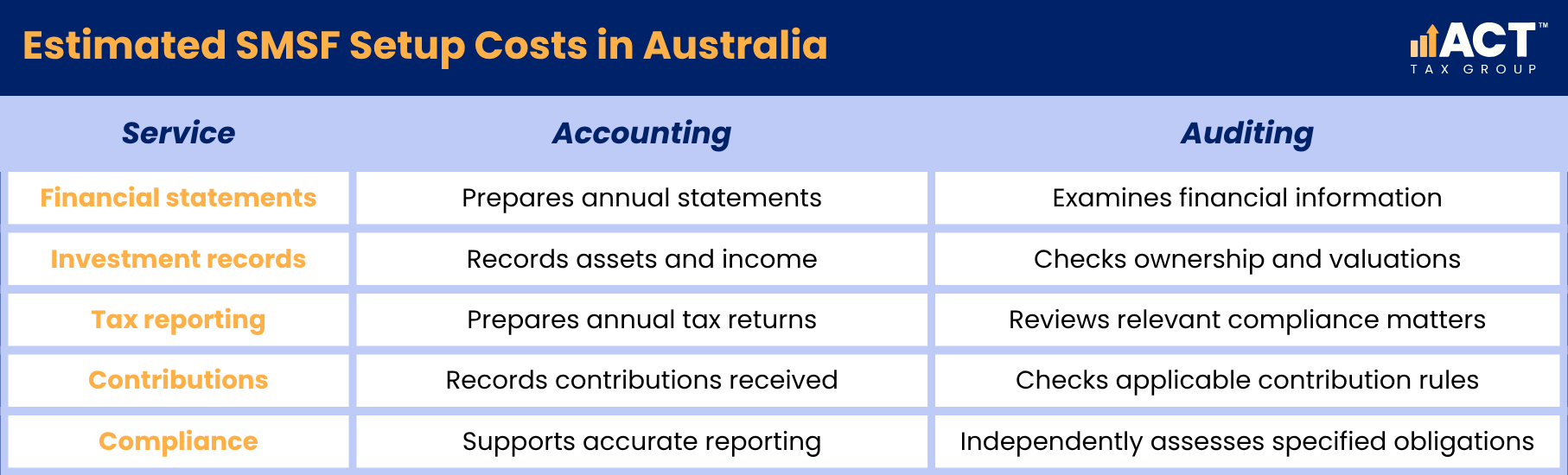
SMSF accounting involves recording income, expenses, contributions and investment transactions. Your accountant also reconciles the fund’s bank account, prepares financial statements and calculates the information needed for the annual tax return.
Independent Audit Services
An approved, independent SMSF auditor examines the fund’s financial statements and reviews compliance with relevant superannuation laws. The auditor must be registered with ASIC. This includes checking investment ownership, asset valuations and supporting documents to identify potential reporting or compliance issues.
The Differences Between SMSF Accounting and Auditing
SMSF accounting and auditing support different aspects of managing your super fund. Accounting prepares the financial information, while auditing provides an independent examination of the fund’s records and relevant obligations.
According to the Australian Securities and Investments Commission (ASIC), its 2026 enforcement reporting covered an SMSF sector with more than 672,000 funds and over $1 trillion in assets. Reliable financial reporting and independent audits help support oversight of these retirement savings.
Factors That Influence Annual SMSF Accounting and Audit Fees
Annual SMSF accounting and audit fees vary according to the fund’s investments, transaction volume and record-keeping requirements. Funds holding straightforward investments may require less administration than those with property, borrowing arrangements or complex transactions.
Investment Types and Fund Complexity
Your fund’s investment strategy and assets influence the amount of accounting and audit work required. Property investments, private company shares and other less straightforward assets may require additional supporting documents and valuation evidence.
Example: An SMSF holding cash and listed shares may have relatively simple annual reporting. A fund owning commercial property may require lease records, property valuations and additional transaction checks.

Record-Keeping and Transaction Activity
Incomplete records can increase professional fees because accountants may need extra time to reconcile accounts or obtain missing information. Maintaining organised records throughout the year can help reduce avoidable administration.
Additional SMSF Costs Outside Annual Service Fees
Not every expense involved in running an SMSF is included in its accounting and audit package. Trustees should review their service agreement to understand which costs are covered and which services require separate payment.
Additional expenses may include:
ATO supervisory levy: A government charge associated with SMSF regulation.
Corporate trustee fees: Company registration and ongoing administration costs.
Property valuations: Independent valuations or specialist reports when required.
Financial advice: Investment strategy reviews, retirement planning or restructuring advice.
Additional compliance work: Assistance with complex transactions or identified issues.
Example: A single member fund using a corporate trustee may incur company administration expenses in addition to annual accounting and audit fees.
Trustee Structure and Its Effect on SMSF Costs
An SMSF can generally have individual trustees or a corporate trustee, where a company acts as trustee. Each structure has different administrative requirements, which can affect the fund’s ongoing costs.
Individual Trustees and Corporate Trustees
Individual trustees may avoid some company administration expenses, while a corporate trustee can simplify certain changes to fund membership and asset ownership. Trustees should consider their circumstances, trust deed and long-term retirement plans before choosing or changing their structure.
Accurate SMSF Records and Cost Management
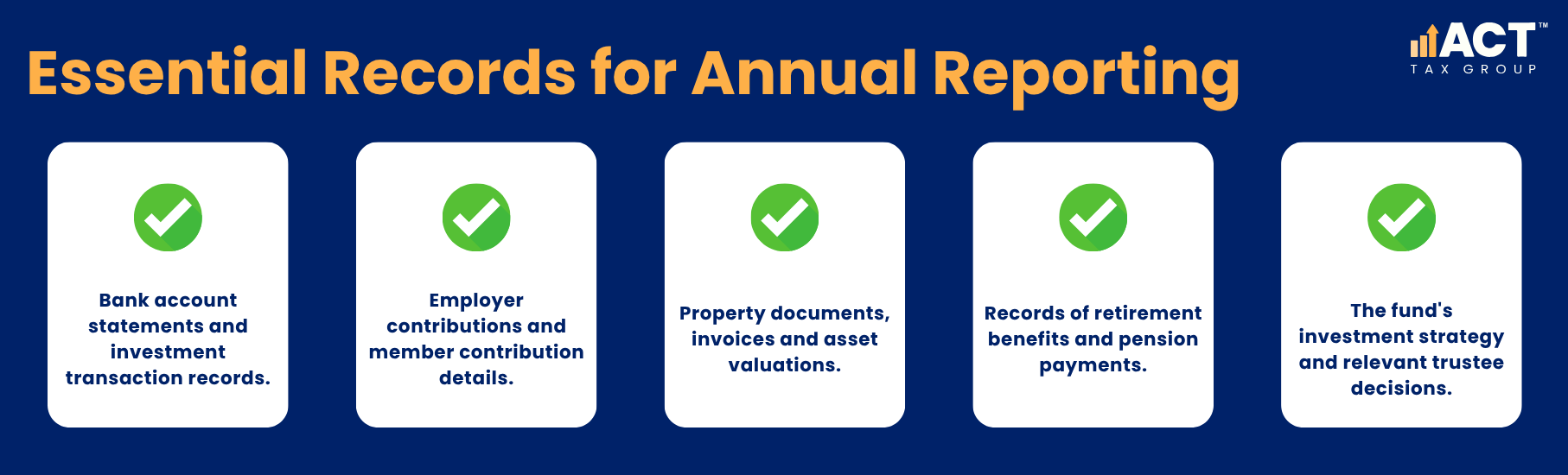
Maintaining complete financial records can make annual accounting and auditing more efficient. Trustees remain responsible for ensuring their SMSF records are accurate, even when they engage professionals to assist with administration.
Reviewing Investment and Trustee Information
Trustees should regularly review their fund’s investment strategy and maintain current SMSF details. Changes involving trustees, directors or members may also create reporting obligations that require professional assistance.
SMSF Compliance and Independent Audit Requirements
SMSF trustees must meet obligations under Australian superannuation and tax laws, including rules concerning investments, contributions and benefit payments. Annual audits help identify relevant compliance issues, but trustees remain responsible for managing the fund correctly.
Annual SMSF Accounting and Audit Deadlines
SMSF accounting and auditing must be completed before the fund’s annual tax return is lodged. The Australian Taxation Office (ATO) requires trustees to appoint an approved SMSF auditor at least 45 days before the applicable lodgement deadline.
Preparing for Annual Reporting
Providing financial statements, investment documents and other records early allow time to complete the audit and address issues before lodgement. Deadlines depend on the fund’s circumstances and whether a registered tax agent manages the return.

How ACT Tax Group Can Help with Annual SMSF Accounting and Audit Fees
At ACT Tax Group, we understand that managing an SMSF involves ongoing financial responsibilities and compliance requirements. Our friendly, IPA-certified accounting team can assist with financial statements, tax reporting, organised records and coordinating independent audit services, while explaining the fees associated with your fund. Whether you’re reviewing existing SMSF expenses or preparing for annual reporting, we’re here to provide practical accounting support.
Review your service agreement, keep your financial records organised and seek professional advice when your circumstances change. Clear information about your fees and obligations helps you make more informed decisions about managing your retirement savings.
Frequently Asked Questions
What Is Required When Setting Up an SMSF?
Setting up a Self-Managed Superannuation Fund (SMSF) involves choosing trustees or a trustee company, establishing a trust deed and opening a separate fund bank account with a financial institution. Trustees must register the SMSF with the ATO within 60 days of establishment. Your fund needs an Australian Business Number (ABN) and Tax File Number (TFN). An Electronic Service Address (ESA) is needed to receive contributions electronically from unrelated employers and to process electronic transfers between super funds. Consider your financial situation, ongoing costs and the risks involved before proceeding.
How Does an SMSF Differ from Other Superannuation Funds?
An SMSF is regulated by the Australian Taxation Office (ATO), while most large retail and industry funds are overseen by the Australian Prudential Regulation Authority (APRA). An ATO-regulated SMSF gives members greater control over investments but also greater responsibility for compliance, costs and administration. Other funds generally provide professional investment management and may offer different insurance and other benefits.
Why Is an Exit Plan Important for SMSF Trustees?
An exit plan helps trustees prepare for circumstances where managing their SMSF becomes difficult or no longer suits their financial situation. This may involve transferring retirement savings to another super fund, changing the trustee structure or winding up the fund. Planning ahead can help trustees understand potential costs, tax implications and the responsibilities involved.

Lukasz Klekowski
Principal of ACT Tax Group, specialising in tax compliance and financial strategy for Australian small businesses.

Disclaimer: All information provided in this publication is of a general nature only and is not personal financial or investment advice. It does not take into account your particular objectives and circumstances. No person should act on the basis of this information without first obtaining and following the advice of a suitably qualified professional. To the fullest extent permitted by law, no person involved in producing, distributing or providing the information in this publication (including ACT TAX GROUP PTY LTD, each of its directors, councilors, employees and contractors and the editors or authors of the information) will be liable in any way for any loss or damage suffered by any person through the use of or access to this information. The Copyright is owned exclusively by ACT TAX GROUP PTY LTD (ABN 31634338088)