

How to Find Lost Super in Australia: Step-by-Step Guide
Published on December 2, 2025
Finding lost super starts with understanding where your money might be. With around $17.8 billion sitting in forgotten super accounts across Australia, a quick check using your Tax File Number (TFN) could add thousands to your retirement savings. Many Australians have lost track of super accounts from past jobs, particularly when they’ve changed jobs frequently or moved house without updating their contact details. Losing track of your super means you could be paying fees on money you’ve forgotten about, missing out on investment earnings, and having a smaller super balance than you should at retirement.
What is Lost and Unclaimed Super?
Lost super refers to accounts your super fund has reported to the Australian Taxation Office (ATO) because they couldn’t contact you or your account became inactive. This typically happens when you change jobs, move house or update your name without telling your fund. Unclaimed super is money that funds are required to transfer to the ATO under specific rules, such as when your balance is very small, your account has been inactive for a long time, or you’ve left Australia permanently.
Your lost or unclaimed money could be held by a fund where you’re a lost member, or it might already be transferred to the ATO. Both can be found and claimed, though the process differs depending on where your money is sitting. The good news is that finding it is straightforward once you know where to look.
Worried you’ve got lost super sitting with old funds or the ATO?
Schedule a complimentary consultation with us today to track down every account linked to your TFN and myGov.
Why Finding your Lost Super Matters
Finding and consolidating lost super reduces duplicated fees and insurance costs that quietly eat into your balance over time. When you hold multiple accounts, you’re paying separate fees to each fund, bringing that money together into one account means one set of fees, which compounds into real savings across your working life.
Consolidation also puts your money in a position to grow more steadily, since a larger balance can benefit more from investment earnings and compound growth. Recent data shows this pool continues to grow each year, with many Australians discovering thousands in super they didn’t know they had from early casual jobs or short-term contracts. Reclaiming this money is one of the simplest ways to boost your retirement savings without any extra contribution from you.
How to Prepare to Find your Lost Super
Before you start searching, gather your TFN, personal details and any old super statements you can find. Having a record of previous employers, old addresses and relevant dates helps the ATO match any stray accounts to you more quickly. Even if your statements are several years old, they’re useful to have on hand.
You’ll also need a myGov account to access the ATO online services where you can search for all super linked to your TFN. Setting up or updating your myGov with your current contact details helps the ATO and your funds connect any lost accounts directly to you now and in future. If you don’t have myGov yet, it’s free to set up on the ATO website.
How Do You Use ATO Online to Find Lost Super?
ATO Online via myGov is the fastest way to check all your super accounts linked to your TFN in one place. Once you’re signed in, you can see your active super account, any lost member accounts with your fund, and any unclaimed super transferred to the ATO.
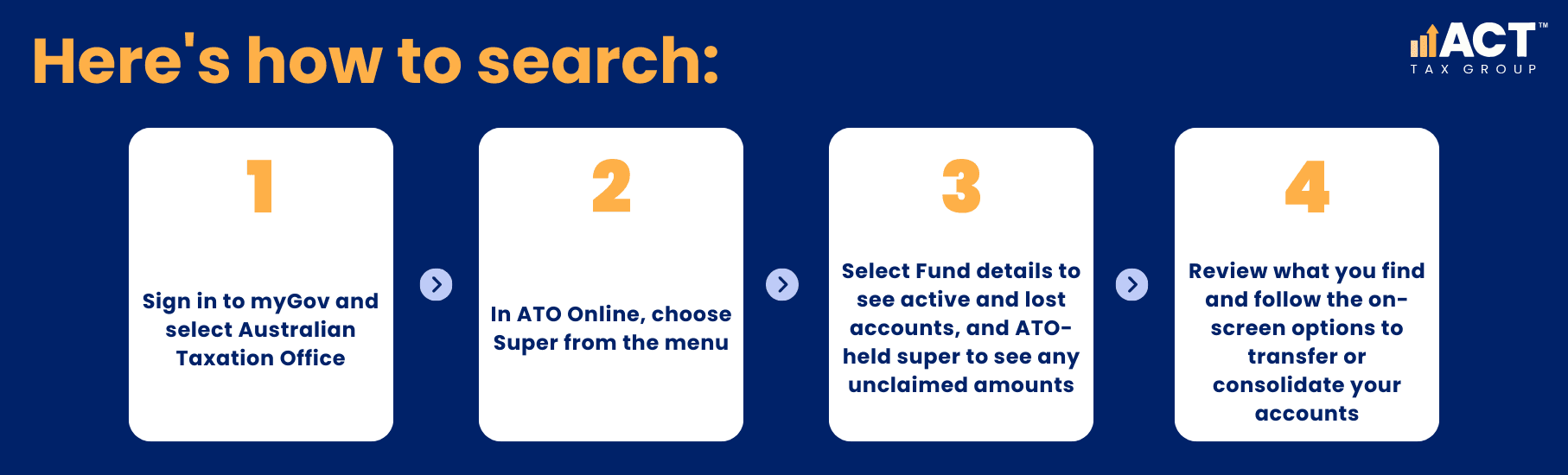
The process usually takes just a few minutes, and you can see your complete super picture straight away.
What Are Other Ways to Search for Lost Super?
If you can’t access myGov online, you have other options. You can call the ATO’s lost super search line and speak to someone directly, or you can complete a paper form, print it and mail it to the ATO. Services Australia service centres can also help you use the online tools or lodge a form if you prefer face-to-face assistance.
Many super funds will also run a search for you if you contact them and provide your TFN. Some funds use matching services that search across multiple funds to help you find lost or forgotten accounts. This can be helpful if you’re not sure which fund your old super is with.
What Should You Do When You Find Lost Super?
Once you locate lost or unclaimed super, you’ll need to decide whether to consolidate it into your primary active account or keep a particular account separate. Transferring ATO-held super or lost fund accounts into your chosen active account is usually straightforward through ATO Online or your fund’s online portal.
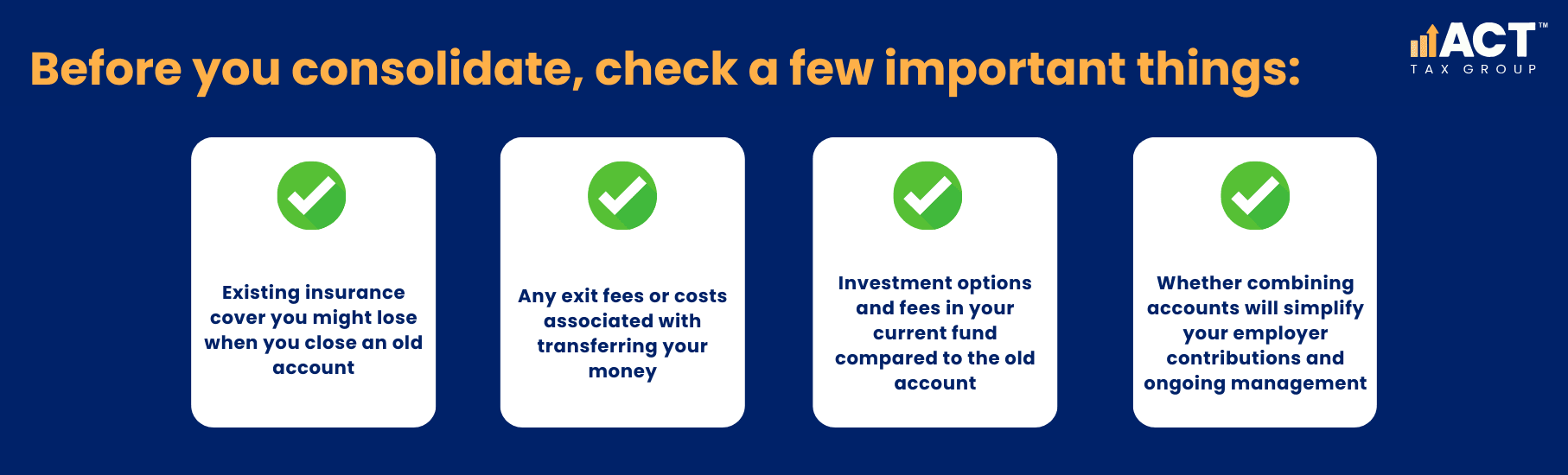
Taking time to review these details before you act ensures you don’t accidentally lose valuable insurance or pay unexpected fees.
How Does Consolidating Super Affect Your Fees and Insurance?
Consolidation usually reduces duplicated account fees because you’re no longer paying separate administration and investment costs across multiple low-balance accounts. This can significantly improve your super balance over time, especially if previous accounts were eroding faster than contributions were going in. The fee savings compound, meaning your money grows faster and larger.
However, some people hold valuable legacy insurance cover in older accounts that may not be available in a new fund or could be more expensive to replace. Before you close an account, review your insurance terms, waiting periods and exclusions carefully. This is where having professional advice can really help, ensuring you don’t lose important cover or accidentally create gaps in your protection.
Why Does Super Become Lost?
Super often becomes lost when people change jobs frequently, work casual roles with multiple employers or have part-time positions with different funds. Moving house without updating your contact details with your fund and the ATO is another major reason, your statements stop reaching you and the fund eventually loses touch. Name changes through marriage, divorce or personal choice can also break the link between you and old accounts if the fund doesn’t receive updated personal details. Over time, small inactive balances may be transferred to the ATO as unclaimed super under rules designed to protect dormant accounts.

How to Stop Your Super from Getting Lost Again
The best way to prevent super from becoming lost is to keep your contact details and TFN current with both the ATO and your main super fund. Whenever you start a new job or move house, take a few minutes to update your details so new employer contributions go to the right place and statements reach you. Make it a habit to do a quick super check each year, a simple review to confirm your active account, check for any lost super and update your insurance and investment choices if needed. Building this into your annual financial review with a professional adviser helps stop balances from going missing in future.
What Recent Data Tells Us About Lost Super
As at 30 June 2024, around $17.8 billion sat in lost and unclaimed super across more than 7 million accounts spread between fund-held lost member accounts and ATO-held unclaimed amounts. The pool has continued to grow into 2025, with unclaimed super reaching approximately $18.9 billion, showing how widespread the issue remains. Young adults and people in casual or gig-economy work are particularly likely to have multiple small forgotten accounts from their early careers. For many households, reclaiming these amounts gives an immediate boost to retirement savings with zero extra cost.
Real Examples of Finding Lost Super
Our team and other advisers regularly help clients uncover several thousand dollars in forgotten super once they complete an online search. One example involved a client who discovered multiple small balances spread across different retail super funds from casual work in hospitality and retail when they were younger. After consolidating these into a single low-fee super account, their projected retirement balance improved noticeably due to lower ongoing fees. These stories are common, even people who thought they’d kept good track often find forgotten accounts when they do a thorough check through the ATO.

How Professional Advice Helps with Lost Super
While finding lost super is often straightforward, deciding how to consolidate and manage it can be more nuanced when insurance, investment options and your broader tax and retirement goals come into play. A professional adviser can help you work through whether to keep particular insurance policies, how different funds align with your risk profile, and how your super fits into your complete financial picture. Our advisers at ACT Tax Group stress that a “set and forget” approach to super is risky, especially with frequent job changes and changing rules. Regular professional review, even just once a year, gives you a structured process to stay on top of your super rather than relying on ad-hoc checks when you happen to remember.
Next Steps to Take
Set aside 30 to 60 minutes to log into myGov, open ATO Online and complete a full super health check including a search for lost and unclaimed super. Gather your TFN and any old super statements or employment records first so you can quickly identify unfamiliar accounts and decide on consolidation. From there, consider booking a review with our team at ACT Tax Group to bring your super findings into a wider tax, retirement and cash flow plan tailored to your personal goals. Turning lost super into a consolidated, well-managed account is one of the simplest moves you can make toward securing your financial future.

Lukasz Klekowski
Principal of ACT Tax Group, specialising in tax compliance and financial strategy for Australian small businesses.

Disclaimer: All information provided in this publication is of a general nature only and is not personal financial or investment advice. It does not take into account your particular objectives and circumstances. No person should act on the basis of this information without first obtaining and following the advice of a suitably qualified professional. To the fullest extent permitted by law, no person involved in producing, distributing or providing the information in this publication (including ACT TAX GROUP PTY LTD, each of its directors, councilors, employees and contractors and the editors or authors of the information) will be liable in any way for any loss or damage suffered by any person through the use of or access to this information. The Copyright is owned exclusively by ACT TAX GROUP PTY LTD (ABN 31634338088)