

WorkCover and Workers’ Compensation: Employer Responsibilities
Share this article
Published on November 11, 2025
WorkCover and workers’ compensation represent fundamental employer responsibilities that protect both your employees and your business. As a business owner in the ACT, your primary duty is to provide a safe work environment where your team can work safely. Understanding your legal obligations ensures compliance and creates a workplace where people thrive.
What Are Your Legal Obligations as an Employer?
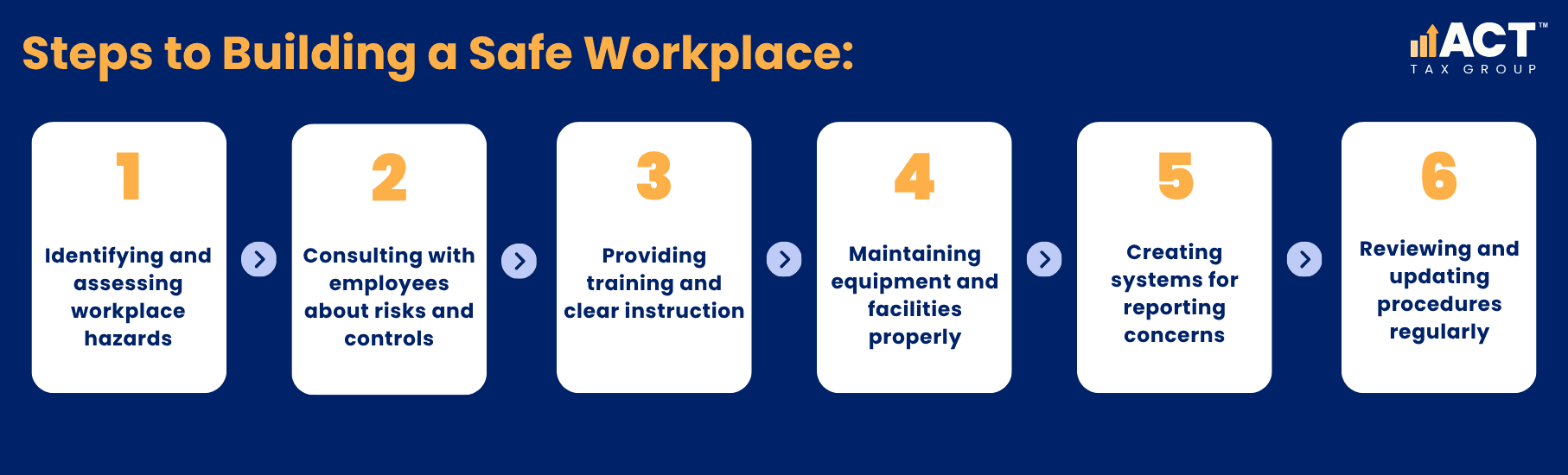
You must take practicable steps to identify risks and implement controls to keep people safe from harm. This includes providing and maintaining safe equipment, machinery, and facilities with proper emergency systems in place.
Your responsibility includes supervising your workforce and providing clear instruction on safe procedures. You must hold current workers’ compensation insurance covering all employees, conduct regular risk assessments, and report workplace incidents as required by law. Create a workplace free from discrimination and maintain accurate records of all health and safety matters.
Unsure if your injury reporting process meets ATO and compliance standards?
Schedule a complimentary consultation with us today to review and strengthen your record-keeping and reporting practices.
Key legal obligations include:
Holding current workers’ compensation insurance for all employees
Identifying risks and implementing practical control measures
Providing training and supervision for safe work practices
Reporting all workplace incidents and injuries promptly
Maintaining accurate records and staying up to date with legal requirements
Creating systems for handling emergencies and responding to harm
Why Is Workers’ Compensation Insurance Mandatory?
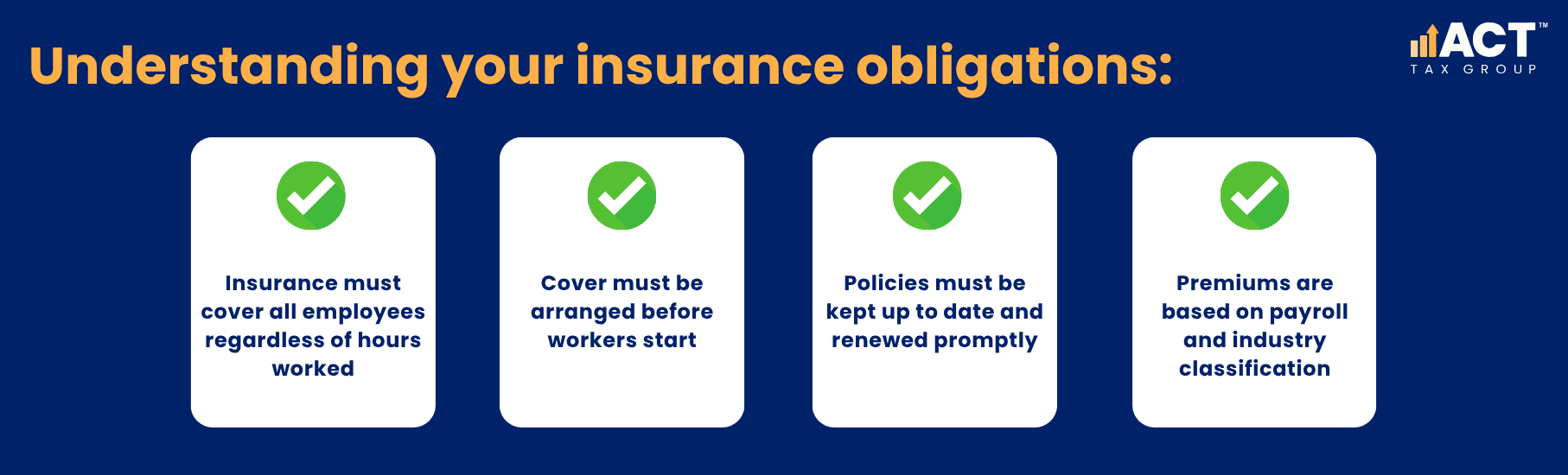
Workers’ compensation insurance is a legal requirement for most employers in Australia. This insurance protects your employees if they suffer work-related injury or illness, ensuring they receive medical care, wage replacement, and rehabilitation support. For your business, it provides protection and helps manage the costs of workplace incidents.
When you employ workers, your business is responsible for arranging appropriate cover whether staff work full-time, part-time, or casually. Even one employee requires valid insurance in place. Self-employed people don’t typically require cover for themselves, but if you employ others, the obligation rests with you. Failure to maintain insurance can result in significant penalties and complications if injury occurs.
How Should You Handle Workplace Injuries?
When injury occurs, your response is critical. Ensure injured workers receive prompt medical attention and support throughout recovery. Notify your insurance provider and complete required forms quickly, as delays can complicate claims and affect your worker’s entitlements.
Create clear systems for reporting injuries so staff feel confident raising concerns without fear of discrimination. Designate someone responsible for handling reports and coordinating with your insurer. Document everything—the date, time, location, people involved, what happened, and what harm resulted.
What Does a Safe Work Environment Look Like?
A safe work environment requires active effort from you and your team. Your responsibility includes identifying hazards specific to your industry and implementing control measures. This might involve modifying equipment, changing procedures, providing protective gear, or restructuring how work is organised.
Consultation with employees is essential—they often have valuable insights into improvements. Create systems where staff feel safe raising concerns without fear of discrimination. Develop clear safety procedures and ensure everyone receives adequate training on working safely. Regular supervision helps reinforce safe practices and identify where additional support is needed.
How Can You Support Injured Workers?
Supporting injured workers is both a legal responsibility and good business practice. When an employee suffers work-related injury, develop a clear return-to-work process that gradually reintegrates workers, often in modified roles during recovery.
Work alongside your injured worker, their doctor, and rehabilitation specialists. Listen to concerns and involve them in conversations about returning to usual duties. Offer suitable alternative work where practicable and keep communication open. This supportive approach leads to faster recovery and better outcomes for both the individual and your business.
What Records Must You Keep?
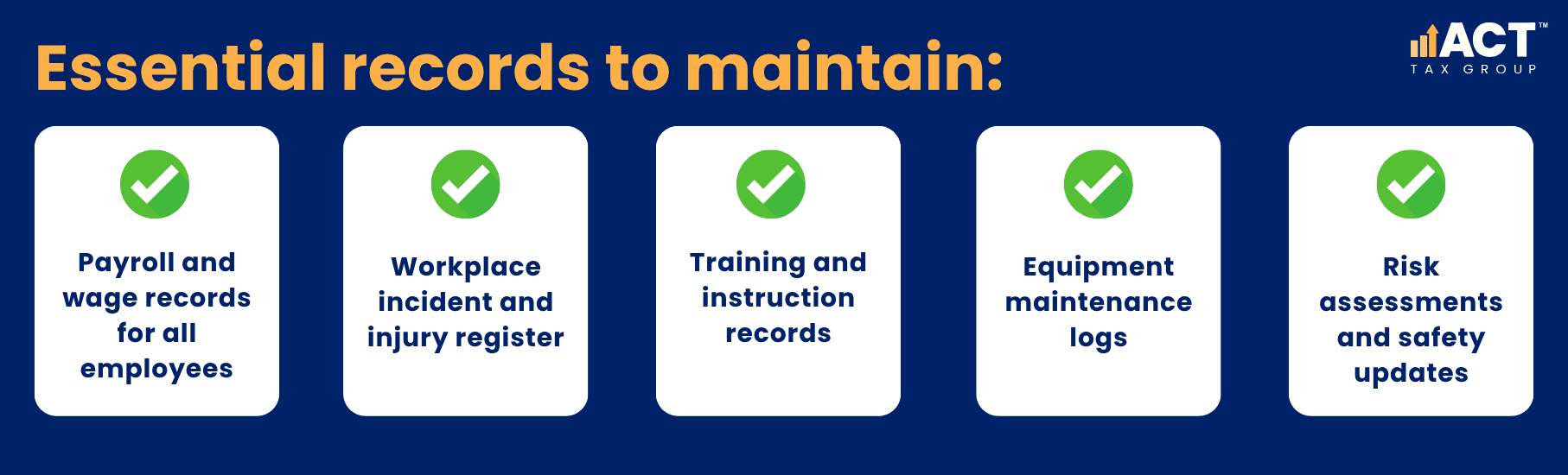
Accurate record-keeping is fundamental to employer responsibilities. Maintain detailed wage records for all employees, as these form the basis of workers’ compensation premium calculations. Create clear incident records including the date, time, location, people involved, what happened, and what harm resulted.
Record near-misses and hazard reports, even when they don’t result in injury. These help identify trends and areas where systems need strengthening. Keep records accessible to staff—transparency builds trust. Store documents securely and retain them for the period required by law. Falsifying records carries serious penalties.
What Training and Instruction Should You Provide?
Your responsibility includes ensuring your team has the knowledge and skills to work safely. Provide clear instruction on workplace procedures, how to use equipment correctly, and what hazards exist. Training should be appropriate to each role and refreshed regularly as systems change.
Make sure staff understand why procedures matter—this helps them apply safety principles in unfamiliar situations. Create a workplace culture where questions are welcomed. Record all training you provide to demonstrate commitment to workplace health and support compliance with legal obligations.
Effective training should cover:
Identifying hazards in their work area
Safe work procedures and why they matter
Correct use of equipment and machinery
Emergency procedures and evacuation routes
How to report injuries and concerns
How Should You Consult with Your Workforce?
Genuine consultation with employees is essential. Your workers are often your best source of information about what’s working and where improvements are needed. Create systems where staff feel invited to share concerns and ideas without fear of negative consequences.
Involve employees in developing safety procedures and assessing risks. When workers see their suggestions acted upon, they become partners in creating a safer workplace. Consult before making significant changes to work processes. Document these conversations so there’s a clear record of discussions and decisions.
What About Contractors and Visitors?
Your primary duty extends beyond direct employees. If contractors work on behalf of your business, you must ensure they work in a safe environment. Provide information about workplace hazards and emergency procedures and coordinate with other employers on-site.
Visitors and clients who come to your workplace also fall within your duty of care. Ensure facilities are safe with clear emergency procedures. If young workers are present, you must ensure tasks are appropriate and supervision is adequate.

What Happens If You Don’t Meet Your Responsibilities?
Failing to meet employer responsibilities carries serious consequences. Regulatory bodies conduct investigations and audits, and non-compliance can result in significant fines, prosecution, and personal liability for directors. Beyond legal consequences, failures damage your business reputation and staff morale.
Employees who don’t feel safe become less productive and engaged. High injury rates increase insurance premiums and create recruitment challenges. Building a genuinely safe workplace is a smart business investment that protects your team and your bottom line.
How Can You Access Support?
You don’t need to examine these responsibilities alone. WorkSafe ACT provides free resources, guidance, and practical advice tailored to different industries. Their website offers templates, checklists, and tools to help develop workplace procedures and systems.
Professional advisors—including occupational health specialists, workplace safety consultants, and employment lawyers—can provide tailored advice. Your insurance provider is also valuable, often offering training and risk assessments. Industry associations sometimes provide sector-specific guidance addressing challenges your business faces.
Conclusion
Your responsibilities as an employer are comprehensive, but fundamentally about doing right by your team. Providing a workplace where people feel safe, supported, and respected isn’t just a legal obligation—it’s the foundation for a business that attracts and retains good people. Workers’ compensation insurance, clear procedures, proper training, and genuine consultation are the building blocks of responsible, successful workplaces.
Start by reviewing your current systems and identifying gaps. Talk to your team about what’s working and where improvements are needed. Consult with professional advisors to ensure you’re meeting all legal requirements. Then commit to keeping your systems up to date as your business evolves. This proactive approach protects your employees, minimises risk, and creates a workplace culture that supports growth for everyone.

Lukasz Klekowski
Principal of ACT Tax Group, specialising in tax compliance and financial strategy for Australian small businesses.

Share this article
Disclaimer: All information provided in this publication is of a general nature only and is not personal financial or investment advice. It does not take into account your particular objectives and circumstances. No person should act on the basis of this information without first obtaining and following the advice of a suitably qualified professional. To the fullest extent permitted by law, no person involved in producing, distributing or providing the information in this publication (including ACT TAX GROUP PTY LTD, each of its directors, councilors, employees and contractors and the editors or authors of the information) will be liable in any way for any loss or damage suffered by any person through the use of or access to this information. The Copyright is owned exclusively by ACT TAX GROUP PTY LTD (ABN 31634338088)