

Two Electricians, One Business: First‑Year Money Systems Every Partnership Should Set Up
Published on June 16, 2026
Two Electricians, One Business: First-Year Money Systems Every Partnership Should Set Up is a practical guide for electrical business partners who want clear records, fair money rules, and fewer disputes in their first year. For two electricians in the Australian Capital Territory (ACT), the right business structure affects tax, liability, ownership, and day to day operations. A partnership is generally simpler than a company, but unlike companies, a general partnership is not usually a separate legal entity, which means the partners may be personally exposed if business debts arise.
What Money Systems Should a New Electrical Partnership Set Up First?
A new partnership should set up separate bank accounts, bookkeeping software, tax savings, partner drawing rules, job costing, and a written agreement before the business becomes busy. These systems help all the partners see income, costs, profits, debts, and obligations clearly.
A partnership business needs its own tax file number (TFN) and Australian Business Number (ABN), and it may also need Goods and Services Tax (GST) registration and regular Business Activity Statement (BAS) lodgements. GST registration is generally required once annual turnover reaches $75,000, so some small businesses focus on staying under the GST registration threshold, and each partner must usually pay income tax on their share of the partnership income.
Struggling to keep partnership finances separate and clear?
Schedule a complimentary consultation with us today to set up compliant business accounts and systems.
First-year setup checklist:
Open a trading bank account in the business name.
Open separate accounts for GST, income tax, wages, and partner drawings.
Choose cloud accounting software that tracks jobs, invoices, receipts, and supplier bills.
Agree how partners distribute income, share income, and take drawings.
Review tax and cash flow before BAS deadlines.
Keep partnership assets and business assets separate from personal assets.
Strong Partnerships Need a Written Agreement
A partnership agreement is a written agreement that explains how the business partnership works, including each partner’s responsibilities, percentage ownership, profits, debts, assets, and decision-making power. It can also explain what happens when a partner leaves, when new partners join, or when one partner wants to change the business structure.
A practical agreement should cover:
How profits and losses are shared.
How much capital each partner contributes.
Who owns tools, vehicles, and other partnership assets.
Who approves loans, finance, and larger purchases.
How partner drawings are calculated and paid.
What happens if one partner leaves or becomes unable to work.
How disputes are handled.
Whether professional advice is needed before major changes.

How Does Partnership Liability Affect Electricians?
In a general partnership, one or more partners may be jointly and severally liable for debts incurred by the business. This means partners can be jointly responsible and severally liable, so one partner may be pursued for the full amount of certain business debts, even if another partner created the problem.
This is why professional advice matters before choosing a legal structure. A sole trader, general partnership, limited partnership, incorporated limited partnership, and company can each create different tax, liability, and ownership outcomes, and companies also need to manage ASIC obligations carefully to avoid late fees and penalties, so the right business structure depends on your risks, assets, goals, and relationship with the other partners.
What Tax Records Should a Partnership Business Keep?
A partnership must lodge a partnership tax return, but the partnership itself does not usually pay income tax on its net income. Instead, it reports income and deductions, and each individual partner includes their share of the partnership net income or loss in their own individual tax return lodgement. The ATO expects business records to be accurate, complete, and easy to explain. For electricians, that means keeping invoices, receipts, bank statements, vehicle records, payroll records, supplier bills, job notes, signed variations, insurance documents, and records of business assets.
Weekly record habits can also reduce errors at tax time and help you avoid common tax deduction mistakes:
Upload receipts for tools, fuel, parking, and materials.
Match supplier bills to each job.
Reconcile bank transactions weekly.
Track unpaid invoices every Friday.
Save written approvals for variations.
Keep private spending out of the business account.

Job Costing Helps Partners Protect Profit
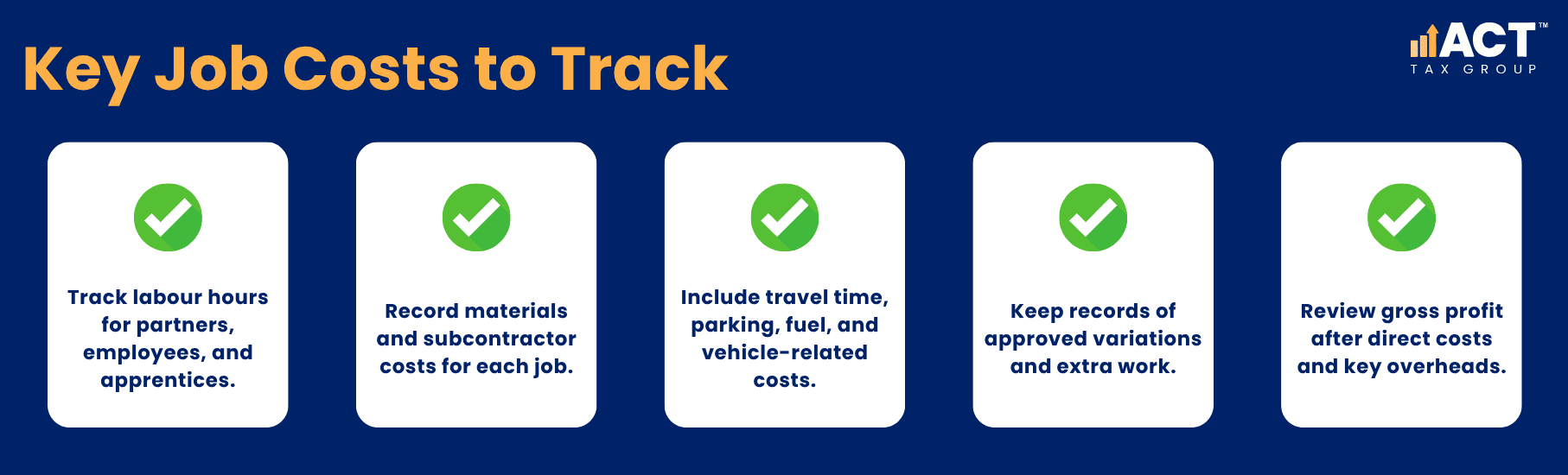
Job costing helps business partners see whether each job is profitable after labour, materials, subcontractors, travel, waste, and overheads. This matters because a partnership can look busy while still making weak profits. According to recent Australian small business reporting, many small and medium-sized businesses have experienced cash flow pressure from delayed payments, low reserves, rising costs, or seasonal changes, so tax‑savvy strategies that improve pricing, cash flow, and reporting can directly boost profits for tradies and contractors.
Payroll, Superannuation, and BAS Need Early Attention
If the partnership employs staff or apprentices, payroll must be set up before the first pay run. This includes Pay as You Go (PAYG) withholding, Single Touch Payroll (STP), superannuation, leave, allowances, and employee records. Errors in payroll can create back payments, stress, ATO issues, and missed PAYG instalment obligations. A clean payroll system also helps partners understand the real cost of employing staff, which can guide pricing and hiring decisions.
Payroll setup steps:
Confirm whether workers are employees or contractors.
Set up STP-enabled payroll software.
Collect TFN declarations and superannuation details.
Review award, overtime, and allowance requirements.
Schedule superannuation payments so they reach the employee’s fund by the required date. For employee earnings paid up to 30 June 2026, quarterly super due dates apply; from 1 July 2026, Payday Super rules apply.
Reconcile wages and PAYG withholding before BAS lodgement, using ATO Online Services for Business where appropriate to streamline BAS and payment tracking.
Power up your business with Accounting Built for Electricians
From start-up to expansion, our accounting team supports your tax, payroll, and cash flow at every stage of growth.
Cash Flow Rules Keep Partner Drawings Fair
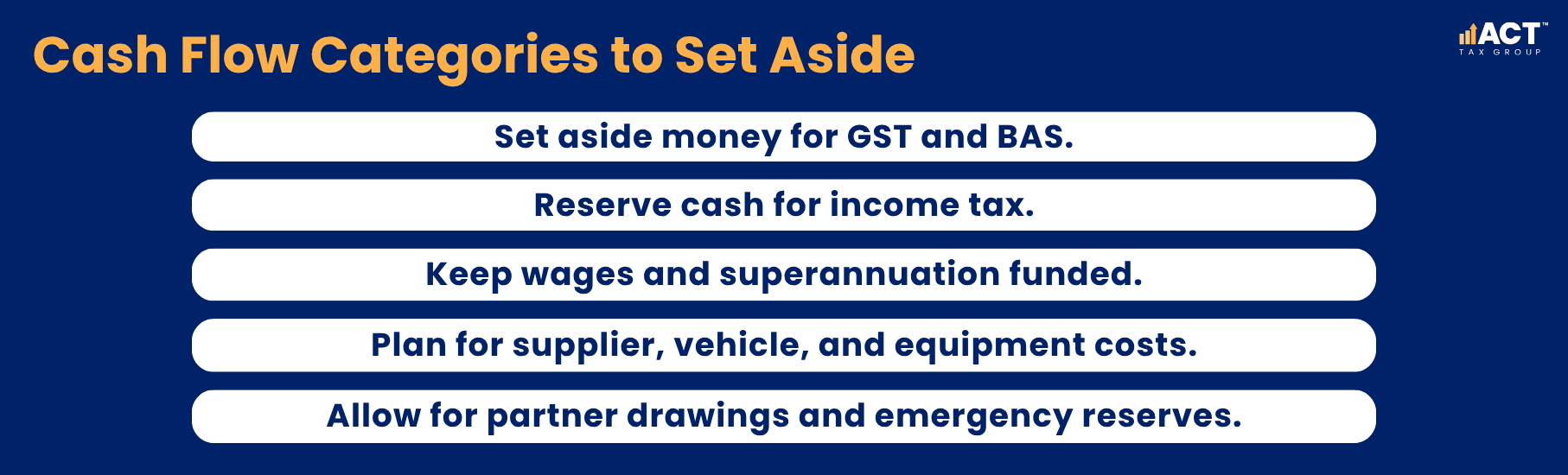
Partner drawings should be based on cash flow, tax savings, and upcoming debts, not just the amount sitting in the bank. This helps prevent one partner from taking too much cash while the partnership still owes GST, income tax, wages, suppliers, insurance, or finance repayments. A simple monthly forecast can show expected income, bills, BAS, payroll, loan repayments, and available cash. The partners can then agree on drawings that protect the business and keep the relationship fair.
How ACT Tax Group Can Help with First-Year Money Systems for Electrical Partnerships
We help electrical business partners set up practical accounting systems that support clean records, clearer tax planning, better cash flow, and stronger decision-making. Our team can help with business structure discussions, partnership income tracking, GST and BAS support, bookkeeping setup, payroll processes, job costing reports, and partner drawing rules.
You can book a consultation with ACT Tax Group to review your partnership business, tax obligations, cash flow, and record-keeping before small issues become larger problems. We provide friendly, IPA-certified support for Australian small to medium-sized businesses that want clear advice.
Conclusion
A strong electrical partnership needs more than two skilled electricians and a steady flow of work. It needs a clear agreement, accurate records, separate bank accounts, tax planning, job costing, payroll systems, and cash flow rules that all the partners understand, especially where unlimited liability may affect personal risk. The first year is the best time to build these habits because the business is still flexible. With the right systems and professional advice, business partners can reduce disputes, meet Australian Taxation Office requirements, protect personal assets where possible, manage obligations, and make better decisions as the partnership grows.

Lukasz Klekowski
Principal of ACT Tax Group, specialising in tax compliance and financial strategy for Australian small businesses.

Disclaimer: All information provided in this publication is of a general nature only and is not personal financial or investment advice. It does not take into account your particular objectives and circumstances. No person should act on the basis of this information without first obtaining and following the advice of a suitably qualified professional. To the fullest extent permitted by law, no person involved in producing, distributing or providing the information in this publication (including ACT TAX GROUP PTY LTD, each of its directors, councilors, employees and contractors and the editors or authors of the information) will be liable in any way for any loss or damage suffered by any person through the use of or access to this information. The Copyright is owned exclusively by ACT TAX GROUP PTY LTD (ABN 31634338088)