

From Accounting Profit to Taxable Income: A Simple Bridge Every Arborist Owner Can Walk Through at Year-End
Published on June 2, 2026
From Accounting Profit to Taxable Income: A Simple Bridge Every Arborist Owner Can Walk Through at Year-End helps arborist business owners understand how accounting profit becomes taxable income before income tax is calculated. In simple terms, taxable income is worked out before tax, not after tax, and it helps determine how much tax may be payable for the financial year.
Is Taxable Income Before or After Tax?
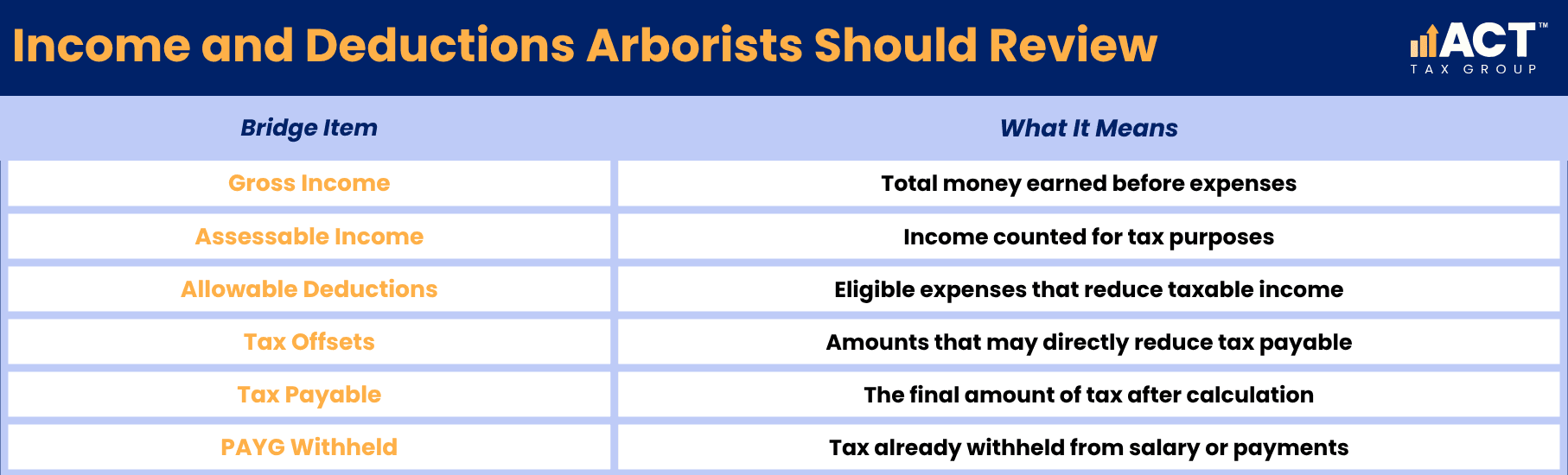
Taxable income is before tax, because it is the amount used to calculate income tax. It generally starts with assessable income, then allowable deductions are claimed to reduce the taxable amount for tax purposes. For an arborist business, assessable income may include gross income from tree removal, pruning, stump grinding, emergency callouts, foreign income from business activities, assessable government payments, capital gains from business assets, and other business income if they apply.
If you operate as a sole trader, personal income such as salary, dividends, investment income, or other income may also need to be included in your individual tax return. The Australian Taxation Office (ATO) generally requires business deductions to be directly related to earning assessable income, not private in nature, and supported by records.
Struggling to turn accounting profit into taxable income?
Schedule a complimentary consultation with us today to clarify your year-end tax position.
The Year-End Bridge Helps You Work Out How Much Tax to Expect
The bridge from accounting profit to taxable income gives an indication of how much tax you may need to pay. It is not the same as an income tax calculator, tax calculator, or calculator on the ATO website, because your final tax payable can depend on your business structure, taxable income, applicable tax rates, Medicare levy, Medicare levy surcharge, tax offsets, credits, PAYG instalments reported on IAS, and other details.

For Australian resident individuals, including sole traders, the tax-free threshold may apply. Companies do not receive the individual tax-free threshold, while partnerships and trusts have different reporting and tax treatment depending on their circumstances. This is why arborist owners should seek professional advice if they are unsure, especially where employees, other workers, debt, investments, PAYG obligations, or capital gains are involved.
What Income and Deductions Should Arborists Review?
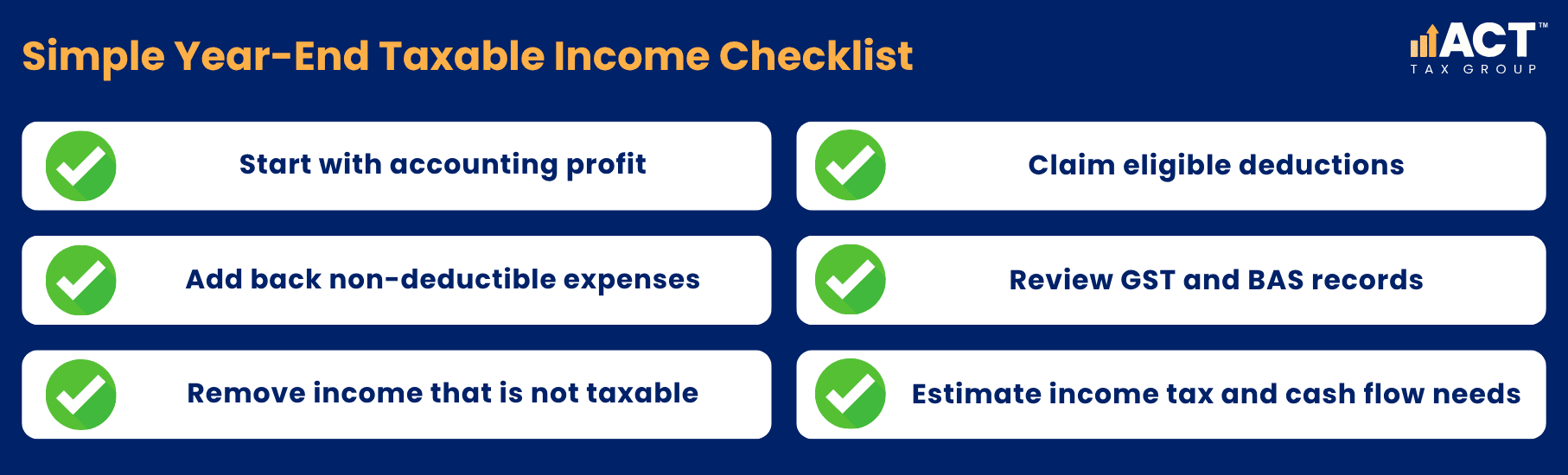
Arborists should review all money earned from services, including payments from homeowners, builders, strata managers, insurers, councils, and commercial clients. They should also check whether any other income, investment income, dividends, benefits, or government payments need to be included in their account records. Deductions may include fuel, tools, repairs, insurance, safety gear, subcontractor costs, wages, software, eligible employer superannuation contributions, and equipment costs where the claim is connected to earning assessable income, supported by records, and free from common tax deduction mistakes.
How ACT Tax Group Can Help with Arborist Year-End Tax Planning
We help arborist owners walk through the bridge from accounting profit to taxable income in plain English. Our team can review your income, deductions, GST, payroll, superannuation, equipment purchases, Business Activity Statement records, and GST credits so you can understand the calculation before you lodge.
Grow your tree care business with Accounting Built for Arborists
From start-up to expansion, our accounting team supports your tax, payroll, and cash flow — so you can focus on running your business safely and profitably.
You can book a consultation with ACT Tax Group to estimate your tax payable, review your records, and plan ahead for the next financial year. We provide practical support for small to medium-sized businesses in Australia, with advice tailored to your business structure and cash flow needs, including using ATO Online Services for Business, managing ASIC late fees and penalties, choosing whether to stay under the GST registration threshold, and understanding how family circumstances may interact with entitlements such as Family Tax Benefit Part A.

Before year-end, check your records, compare your accounting profit with taxable income, and arrange professional advice if anything is unclear. A simple bridge can help you move from rough estimates to clearer decisions about tax, income, deductions, and the money your arborist business needs to keep growing.

Lukasz Klekowski
Principal of ACT Tax Group, specialising in tax compliance and financial strategy for Australian small businesses.

Disclaimer: All information provided in this publication is of a general nature only and is not personal financial or investment advice. It does not take into account your particular objectives and circumstances. No person should act on the basis of this information without first obtaining and following the advice of a suitably qualified professional. To the fullest extent permitted by law, no person involved in producing, distributing or providing the information in this publication (including ACT TAX GROUP PTY LTD, each of its directors, councilors, employees and contractors and the editors or authors of the information) will be liable in any way for any loss or damage suffered by any person through the use of or access to this information. The Copyright is owned exclusively by ACT TAX GROUP PTY LTD (ABN 31634338088)