

What Is the Transfer Balance Cap and How Does It Affect Your Super
Published on January 19, 2026
What Is the Transfer Balance Cap and How Does It Affect Your Super if you are planning to turn your savings into a steady retirement income? The Transfer Balance Cap is a lifetime limit on how much money you can move into a retirement phase account where investment earnings are tax free, so it directly shapes how you structure your pension and superannuation income stream. The way this cap works can affect your tax, your cash flow and how long your super lasts.
From 1 July 2025, the general Transfer Balance Cap is set at 2 million dollars, which means this is the total amount most people can first transfer into retirement phase income streams across all funds. Any balance over that limit must remain in accumulation phase, where investment earnings are usually subject to tax inside the fund. That makes it important to plan how your super account moves from saving to retirement phase so you can get the best outcome from the rules.
What Exactly Is the Transfer Balance Cap?
The Transfer Balance Cap is a lifetime limit on the total amount you can move from accumulation phase into a retirement phase pension or other retirement phase income stream. Once money is transferred into a retirement phase account, a matching transfer balance credit is recorded in your transfer balance account. Future earnings, losses, or pension payments do not change that original credit, so only certain events add debits or credits over time.
This cap applies across all of your super funds, so it is based on your total amount in retirement phase, not just one pension account. If you use more cap space than your personal Transfer Balance Cap allows, you may be required to remove the excess amount from retirement phase. That is why understanding this limit early helps you avoid additional tax and rushed decisions later.
Concerned about exceeding your $2 million Transfer Balance Cap?
Schedule a complimentary consultation with us today to review your super balances and avoid excess transfer tax.
How Much Is the General Transfer Balance Cap Now?
The general Transfer Balance Cap started at 1.6 million dollars when it was first introduced and has increased over time in line with the consumer price index. From 1 July 2025, the general transfer balance cap is 2 million dollars for anyone starting a retirement phase income stream for the first time in that financial year. That general cap acts as the starting point for working out your personal cap.
These increases are driven by indexation rules that look at the movement in the consumer price index and only lift the cap in fixed steps. The general Transfer Balance Cap will not move every year, but when indexation is triggered, the balance cap usually rises by a set amount. When the cap changes, it affects how much you can transfer to retirement phase for the first time and how your personal Transfer Balance Cap can grow over time.
What Is a Personal Transfer Balance Cap?
Your personal Transfer Balance Cap is the individual limit that applies to you based on the general cap and your past activity. It starts from the general Transfer Balance Cap that applied when you first moved money into a retirement phase pension or other superannuation income stream. From there, proportional indexation may increase your personal cap over time.
Proportional indexation works by looking at the highest value your transfer balance account has reached and comparing it to the general cap at that time. If you have not used your full cap, you still have unused cap space, and a portion of each future indexation increase may be added to your personal Transfer Balance Cap. Your personal cap is therefore calculated using both your past credits and debits and each indexation step.
How Does Your Transfer Balance Account Work?
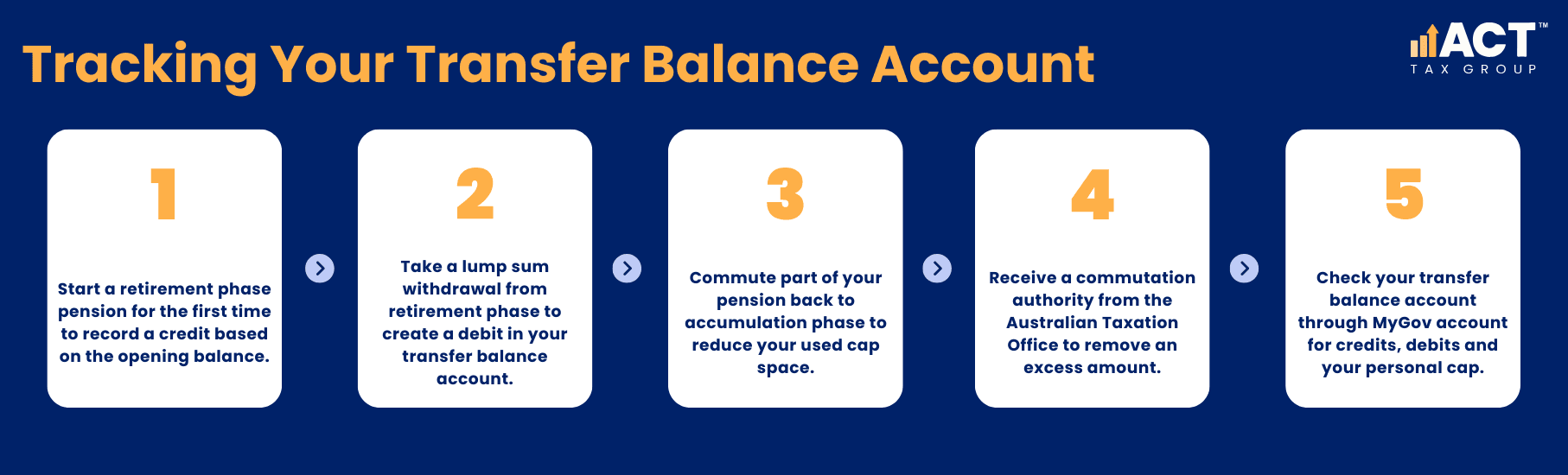
Your transfer balance account is a running record used to track your movements into and out of retirement phase, not a real bank account you can see daily. When you start an account based pension for the first time, the pension valued at its opening balance is recorded as a credit in your transfer balance account. Later commutations, lump sum withdrawals from retirement phase or some other events are recorded as debits.
This record uses values that are calculated at specific times, such as when your pension starts, when a lump sum is taken, or when a commutation authority is applied. Over time, the Australian Taxation Office uses this list of credits and debits to determine whether you have stayed within your personal Transfer Balance Cap. While you can see details through your MyGov account, the day-to-day investment earnings and regular pension payments do not change the transfer balance themselves.
What Happens If You Have an Excess Transfer Balance?
If the total amount recorded in your transfer balance account is higher than your personal cap, you will have an excess transfer balance. In that case, the Australian Taxation Office will issue a determination that sets out the excess amount and the notional earnings that have been calculated on that excess. You then need to take steps to remove that excess from retirement phase.
To fix the excess, you may need to commute part of your retirement phase pension back to accumulation phase or take a lump sum out of the super system. If you do not act within the time allowed, a commutation authority can be sent to your super fund, requiring it to commute the required amount on your behalf. On top of moving the excess amount, you may also face excess transfer balance tax on the notional earnings that have built up on that excess.
What Is Excess Transfer Balance Tax?
Excess transfer balance tax is an additional tax that applies to the notional earnings linked to any excess transfer balance. These notional earnings are calculated using a set rate and apply only to the excess amount and the period of time it remained over the limit. The aim is to remove the benefit of having too much money in a tax-free retirement phase account.
For a first time excess, the extra tax rate is lower, but later breaches can be taxed at higher levels that are closer to your full marginal rates. Once excess transfer balance tax is determined, it becomes payable even after you commute the excess amount. This is one of the main reasons it is important to monitor your cap space and seek professional advice before making large transfers to retirement phase.
How Do Account Based Pensions and Income Streams Fit In?
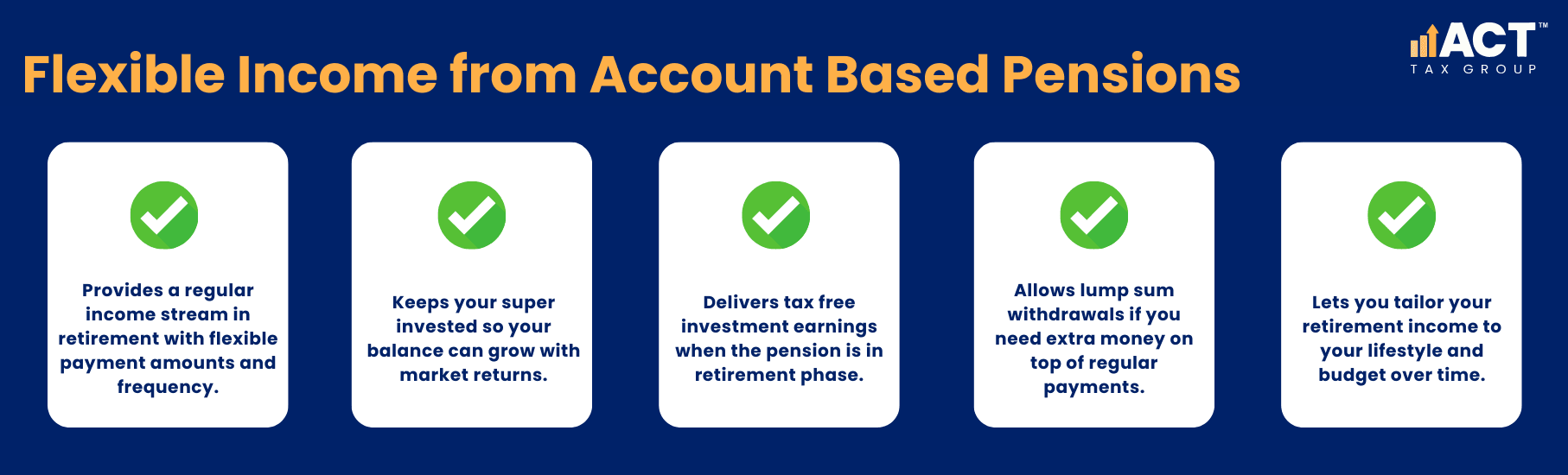
An account-based pension is the most common type of retirement phase income stream. When you start this kind of pension for the first time, the pension valued at the start date is transferred from your accumulation phase super account into a retirement phase account. That transfer creates a credit in your transfer balance account equal to the full amount used to start the pension.
Ongoing pension payments are then made as regular pension payments from that account, subject to minimum drawdown rules each financial year. While the balance will change with investment earnings and payments, those changes do not usually create new credits or debits for transfer balance purposes. Instead, it is the initial transfer, later commutations, and certain lump sum withdrawals that matter for your cap calculation.
How Do Defined Benefit Income Streams Work with the Cap?
Defined benefit pensions and defined benefit income streams are treated differently because they usually pay a set annual entitlement rather than being based on a visible account balance. To bring them into the cap rules, a special value is calculated for transfer balance purposes using a set formula and this value is recorded as a credit in your transfer balance account. The calculation is designed for illustrative purposes, to approximate a comparable balance.
If your defined benefit income pushes you over your personal cap, you might not be able to commute the pension itself, but some of the income could become subject to tax at your marginal rates. In some cases, there are limits on how much defined benefit income can remain tax free before extra tax applies. This makes it important to look at your total amount of retirement phase income streams, including any defined benefit income, when planning your strategy.
How Does The Cap Affect Investment Earnings And Tax?
Once money is inside a retirement phase account that is within your personal Transfer Balance Cap, the investment earnings on those assets are generally tax free inside the super fund. By contrast, investment earnings on money that remains in accumulation phase are usually subject to tax within the fund. The larger the share of your super that can sit in retirement phase, the more of your earnings can avoid this internal tax.
However, the Transfer Balance Cap places a firm limit on how much can be moved into that tax free environment. If you have super across multiple funds, the Australian Taxation Office looks at your total transfer balance, not just one super account, when checking this limit. Planning which assets are transferred into retirement phase and which stay in accumulation phase can therefore make a real difference to your long-term after-tax position.
How Are Personal Caps And Indexation Calculated?
Your personal transfer balance is tracked continuously through your transfer balance account, but indexation only changes your personal cap at specific times. When the general Transfer Balance Cap increases due to indexation, the Australian Taxation Office works out how much of your original cap you have used at your highest point. That usage is then applied to the new increase through proportional indexation.
For example, if your highest transfer balance was 1.6 million and the general cap at that time was 2 million, you have used 80 percent of your cap. If the general cap later rises, your personal cap only grows by 20 percent of that increase. This calculation means that people who have not yet started a retirement phase pension at the time of indexation usually get the full amount of the increase.

How Do Pension Payments, Commutations and Withdrawals Affect the Cap?
Regular pension payments you take from your retirement phase account do not usually change your transfer balance account. By contrast, when you make lump sum withdrawals from retirement phase or commute part of your pension back to accumulation phase, a debit is recorded and your used cap space may fall. This can free up room under your personal cap for future transfers.
Sometimes the Australian Taxation Office issues a commutation authority to your fund, which requires the trustee to move a determined amount back to accumulation or pay it out as a lump sum. When that happens, the fund must follow the instructions, and the commuted value is then recorded as a debit in your transfer balance account. Tracking these movements carefully helps you avoid an excess transfer balance and the additional tax that comes with it.
How Can You Check Your Transfer Balance and Plan Ahead?
You can see your recorded transfer balance and personal Transfer Balance Cap through your mygov account once it is linked to the Australian Taxation Office. This can be a useful way to confirm your current position before starting a new pension or moving more money into retirement phase. It also lets you check how previous credits and debits have been treated.
Because the rules involve valuations, indexation steps and calculations that are not always obvious from your fund statements, many people choose to seek professional advice. An adviser or accountant can look at your super fund records, your transfer balance account, and your overall assets to help you structure pension accounts and income streams within your limit. This support can make sure your plan is determined by your goals, not just by the cap.

Conclusion: Using The Transfer Balance Cap to Your Advantage
The Transfer Balance Cap is a central limit in the super system that shapes how much of your superannuation can sit in a tax-free retirement phase account. Understanding how your personal Transfer Balance Cap, your transfer balance account and proportional indexation work gives you more control over when and how you start a retirement phase pension. Used carefully, these rules can support a steady pension, manageable tax and a more confident retirement.
If you are unsure how close you are to your personal cap, or whether a new pension or lump sum withdrawal could affect your limit, it is wise to get professional advice before acting. A clear view of your super account balances, transfer balance and income streams makes it easier to avoid excess amounts, additional tax and rushed corrections. With the right guidance, you can turn these complex settings into a simple, reliable plan for your financial future.

Lukasz Klekowski
Principal of ACT Tax Group, specialising in tax compliance and financial strategy for Australian small businesses.

Disclaimer: All information provided in this publication is of a general nature only and is not personal financial or investment advice. It does not take into account your particular objectives and circumstances. No person should act on the basis of this information without first obtaining and following the advice of a suitably qualified professional. To the fullest extent permitted by law, no person involved in producing, distributing or providing the information in this publication (including ACT TAX GROUP PTY LTD, each of its directors, councilors, employees and contractors and the editors or authors of the information) will be liable in any way for any loss or damage suffered by any person through the use of or access to this information. The Copyright is owned exclusively by ACT TAX GROUP PTY LTD (ABN 31634338088)