

What Is Voluntary Administration And When Should a Company Enter It
Share this article
Published on January 12, 2026
What is voluntary administration and when should a company enter it are questions many directors ask when their company is in financial difficulty and normal cash flow solutions are no longer working. Voluntary administration is a formal process where an independent person, called a voluntary administrator, takes control of the company’s affairs to work out the best outcome for the company’s creditors, employees and owners. When used at the right time, it can give a company breathing space from enforcement action and help decide the company’s future in a more orderly way than an immediate liquidation.
When a company is under financial distress, it is easy for company directors to delay decisions and hope things improve, but waiting can increase the risk of insolvent trading and reduce the value of the company’s assets. Voluntary administration aims to protect the company’s business, ensure employee entitlements are treated fairly and give creditors a clear say in the company’s future. Understanding how the voluntary administration process works helps you make informed decisions instead of reacting when legal action or demands have already escalated.
What Is Voluntary Administration Under the Corporations Act?
Voluntary administration is a process under the Corporations Act where a registered liquidator is appointed as voluntary administrator to take control of an insolvent company or one likely to become insolvent. The administrator takes control of the company’s property, reviews the company’s affairs and financial circumstances, and recommends how to deal with creditor claims in a way that is better than immediately winding the company up. The aim is either to save a viable business or to deliver a better return to the company’s creditors than immediate liquidation.
Once appointed, the voluntary administrator is an independent person who must act in the interests of all creditors, not just one group such as secured creditors or trade creditors. During the administration period there is usually a pause on most enforcement action, which creates breathing space so the voluntary administrator’s investigation can take place without constant pressure from those owed money. At the end of this review, creditors vote on whether the company should enter a company arrangement, return to directors control, or go into liquidation.
Worried your ATO debt is now unmanageable?
Schedule a complimentary consultation with us today to review PAYG, BAS and company tax arrears before enforcement escalates.
When Should a Company Consider Entering Voluntary Administration?
A company should consider voluntary administration when it is an insolvent company or likely to become one because it cannot pay debts as they fall due. Warning signs include ongoing financial problems, constant discussions with trade creditors about late payments, repeated extensions from the landlord for lease property, and growing debts to the tax office and other unsecured creditors. In these situations, the risk of insolvent trading claims against directors increases if they keep the business continuing without a clear plan.
Company directors should also consider voluntary administration when key stakeholders such as banks or major suppliers have lost confidence and are threatening legal action or enforcement action over a security interest on the company’s assets. If the company’s business is still fundamentally a viable business but needs time or restructuring, the administration period can help preserve value while options are tested. Deciding to enter voluntary administration early often gives more choices than waiting until there is no realistic alternative to immediate liquidation.
How Does The Voluntary Administration Process Start?
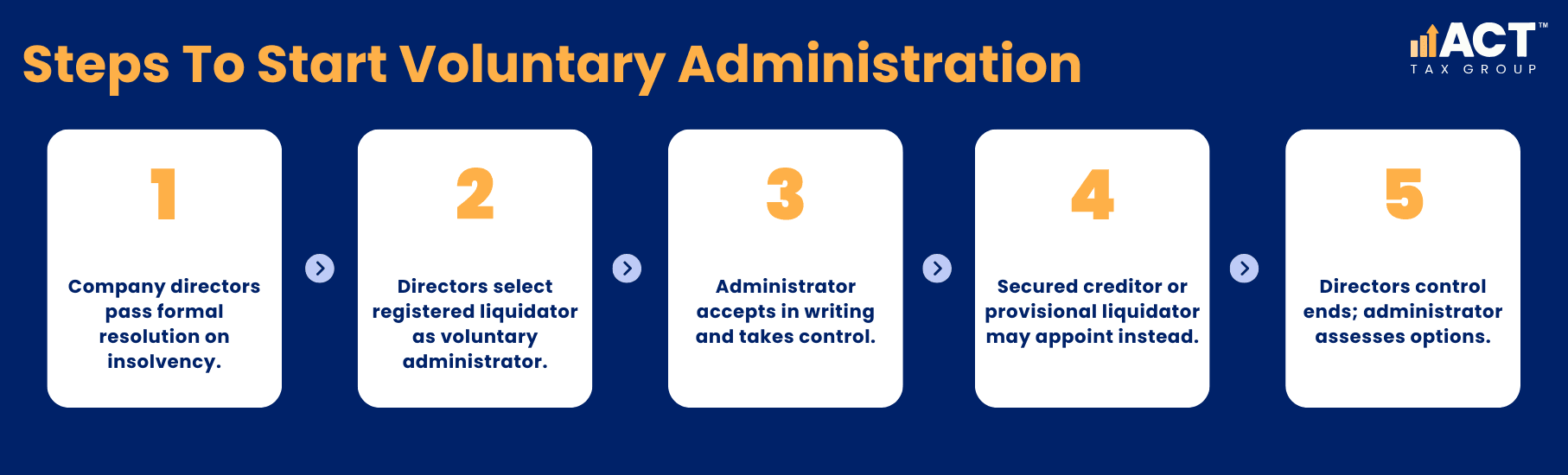
The voluntary administration process usually starts when company directors pass a formal resolution that the company is insolvent or likely to become insolvent and that an administrator should be appointed. They then approach a registered liquidator who is willing to act as voluntary administrator, and once that person accepts in writing, the administrator takes control of the company’s affairs and company’s property. In some cases a secured creditor with a security interest or a liquidator or provisional liquidator may also start the process.
From appointment, directors control ends for most day‑to‑day decisions and the independent administrator makes the key calls about whether to continue trading, sell assets, or reduce costs. This taking control can feel confronting for directors, especially if they have signed a personal guarantee, but it also reduces the risk of them becoming personally liable for new debts. For creditors, it signals that an independent administrator is now assessing the best outcome rather than leaving matters to directors who are under pressure.
What Happens at the First Creditors Meeting?
The first creditors meeting is a key early step in voluntary administration and must usually be held within eight business days of the appointment. Eligible employees, secured creditors, other unsecured creditors and any other stakeholders owed money are invited to attend or lodge documents so they can take part. The main purpose of this first meeting is to confirm whether creditors trust the existing voluntary administrator to continue, or whether they want to replace them with another independent person.
Creditors also decide at this first meeting whether to form a committee to help oversee the administration period. This group can provide feedback to the voluntary administrator about the company’s business and key stakeholders, but it does not replace the formal creditors meeting. Before the first meeting, creditors will receive at least five business days’ notice along with basic information about the company’s financial difficulty, so they can engage meaningfully in how the voluntary administration process unfolds.
What Does The Voluntary Administrator Do During The Administration Period?
During the administration period, the voluntary administrator’s investigation focuses on understanding the company’s financial circumstances, company’s assets, company’s property, and the reasons for the financial distress. The administrator assesses creditor claims, reviews possible voidable transactions such as unusual payments to related parties, and considers whether the company’s business can continue trading in some form. This review includes talking with company directors, staff and key stakeholders to build a realistic picture of the company’s future options.
The voluntary administrator must then decide whether there is a viable business that can be kept going under a company arrangement or whether immediate liquidation is likely to deliver better returns. If business continuing is possible, the administrator may allow trading to go on during the administration period to preserve goodwill, customers and staff. Throughout this time, creditors play an important role by sharing information, raising concerns and preparing for the later creditors meeting where they will decide company’s future.
How Does A Deed Of Company Arrangement (DOCA) Work?
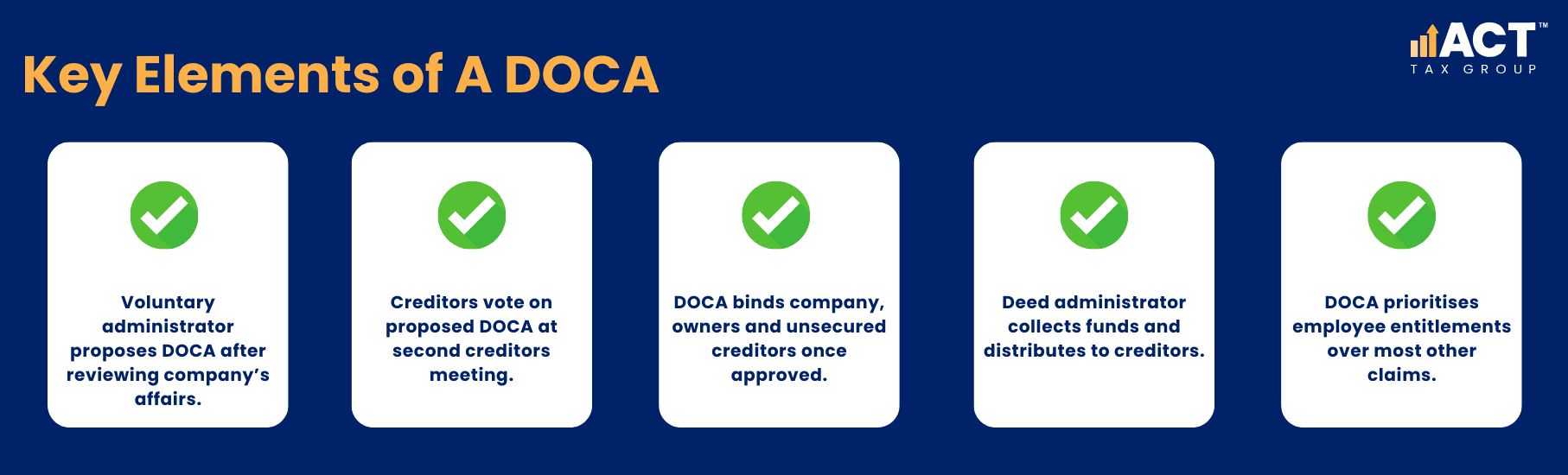
A deed of company arrangement is a binding agreement between the company and its creditors that sets out how debts will be dealt with after the administration period. Often called a company arrangement DOCA, it usually involves contributions from future profits, asset sales or funds from owners to pay an agreed amount to creditors over time. Once creditors approve a DOCA proposal, it binds owners and unsecured creditors, and may also affect some secured creditors depending on the terms.
The paid depends on the company’s ability to generate funds under the deed, and the exact terms of the binding agreement. The deed administrator’s ongoing role is to carry out the DOCAs terms, collect funds and distribute them to creditors in line with the agreed priorities. For employees, a well‑structured company arrangement aims to ensure employee entitlements are dealt with fairly, improving the prospects for eligible employees compared with an immediate liquidation.
What Happens at the Second Creditors Meeting?
The second creditors meeting, sometimes called the second meeting, is where creditors vote on the DOCAs terms or other options for the company’s future. Before this meeting, the voluntary administrator issues a detailed report that explains the voluntary administrator’s investigation, summarises creditor claims and outlines the likely returns under different scenarios. Creditors then compare a proposed DOCA against immediate liquidation or a return to directors control.
At the meeting, creditors vote on the administrator’s recommendations and may approve a company arrangement, choose liquidation, or very rarely decide to hand the company back to the directors. The creditors vote is based on both the number of creditors and the amount they are owed, so larger creditors have greater influence. Once creditors approve a DOCA proposal, the deed administrator steps in to manage the arrangement going forward.
How Are Different Types Of Creditors Treated In Voluntary Administration?
Different groups of creditors are affected in different ways during voluntary administration. Secured creditors, such as banks with a security interest over major assets, may have special rights that allow them to enforce their security in certain timeframes or choose to wait and take part in the process. Unsecured creditors, including trade creditors and other unsecured creditors, usually cannot start or continue legal action while the administration period is in place.
In a DOCA or liquidation, the way each creditor is paid depends on the order of priorities and the value of company’s assets. Employee entitlements such as wages and some leave are generally given priority over other unsecured creditors to help protect eligible employees. While no process can fully satisfy every party owed money, a well‑designed company arrangement aims to give creditors a better result than immediately winding the company up.
How Does Voluntary Administration Affect Directors, Employees And Stakeholders?
For company directors, voluntary administration changes their day‑to‑day role because the administrator takes control of the company’s business and decisions. This can be a relief in serious financial difficulty because it reduces the risk of insolvent trading claims and of being personally liable for new debts incurred while insolvent. Directors still need to cooperate fully with the voluntary administrator’s investigation, provide records and help explain the company’s affairs.
Employees often worry about jobs and entitlements when they hear the word insolvent company, but voluntary administration can help protect them compared with a rushed liquidation. If the administrator keeps the business continuing, wages and super during the administration period are usually treated as high‑priority costs. In a later DOCA or liquidation, there are rules that aim to ensure employee entitlements are handled before most other unsecured creditors, which offers some comfort to eligible employees.
Other stakeholders, including landlords and customers, will also feel the impact of voluntary administration. For example, a landlord may not be able to immediately terminate a lease property during the administration period, and customers may need clear communication about business continuity. Good engagement from the independent administrator and directors can help maintain relationships and support the best outcome for everyone involved.

What Are the Risks of Waiting Too Long to Enter Voluntary Administration?
Waiting too long to consider voluntary administration can reduce the chances of saving a viable business and increase personal risks for directors. As financial problems deepen, creditors become less patient, key suppliers may stop trading, and staff may leave, all of which lower the value of the company’s assets. At the same time, continuing to trade while insolvent increases the risk of insolvent trading claims and other personal exposure, especially where a personal guarantee has been given.
By acting earlier, company directors can access company breathing space before creditor claims and legal action become overwhelming. This gives the voluntary administrator more room to examine options such as a DOCAs structure, sale of parts of the business, or other restructures that might keep jobs and value in the business. Late appointments, on the other hand, often limit the administration to simply closing the company down and distributing what little remains to creditors.
What Practical Steps Should Directors Take Before And During Voluntary Administration?
Before entering voluntary administration, directors should gather key financial information, including cash flow forecasts, details of the company’s property, lists of creditors, and a clear picture of all security interests. Having accurate records helps the independent administrator make faster, better decisions about whether the company’s business can continue trading or needs to be wound up. It also shows creditors that directors are acting responsibly and supporting a transparent process.
Directors should also speak with an experienced advisor or registered liquidator early to understand whether voluntary administration, another company arrangement, or a different option is likely to deliver the best outcome. During the administration period, directors should stay engaged with the voluntary administrator, answer questions quickly and be honest about past decisions and any possible voidable transactions. This cooperative approach builds creditors trust and improves the chances that creditors approve a workable DOCAs structure rather than forcing an outcome that mainly focuses on immediate liquidation.

Conclusion: When Should You Seek Help About Voluntary Administration?
Voluntary administration is a powerful tool when used at the right time, but it is not a cure‑all for every insolvent company. It works best when there is a genuinely viable business to save and when company directors act early, so the voluntary administrator has real options beyond simply selling assets and closing the doors. The process gives breathing space, brings in an independent administrator, and lets creditors play a clear role in deciding the company’s future.
If your company is facing financial difficulty, rising creditor claims or threats of enforcement action, it is important not to wait until only immediately winding the business up seems possible. By talking with a trusted advisor or registered liquidator sooner, you can weigh up a DOCAs proposal, other restructuring options and the risks of insolvent trading in a calm, informed way. Taking control early helps protect your business, your employees, and your own position as a director, so you can move forward with clearer choices and less stress.

Lukasz Klekowski
Principal of ACT Tax Group, specialising in tax compliance and financial strategy for Australian small businesses.

Share this article
Disclaimer: All information provided in this publication is of a general nature only and is not personal financial or investment advice. It does not take into account your particular objectives and circumstances. No person should act on the basis of this information without first obtaining and following the advice of a suitably qualified professional. To the fullest extent permitted by law, no person involved in producing, distributing or providing the information in this publication (including ACT TAX GROUP PTY LTD, each of its directors, councilors, employees and contractors and the editors or authors of the information) will be liable in any way for any loss or damage suffered by any person through the use of or access to this information. The Copyright is owned exclusively by ACT TAX GROUP PTY LTD (ABN 31634338088)