

Arborist Improves Record-Keeping for Equipment and Expenses
Published on October 8, 2025
Running your own arborist business in Australia means juggling multiple responsibilities, and one of the biggest challenges many tree service professionals face is maintaining proper bookkeeping for equipment purchases and business expenses. Without organised financial records, you might find yourself scrambling during BAS time, potentially missing valuable tax deductions, or worse—facing penalties for late lodgements. This challenge becomes even more pressing when cash flow is tight, and BAS deadlines are looming.
Facing similar challenges with your record-keeping system? Let us help you find a solution that works for your arborist business.
When Documentation Issues Creates BAS Stress
Jake (not real client’s name) had been operating his tree service business successfully for over five years, building a solid reputation across Canberra and surrounding areas. However, as his business grew, so did his equipment inventory and operational expenses. What started as a simple operation with basic tools had evolved into a complex business requiring chainsaws, chippers, stump grinders, climbing equipment, and specialised safety gear.
The problem became apparent when BAS deadlines approached. Jake would spend entire weekends sifting through source documents, trying to remember which equipment purchases were for business use versus personal use. He struggled to track financial data on larger equipment items and often couldn’t locate purchase receipts for tools and safety equipment when preparing tax returns.
Grow your tree care business with Accounting Built for Arborists
From start-up to expansion, our accounting team supports your tax, payroll, and cash flow — so you can focus on running your business safely and profitably.
Missing Equipment Documentation
Jake’s main challenge centered around recording financial transactions for equipment purchases. As an arborist, he regularly purchased tools costing both above and below crucial thresholds that determine immediate versus depreciated deductions. Without proper financial records, he couldn’t maximise his tax benefits during BAS preparation.
He also faced difficulties with larger equipment purchases. When he bought a wood chipper worth several thousand dollars, he wasn’t sure how to handle the bookkeeping process properly. Similar confusion arose with his truck modifications, climbing gear, and safety equipment purchases throughout the year.
The lack of a systematic bookkeeping system meant Jake couldn’t produce accurate financial statements when needed. This created problems not only for tax returns but also when he needed to show his financial performance to potential lenders or business partners.
Cash Flow Pressure Around BAS Time
The quarterly BAS deadlines created additional stress for Jake’s business operations. Like many small businesses, he experienced seasonal fluctuations in revenue, with peak periods during spring and summer followed by slower winter months. When BAS payments were due, particularly in quieter periods, cash flow became tight.
Without organised bookkeeping, Jake couldn’t accurately forecast his tax obligations or plan for BAS payments in advance. This reactive approach meant he was constantly caught off guard by his quarterly obligations, creating unnecessary financial pressure during already challenging periods.
His accounts receivable and accounts payable weren’t properly tracked either, making it difficult to maintain healthy cash flow. Jake often didn’t know exactly when clients would pay or when his own expenses were due, leading to poor financial planning.

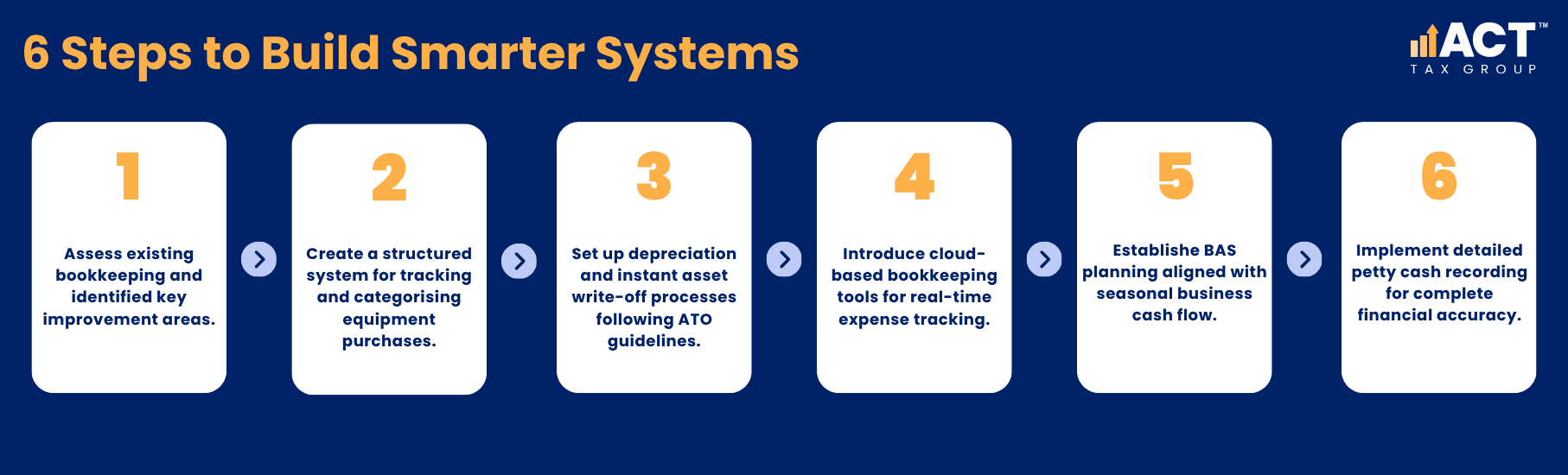
How ACT Tax Group Helped: Building Systems That Work
When Jake approached our team for an initial consultation, we immediately recognised that his challenges weren’t unique. Many arborists across Australia face similar bookkeeping difficulties, especially when their businesses experience rapid growth. Our approach focused on creating practical, sustainable systems that would work for his hands-on business environment.
We started by assessing Jake’s current processes and identifying key areas where improved documentation could provide immediate benefits. Rather than overwhelming him with complex systems, we focused on implementing simple, effective solutions that aligned with his daily operations.
Creating Equipment Tracking Systems
Our bookkeeping service helped Jake establish a comprehensive equipment tracking system that addressed both immediate deductions and depreciation schedules. We provided guidance on properly categorising equipment purchases based on legal requirements, ensuring he could maximise deductions while maintaining compliance.
For tools and equipment under certain cost thresholds, we showed Jake how to claim immediate deductions. For larger purchases, we established depreciation schedules that aligned with ATO guidelines for arboricultural equipment. This systematic approach meant Jake could confidently handle equipment purchases throughout the year without scrambling during BAS preparation.
Ready to implement a better tracking system? Contact ACT Tax Group today to discuss a tailored approach for your arborist business.
We also helped Jake understand instant asset write-off provisions available to small businesses, which could provide significant benefits for equipment purchases under current thresholds. This knowledge empowered him to make more strategic purchasing decisions that aligned with his cash flow and tax planning objectives.
Implementing Digital Record-Keeping Solutions
Recognising that paper-based systems weren’t sustainable for Jake’s growing business, we introduced him to digital bookkeeping systems that integrated with his existing workflows. We recommended cloud-based accounting systems that could sync with his mobile device, allowing him to capture receipts and categorise expenses immediately after purchases.
This digital approach eliminated the weekend receipt-sorting sessions that had become a source of stress for Jake. Instead, he could maintain organised financial records throughout the year, making BAS preparation much more straightforward and reducing the risk of missing valuable deductions.
The new system enabled proper recording of journal entries, which was crucial for maintaining accurate financial data. Jake could now track his expenses, revenue, and petty cash transactions systematically, providing him with clear visibility over his financial performance.
BAS Planning and Cash Flow Management
We worked with Jake to establish a BAS planning system that aligned with his seasonal business patterns. By forecasting his quarterly obligations and setting aside funds regularly, he could avoid the cash flow crunches that had previously caused stress during lodgement periods.
Our team provided guidance on BAS due dates and the benefits of working with registered BAS agents for electronic lodgements. This approach gave Jake additional time to prepare his submissions while ensuring compliance with ATO requirements.
We also helped Jake improve his accounts receivable processes, implementing systems to track client payments and follow up on overdue invoices. This proactive approach to managing money coming into the business significantly improved his cash flow management.
Take control of your BAS obligations and cash flow today—get in touch with ACT Tax Group to see how we can help simplify your quarterly reporting.
The Outcome: Simplified Operations and Better Cash Flow
The improvements to Jake’s bookkeeping system delivered benefits that extended well beyond BAS compliance. Within six months of implementing the new processes, he noticed significant improvements in his business operations and financial management.
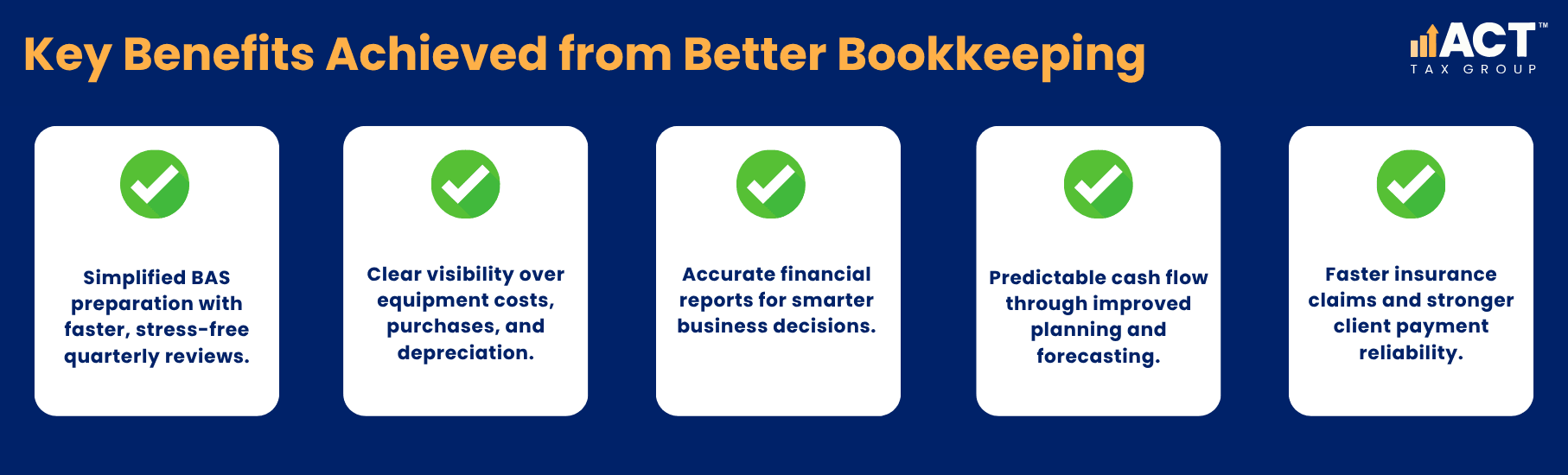
Jake’s BAS preparation time reduced from stressful weekend marathons to straightforward quarterly reviews. With organised digital records and proper equipment tracking, he could complete his BAS requirements efficiently while maintaining confidence in the accuracy of his submissions.
Enhanced Equipment Management
The new tracking system provided Jake with better visibility over his equipment inventory and associated costs. He could make more informed decisions about equipment purchases, timing them strategically to improve cash flow and tax benefits. The depreciation schedules we established also ensured he was claiming all available deductions without missing opportunities or making compliance errors.
Jake particularly appreciated having clear documentation for insurance purposes. When a piece of equipment was damaged on a job site, he had immediate access to purchase receipts, depreciation records, and current book values, simplifying the insurance claim process.
The improved bookkeeping process also meant Jake could produce accurate financial statements whenever needed. This proved valuable when applying for equipment financing or presenting his business performance to potential clients.
Improved Cash Flow Management
With better forecasting and planning systems in place, Jake’s cash flow became more predictable. He could anticipate BAS obligations and set aside funds accordingly, eliminating the financial stress that had previously accompanied quarterly deadlines.
The organised bookkeeping also revealed expense patterns that helped Jake identify opportunities for better vendor management and cost control. He could negotiate better terms with suppliers and track the true profitability of different types of jobs more accurately.
Jake’s accounts payable management improved significantly too. He could now track all his business expenses systematically, ensuring bills were paid on time while maintaining optimal cash flow. This professional approach also improved his relationships with suppliers and service providers.
Professional Growth and Confidence
Perhaps most importantly, Jake gained confidence in his business operations. He no longer dreaded BAS time or worried about compliance issues. Instead, he could focus on growing his business and serving his clients, knowing that his financial systems were robust and reliable.
The systematic approach also positioned Jake’s business for future growth. As he considered expanding his operations or taking on larger projects, he had the foundational systems needed to manage increased complexity without proportional increases in administrative burden.
Jake also found that having accurate financial data helped him make better business decisions. He could analyse which services were most profitable, identify seasonal trends, and plan for equipment upgrades based on solid financial information rather than guesswork.
Key Takeaways for Arborists
The investment in proper bookkeeping systems pays dividends through better financial reports and reduced stress. Regular bookkeeping duties, which involves preparing source documents like receipts and invoices, create organised records for your business. Recording journal entries consistently ensures you capture every transaction and maintain accurate financial data throughout the year.
Double entry bookkeeping provides accuracy by recording each transaction in two accounts. This method helps create reliable financial reports and supports your balance sheet preparation. These reports show your business performance and help you make informed decisions about equipment purchases and cash flow management.

For Jake, these improvements transformed BAS obligations from stressful deadlines into routine business processes. Whether you operate as a sole trader starting your arborist business or manage an established company, implementing systematic bookkeeping processes provides essential foundations for sustainable success in Australia’s competitive tree service industry.
Ready to transform your arborist business operations? Contact ACT Tax Group today to discover how proper record-keeping can improve your cash flow and reduce BAS stress.

Lukasz Klekowski
Principal of ACT Tax Group, specialising in tax compliance and financial strategy for Australian small businesses.

Disclaimer: All information provided in this publication is of a general nature only and is not personal financial or investment advice. It does not take into account your particular objectives and circumstances. No person should act on the basis of this information without first obtaining and following the advice of a suitably qualified professional. To the fullest extent permitted by law, no person involved in producing, distributing or providing the information in this publication (including ACT TAX GROUP PTY LTD, each of its directors, councilors, employees and contractors and the editors or authors of the information) will be liable in any way for any loss or damage suffered by any person through the use of or access to this information. The Copyright is owned exclusively by ACT TAX GROUP PTY LTD (ABN 31634338088)