

Electrical Contractor Plans for Seasonal Downturns Using Business Budgets
Published on October 8, 2025
Electrical Contractor Plans for Seasonal Downturns Using Business Budgets is all about showing you how to protect your cash flow when work slows. You’ve seen how colder months can turn a positive cash flow into a negative cash flow scenario, threatening your company’s financial health just when BAS deadlines loom. Managing cash flow and keeping operating cash flow steady is critical to covering bills, paying employees, and maintaining profitable operations.
Facing similar cash flow issues? Let ACT Tax Group help you find a solution.
Seasonal Cash Flow Struggles for Electrical Contractors
When revenue from sales and services dips in winter, your net income and operating activities suffer. For Liam (not real client’s name), the main cash flow problems were:
Struggling to keep cash flow steady in the off-season?
Schedule a complimentary consultation with us today to set up forecasts and secure your BAS obligations.
Irregular Timing of Payments
Bills for recent projects often arrive weeks before payment. Meanwhile, suppliers expect payment on delivery of materials. This timing gap can create cash shortages, forcing you to delay capital expenditures or draw on overdraft facilities.
Unexpected Expenses and Debt
Even during downturns, you still have rent, insurance, and wages to pay. When work slows, covering these costs demands tapping into reserves meant for investing activities or financing activities—and sometimes taking on debt or high-interest credit.

Lack of Visibility into Future Cash
Without a clear cash flow statement outlining all transactions over a defined period, it’s hard to know if your net cash flow will remain positive. That uncertainty can lead to unnecessary stress, or worse, missed tax payments and penalties.
Economic Uncertainty and Growth Planning
In a fluctuating economy, you need flexibility. If you’re unable to invest in new equipment or hire apprentices, you risk stalling growth when the busy season returns. Being stuck in negative cash flow prevents you from seizing opportunities that could drive future revenue.
How Our Team Helped
Our team at ACT Tax Group guided Liam through a step-by-step process focused on managing cash flow. This was a difficult process as it required drastic actions to build cash buffer.
Establishing a Dedicated Reserve Fund
We advised Liam to treat his rainy-day fund like another expense line. Each time he reviewed revenue from sales, he set aside a percentage into a separate fund rather than using that money for extra equipment or discretionary spend. Over time, this fund became the first source to cover cash shortages, protecting his main operating activities.

Building a Rolling Cash Flow Forecast
Next, we helped him develop a three-month cash flow forecast that tracked net cash flows from operating activities, financing activities, and investing activities. By projecting invoices, payments to suppliers, payroll, and BAS liabilities, Liam had visibility into when cash would be tight. This forecast became his blueprint for making informed decisions on capital expenditures and spending.
Implementing Tiered Spending Controls
We set up simple thresholds tied to his forecast. For example, if net cash flow fell below a set level, non-essential purchases—such as upgrading tools or investing in marketing—were paused automatically. This process ensured critical bills, tax obligations, and payroll were always covered first.
Improving BAS Timing and Payment Terms
To smooth out lump-sum BAS payments, we recommended voluntary PAYG instalments and negotiating extended payment terms with the ATO when needed. We also helped Liam review supplier contracts to secure more favourable payment terms, improving his short-term cash position without harming long-term supplier relationships.
Ready to implement this strategy? Contact ACT Tax Group today to discuss a tailored approach.
Outcome
After three months, Liam saw real improvement in his cash flow:
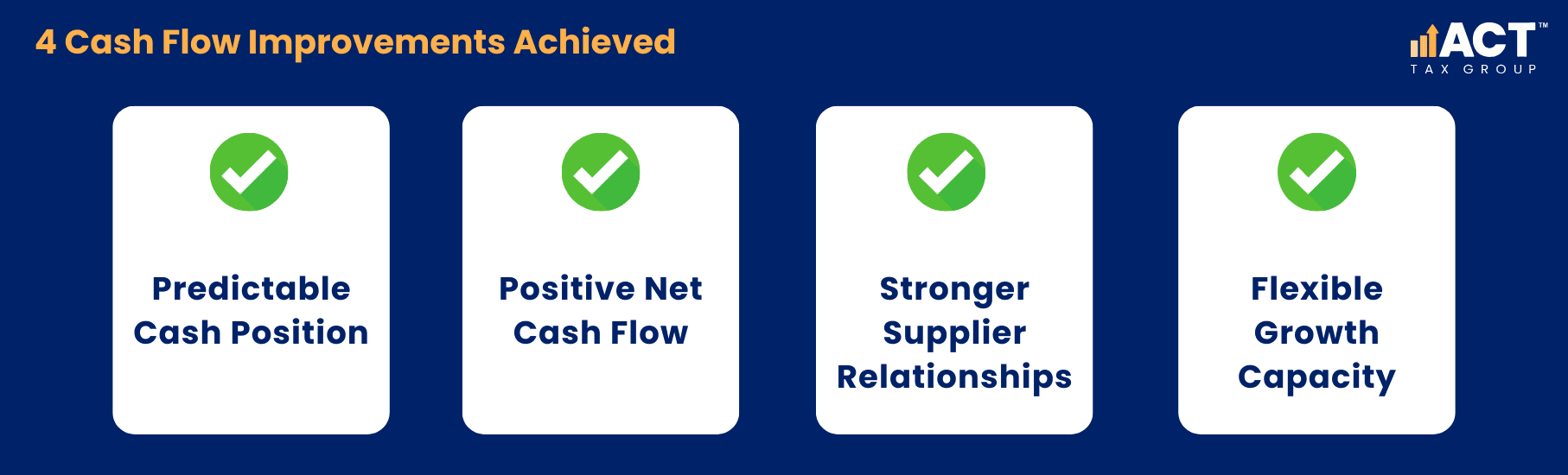
His rolling forecast gave clear insight into upcoming cash shortages, allowing him to plan strategically rather than react under pressure.
With his reserve fund acting as a buffer, he maintained positive operating cash flow even during the slowest weeks.
Negotiated payment terms meant he could manage invoices over a longer period without incurring late fees or damaging his credit rating.
By avoiding unnecessary debt, Liam remained in a strong position to invest in training, tools, and marketing once demand picked up.
Key Takeaways
Seasonal downturns don’t have to threaten your financial health. By following these steps, you can manage cash flow proactively:
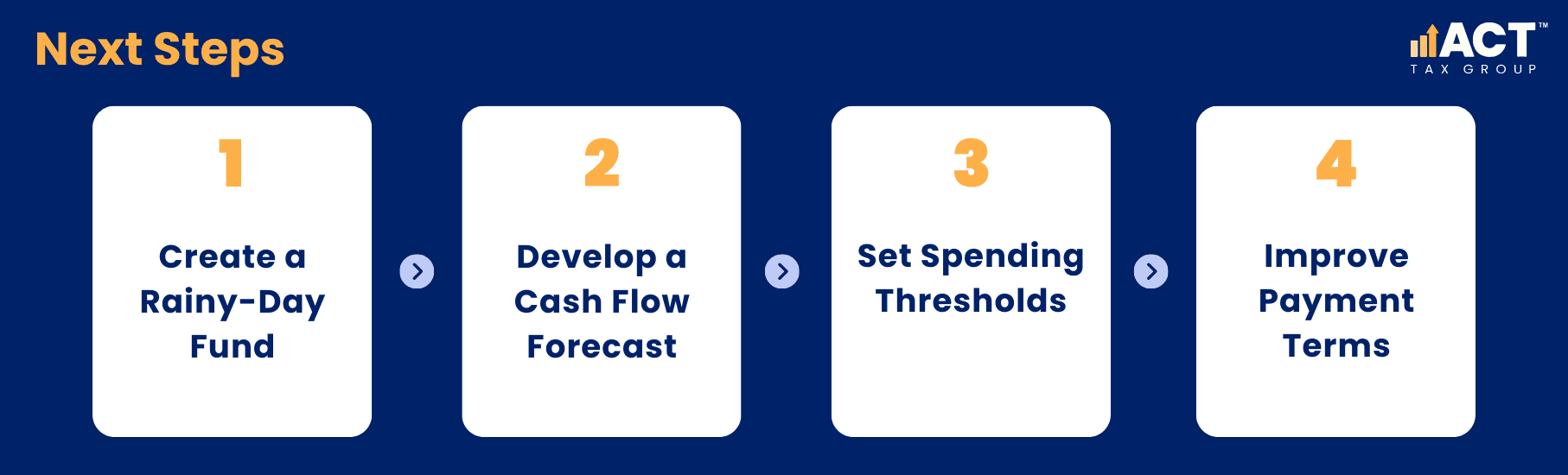
Allocate part of your revenue into a dedicated reserve, treating it like any other expense.
Track cash in and out over the next quarter, including revenue, expenses, BAS, wages, and supplier payments.
Pause non-essential spending automatically when your net cash flow forecast signals risk.
Negotiate longer terms with suppliers and consider PAYG instalments to smooth BAS obligations.
Considering how these strategies could bolster your cash flow? Contact our team to get started and secure your company’s financial health for the next seasonal cycle.

Lukasz Klekowski
Principal of ACT Tax Group, specialising in tax compliance and financial strategy for Australian small businesses.

Disclaimer: All information provided in this publication is of a general nature only and is not personal financial or investment advice. It does not take into account your particular objectives and circumstances. No person should act on the basis of this information without first obtaining and following the advice of a suitably qualified professional. To the fullest extent permitted by law, no person involved in producing, distributing or providing the information in this publication (including ACT TAX GROUP PTY LTD, each of its directors, councilors, employees and contractors and the editors or authors of the information) will be liable in any way for any loss or damage suffered by any person through the use of or access to this information. The Copyright is owned exclusively by ACT TAX GROUP PTY LTD (ABN 31634338088)