

Arborist Balances Seasonal Income With Smart Cash Flow Forecasting
Published on September 26, 2025
Managing cash flow with seasonal income fluctuations creates financial stress for many arborist business owners across Australia. You might find yourself earning well during busy summer months but struggling to maintain enough cash reserves when winter brings reduced demand and lower sales volumes.
Why Seasonal Income Creates Cash Flow Statement Issues
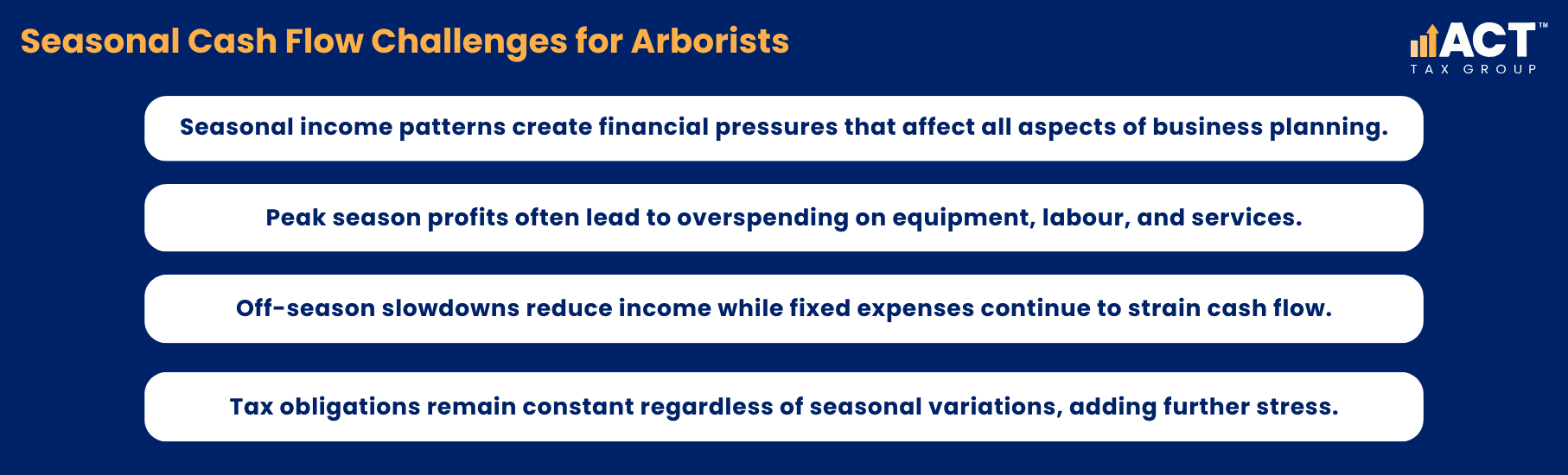
Dave’s (not the real client’s name) tree service business experienced the typical seasonal patterns that affect most small business owners in the arborist industry across Australia. The cyclical nature of his services created unique financial pressures that impacted every aspect of business operations and long-term planning.
Struggling to keep up with BAS deadlines during the slow season?
Schedule a complimentary consultation with us today to streamline your ATO compliance and avoid late fees.
Peak Season Success Creates Planning Problems
During the busy months from September to March, Dave’s business thrived with strong demand for tree removal, pruning services, and storm damage repairs. Property owners focused on landscape maintenance before summer, creating periods where his small business generated substantial income from both residential and commercial customers.
However, success during peak season often led to poor business decisions. Dave frequently invested profits immediately into capital expenditures like new equipment or expanded services without considering how these expenses would affect his cash position during slower periods. He also increased spending on casual labour and additional services, assuming the strong income would continue.
Facing seasonal cash flow challenges in your arborist business? Let ACT Tax Group help you manage your cash flow and tax compliance with a tailored solution that works around your seasonal cycles. Book a complimentary consultation today.
Off-Season Reality Tests Your Cash Position
From April to August, demand for tree services naturally declined, causing significant drops in monthly sales. Despite reduced income, Dave still faced consistent expenses including vehicle maintenance, insurance payments, equipment costs, and employee wages.
This seasonal shift created challenging cash flow issues. Money that seemed abundant during peak months disappeared quickly, leaving insufficient funds to pay bills and cover basic business operations. Dave often found himself using personal savings or credit to pay suppliers during slower periods.
Tax Deadlines Don’t Wait for Busy Seasons
The most stressful aspect wasn’t just managing reduced income during quiet months. Dave struggled to maintain enough money to pay Business Activity Statement (BAS) obligations when quarterly deadlines arrived. Tax obligations remained consistent regardless of seasonal income variations, creating additional pressure on already tight working capital.
Without proper planning, he often scrambled to find enough funds for quarterly payments or missed deadlines entirely. This reactive approach to tax compliance created unnecessary financial stress and affected his ability to make informed decisions about business growth.
How We Helped Create a Cash Flow Management System
When Dave approached ACT Tax Group, we recognised that his challenges weren’t unique to his business. Even profitable businesses face similar cash flow issues that can be resolved through better planning and systematic approaches to financial management.
Our team developed a comprehensive approach that addressed both immediate cash position concerns and long-term financial stability. Rather than simply helping with tax compliance, we created systems that would work regardless of seasonal income variations.
Understanding Your Business Patterns
We began by analysing Dave’s historical business records to identify clear patterns in both income and expenses. This cash flow analysis revealed that his business generated approximately 70% of annual revenue during the seven-month peak season, while operational costs remained relatively stable throughout the year.
Understanding these patterns allowed us to create realistic projections for future cash flow and identify periods where additional financial resources might be needed. We also separated fixed costs like insurance and vehicle payments from variable expenses such as casual labour and fuel, showing exactly how much cash the business needed each month to cover minimum obligations.
Building a Cash Flow Forecast That Works
Using Dave’s historical data, we developed a rolling 12-month cash flow forecast that projected income and expenses based on seasonal variations. The forecast incorporated planned equipment purchases, tax obligations including quarterly BAS payments, and anticipated business activities.
Our forecasting model provided clear visibility into upcoming cash requirements and helped identify periods where the business might experience financial pressure. More importantly, it enabled proactive planning rather than reactive problem-solving when cash flow challenges arose.
Ready to take control of your cash flow management? At ACT Tax Group, we create customised systems designed to manage your seasonal income and expenses. Get in touch with us to start building your own cash flow forecasting system.
Setting Up Automatic Tax Provisioning
One of the most impactful changes involved restructuring how Dave handled financial commitments. Instead of trying to remember to save money for BAS payments during busy periods, we implemented an automatic system that set aside a calculated percentage of each payment received.
This systematic approach eliminated the stress of finding large sums for quarterly payments and ensured compliance with all tax requirements. Dave no longer worried about having enough funds when deadlines arrived because these obligations were systematically managed throughout the year.

Results That Transform Your Business Operations
The implementation of systematic managing cash flow created significant improvements across multiple aspects of Dave’s business. These changes affected everything from daily operations to strategic planning for future growth.
Immediate Improvements in Financial Health
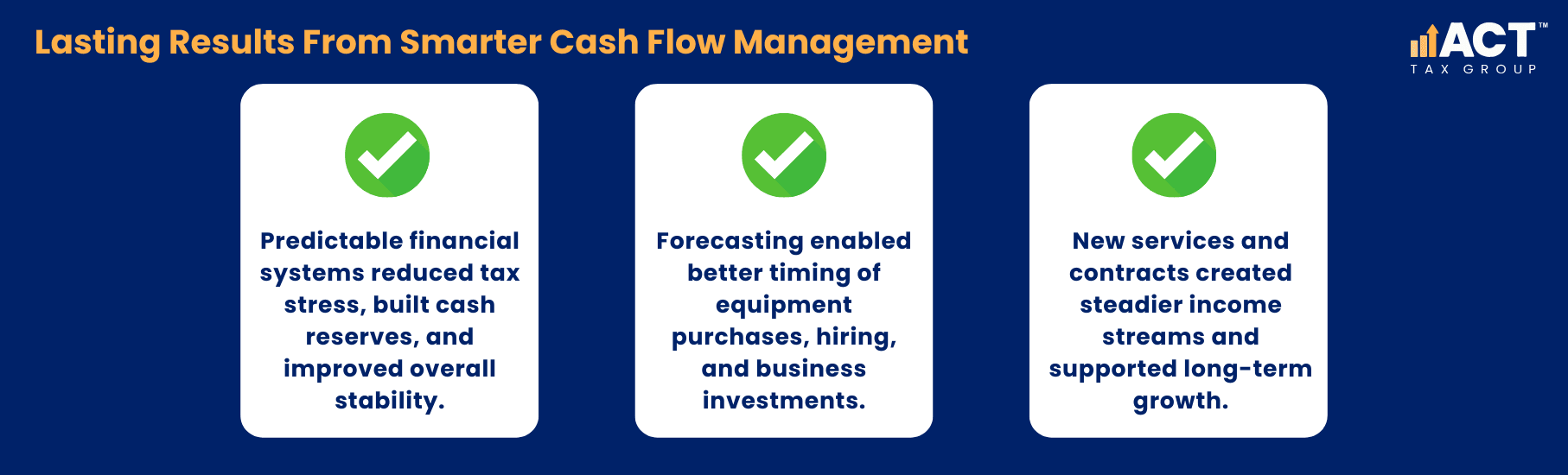
Within the first year, Dave experienced more predictable financial management and reduced stress around tax deadlines. The automatic provisioning for BAS obligations eliminated cash flow surprises and allowed his to focus on business growth rather than constantly worrying about upcoming payments.
His cash reserves grew from virtually nothing to a stable buffer within twelve months. This improvement came from better allocation of existing income rather than earning more money. The systematic approach to setting aside tax funds and maintaining operating reserves created financial stability that had been missing from his business.
Better Equipment and Investment Timing
The cash flow forecasting enabled much better decision-making about capital expenditures and business investments. Dave could now plan major equipment purchases during high-income periods while ensuring enough money remained for quieter months.
This strategic approach to investing improved both his operational efficiency and financial stability. Instead of reactive buying when equipment broke down, he could plan purchases during optimal cash flow periods and negotiate better payment terms with suppliers.
Strategic Business Growth Opportunities
With improved cash flow management, Dave identified opportunities to smooth out seasonal income variations. He expanded services to include winter tree health assessments and developed maintenance contracts with commercial clients, providing more predictable revenue streams throughout the year.
These additions didn’t just increase total income – they created more stable cash flow patterns that reduced the financial stress associated with seasonal variations. Dave could maintain consistent service quality and employee stability regardless of traditional seasonal fluctuations.
Imagine having predictable cash flow year-round like Dave did. Contact us today to schedule a consultation and take the first step toward improving your business operations.
Practical Steps You Can Take Today
Dave’s experience demonstrates that seasonal cash flow challenges can be effectively managed through systematic planning and professional advice. These strategies can help you transform income variations from sources of stress into manageable aspects of business operations.
Start with Understanding Your Patterns
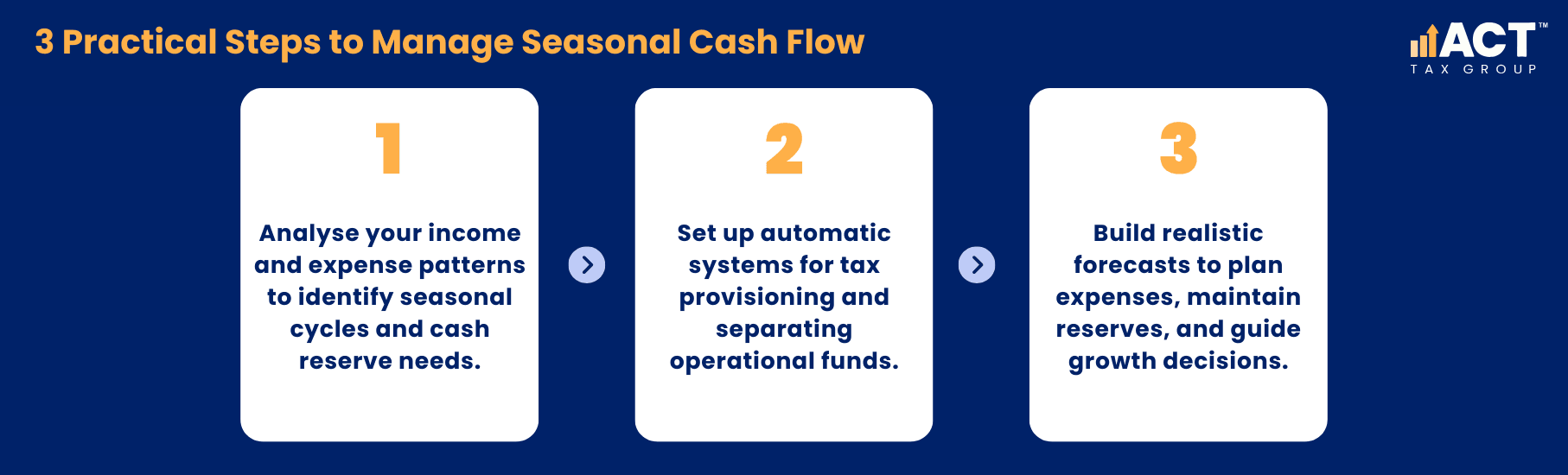
Begin by analysing your historical income and expense patterns to understand your specific seasonal cycles. Look for trends in revenue generation and cost structures that can inform better planning decisions. Understanding when your business typically generates most income and when major expenses occur helps you plan for periods requiring additional cash reserves.
Most arborists find similar patterns to Dave’s experience, with peak earning potential during warmer months and reduced demand during winter. However, your specific patterns might vary based on location, services offered, and customer base.
Implement Systems That Work Automatically
Consider setting up automatic systems for tax provisioning and cash flow management. Setting aside a calculated percentage of each payment received helps maintain enough funds for BAS obligations regardless of income variations.
Automatic systems work better than manual approaches because they don’t rely on remembering to save money when you’re focused on busy operational periods. These systems also help separate funds earmarked for specific obligations from money available for business operations and growth.
Plan Ahead with Realistic Forecasting
Focus on creating positive cash flow throughout the year by timing major expenses during peak earning periods and maintaining sufficient reserves during slower months.
Regular monitoring of cash flow projections ensures accuracy and allows adjustments for changing business conditions. Professional advice can help maintain realistic forecasts and find opportunities for improvement in financial management processes. This systematic approach helps you understand your free cash flow patterns and identify the best times for business investments or expansion activities.
Remember that effective cash flow management focuses on better allocation and timing of income you already generate rather than simply earning more money. If you’re ready to develop a cash flow management system for your arborist business, our team at ACT Tax Group can help create strategies tailored to your specific needs and seasonal patterns.
Don’t let seasonal income fluctuations stress you out any longer. Get expert advice and tools to improve your cash flow. Contact us today to implement strategies that work for your business needs.

Lukasz Klekowski
Principal of ACT Tax Group, specialising in tax compliance and financial strategy for Australian small businesses.

Disclaimer: All information provided in this publication is of a general nature only and is not personal financial or investment advice. It does not take into account your particular objectives and circumstances. No person should act on the basis of this information without first obtaining and following the advice of a suitably qualified professional. To the fullest extent permitted by law, no person involved in producing, distributing or providing the information in this publication (including ACT TAX GROUP PTY LTD, each of its directors, councilors, employees and contractors and the editors or authors of the information) will be liable in any way for any loss or damage suffered by any person through the use of or access to this information. The Copyright is owned exclusively by ACT TAX GROUP PTY LTD (ABN 31634338088)