

How an Electrician Kept Cash Flow Steady With Forecasting Support
Published on September 24, 2025
Managing cash flow with Business Activity Statement (BAS) deadlines can turn even profitable businesses into financial stress zones. Mark, an electrician running his own contracting business in Australia, found himself caught between late payments from clients, seasonal work patterns, and quarterly tax obligations that strained his ability to pay bills on time. Like many small businesses, he struggled with timing issues between completing work and receiving money, creating cash flow issues that affected his working capital.
Why Cash Flow Becomes a Challenge for Electrical Contractors
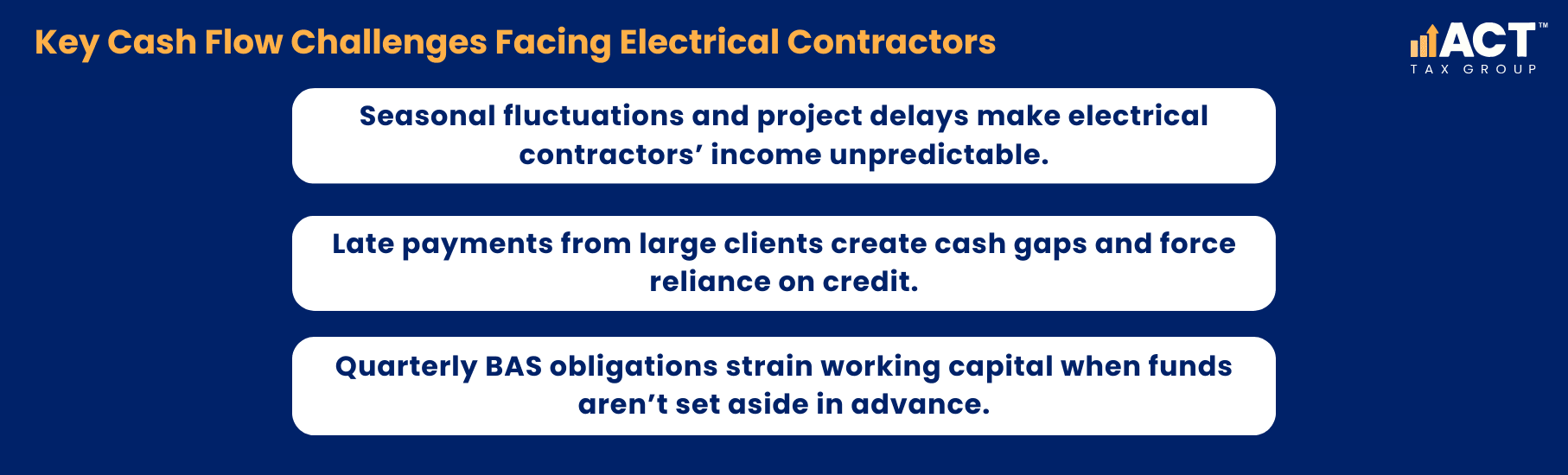
Mark’s situation reflects the reality many electrical contractors face when trying to balance the practical demands of their trade with effective finance management. The electrical contracting industry presents unique challenges that can strain cash flow and create financial stress for business owners.
Tired of scrambling to pay bills when client payments are delayed?
Schedule a complimentary consultation with us today to improve your cash flow timing and payment terms.
Seasonal Work Patterns Affect Income Timing
The seasonal nature of electrical work means income fluctuates significantly throughout the year. During busy summer months, Mark would secure multiple air conditioning installation projects and commercial work, but winter often brought slower periods with mainly maintenance services. This inconsistent revenue made it difficult to predict whether he’d have enough money available for quarterly BAS payments and other financial commitments.
The challenge wasn’t just about total sales volume. Even during busy periods, Mark found that money didn’t always come in when expected. Customers would approve projects but delay signing contracts, or weather conditions would push completion dates back, affecting when invoices could be issued and payments received.
Client Payment Delays Create Cash Flow Gaps
Late payments from larger construction clients added complexity to Mark’s cash flow situation. While he completed electrical installations according to payment terms, he often waited weeks for payment approval and processing from general contractors and property developers. These delays created significant gaps between his expenses including wages, materials, and vehicle costs and his actual cash receipts.
The accounts receivable situation became particularly challenging when multiple large clients had overdue payments simultaneously. Mark found himself using credit facilities to cover immediate expenses, which reduced his profit margins and added interest costs to his operations. Even profitable businesses can face serious challenges when customers don’t pay according to agreed terms.
Tax Obligations Create Pressure Points
The quarterly Business Activity Statement system, while designed to help businesses manage their tax obligations, created predictable pressure points every three months. Mark found himself in reactive mode, suddenly realising a BAS payment was due without having enough funds prepared. This led to stressful business decisions about which suppliers to pay first and whether he could afford to take on additional projects requiring upfront material purchases.
Without proper cash flow analysis and planning, Mark couldn’t anticipate these obligations or set aside money gradually. The quarterly nature of BAS meant large lump sum payments that could strain his working capital just when he needed flexibility for business growth opportunities.
How We Helped Mark Build Better Financial Systems
When Mark approached our team at ACT Tax Group, we recognised that his challenges required a comprehensive approach combining immediate cash flow relief with long-term financial planning strategies. Our solution focused on creating practical systems he could use consistently without overwhelming his busy schedule as a working electrician.
Implementing Cash Flow Forecasting Tools
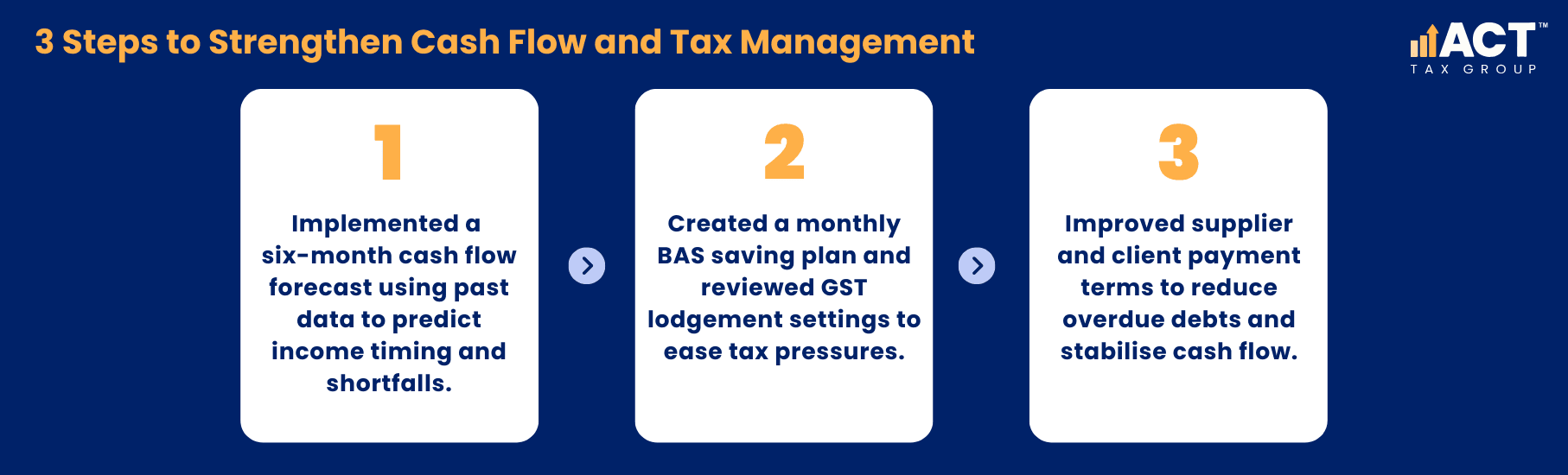
We worked with Mark to establish a straightforward cash flow forecasting system that projected his income and expenses for six months ahead. This timeline covered two complete BAS cycles, giving him visibility into upcoming tax obligations while accounting for seasonal variations in his business. The forecasting model included historical data from his previous three years of trading, helping identify predictable patterns in his cash flow.
Our team helped Mark categorise his revenue streams into different areas: residential maintenance work, commercial installations, and emergency callouts. Each category had different payment terms and seasonal patterns, which we mapped into the forecasting model. This detailed approach provided Mark with realistic expectations about when money would actually reach his bank account, rather than when invoices were issued to customers.
The cash flow analysis revealed periods when Mark might face cash flow issues despite having strong profit margins on completed work. Understanding these timing gaps helped him plan for potential shortfalls and avoid the stress of unexpected financial pressure.
Creating BAS Planning Systems
We established a system that aligned BAS lodgement deadlines with Mark’s cash flow forecasting. Rather than treating BAS as a quarterly surprise, we helped him set aside funds monthly to cover his obligations in advance. This approach smoothed out the financial impact and eliminated the stress of finding large lump sums every quarter.
Our team reviewed Mark’s GST registration and payment frequency to ensure it aligned with his business operations. By default, most electricians report and pay BAS quarterly, but depending on turnover and cash flow needs, some may choose monthly or even annual reporting. Reviewing which frequency aligns best with the business ensures cash flow is managed effectively. This helped Mark avoid ATO late penalties and General Interest Charges (GIC), maintaining positive cash flow throughout the year while meeting all his tax obligations on time.
Improving Payment Terms and Supplier Relations
We analysed Mark’s supplier relationships and helped negotiate more favourable payment terms with his key vendors. This included establishing 30-day payment terms with electrical wholesalers and negotiating early payment discounts where beneficial. These improvements provided additional flexibility in his cash flow timing and helped him better manage his accounts payables.
For client payments, we helped Mark implement clearer payment terms and follow-up procedures. This included deposit requirements for larger projects and structured payment milestones tied to project completion phases. These changes helped reduce unpaid debts and overdue payments that had previously created financial stress and affected his ability to pay ongoing expenses.
From Financial Stress to Business Confidence
The forecasting and planning systems we implemented with Mark delivered measurable improvements in his business operations and financial health. Within six months, he reported feeling significantly more in control of his finance situation and confident about making business decisions for future growth.
Predictable Cash Flow Management
Mark’s cash flow became much more predictable as the forecasting system helped him anticipate slow periods and plan accordingly. He began setting aside funds during busy months to cover expenses during quieter periods, eliminating the feast-or-famine cycle that previously characterised his business. This approach ensured he always had enough funds to pay bills, employees, and suppliers on time.
The improved visibility into his future cash flow allowed Mark to make better decisions about when to invest in new equipment, hire additional staff, or take on larger projects. He could see several months ahead and plan major purchases during periods when his cash flow would be strongest.
Stress-Free Tax Compliance
BAS payments transformed from stressful events into routine business expenses. With monthly provisions and advance planning, Mark never again faced the pressure of finding unexpected funds for quarterly tax obligations. This predictability allowed him to focus on delivering quality electrical services rather than worrying about upcoming finance deadlines.
The systematic approach to tax planning also improved his relationships with suppliers and lenders. When creditors saw that Mark had reliable systems for managing his obligations, they were more willing to extend favourable payment terms and credit arrangements that supported his business growth.
Business Growth and Investment Opportunities
The improved cash flow management enabled Mark to take advantage of growth opportunities he previously couldn’t afford. He purchased a second work vehicle and hired an apprentice, expanding his service capacity without compromising his financial health. His free cash flow improved significantly, giving him more options for investing in business development and equipment upgrades.
Client relationships improved as Mark gained confidence to discuss project timelines and payment terms upfront. His professional approach to financial management impressed larger commercial customers, leading to repeat business and referrals. Customers appreciated his transparent approach to finance and payment requirements, which reduced payment disputes and improved his accounts receivable management.

Key Takeaways for Your Electrical Business Success
Mark’s experience demonstrates how practical cash flow forecasting and systematic financial planning can transform electrical contracting businesses. These proven strategies can help you overcome similar challenges and build a more stable financial foundation for your electrical business.
Start With Your Business Patterns
Understanding your business patterns forms the foundation of effective cash flow management. Your electrical business likely follows predictable cycles that you can use to your advantage.
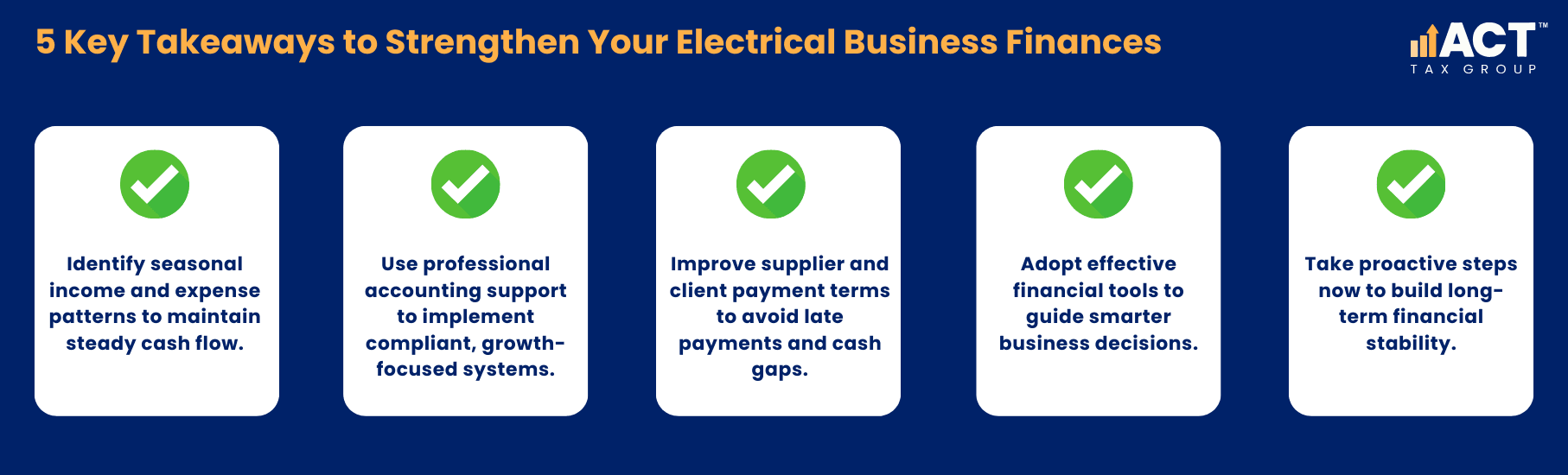
Start by tracking your income patterns over the past year and identifying seasonal trends in your electrical business. Map out your major expenses, including tax obligations, equipment purchases, and employee costs, then create a monthly budget that accounts for these predictable elements. This helps ensure you have enough money to meet all financial commitments while maintaining positive cash flow.
Get the Right Professional Support
Professional advice from accounting specialists who understand electrical contracting businesses can create significant value for your operations. The right support makes all the difference in implementing systems that work for your specific business needs.
The right support helps you implement systems that save time while improving your cash flow management. Professional guidance ensures your forecasting approach complies with Australian tax requirements while supporting your business growth objectives and helping you find opportunities for improvement.
Review and Improve Your Payment Systems
Regular review of your payment terms with both suppliers and customers can significantly impact your overall cash flow. Small changes in these relationships often deliver major improvements to your working capital.
Don’t hesitate to discuss payment terms that work better for your business operations and help you avoid late payments that strain your working capital. Many electrical contractors benefit from requiring deposits on larger projects and establishing clear milestone payments tied to project completion phases.
Use Better Tools and Systems
Effective record keeping and use of appropriate tools leads to better decisions about when to spend on new equipment, hire employees, or take on additional debts. Good systems give you the information you need to make smart choices. Understanding your business needs and actual results helps you make informed decisions about your future operations and growth plans.
Take Action on Your Cash Flow Today
If you’re experiencing cash flow challenges in your electrical contracting business, our team at ACT Tax Group can help you implement practical forecasting solutions tailored to your specific situation. We can help you understand how much cash your business needs for operations and create a cash flow statement that tracks your money movements throughout the year. We understand that effective money management is crucial for business success, and we can help you develop systems that ensure you always have enough cash to operate effectively while building toward sustainable growth.
Contact us today to discuss how we can support your business financial stability and help you create the systems needed for long-term success.

Lukasz Klekowski
Principal of ACT Tax Group, specialising in tax compliance and financial strategy for Australian small businesses.

Disclaimer: All information provided in this publication is of a general nature only and is not personal financial or investment advice. It does not take into account your particular objectives and circumstances. No person should act on the basis of this information without first obtaining and following the advice of a suitably qualified professional. To the fullest extent permitted by law, no person involved in producing, distributing or providing the information in this publication (including ACT TAX GROUP PTY LTD, each of its directors, councilors, employees and contractors and the editors or authors of the information) will be liable in any way for any loss or damage suffered by any person through the use of or access to this information. The Copyright is owned exclusively by ACT TAX GROUP PTY LTD (ABN 31634338088)