

How to Avoid and Manage ASIC Late Fees as an Arborist Trading as a Company
Published on September 10, 2025
How to avoid and manage ASIC late fees as an arborist trading as a company starts with knowing exactly when your company’s annual review date falls, understanding the annual review fee, and putting systems in place to pay ASIC fees on time so you never rack up late lodgement fees. Cash flows great in summer but we’re struggling through winter—and the last thing your tree services business needs is extra penalties from ASIC charges eating into tight margins.
Understanding Your Annual Review Obligations
ASIC’s annual statement process starts on 1 July each year when fee increases take effect based on the Consumer Price Index. As an arborist trading as a company, you need to know exactly when your company’s annual review date occurs so you can plan ahead.
Struggling with ASIC fees eating into winter cash flow?
Schedule a complimentary consultation with us today to map payments around your seasonal income.
What Is the Annual Review Fee and ASIC Fees Structure?
Each year, ASIC issues a company annual statement around your annual review date. That statement includes an invoice showing the original fee you owe—the annual review fee—which for 2025–26 is $329 for standard proprietary companies and $67 for special purpose companies. ASIC’s fee indexation by the Consumer Price Index may increase that fee on 1 July each year, so always check the current year before budgeting.
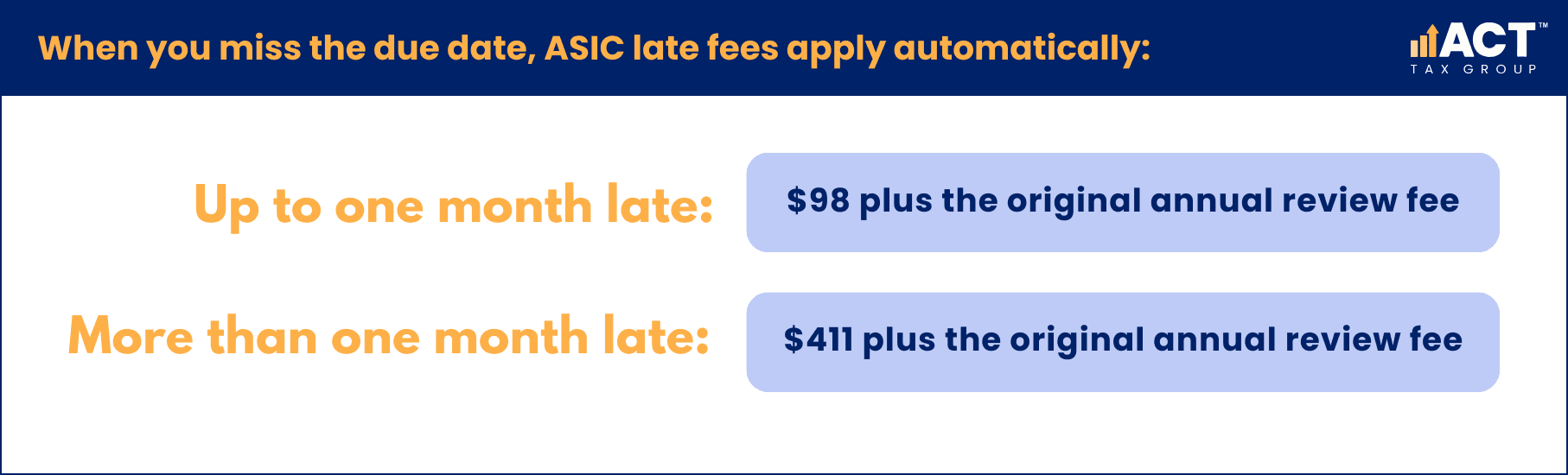
Late fees are automatically applied 28 days after the due date and increase the longer payment is delayed. Check ASIC Connect for the exact fee schedule each year.
Why ASIC Charges Penalties Automatically
ASIC’s system has limited power to issue reminders after the initial company annual statement is processed. Once the annual review fee is overdue by 28 days, a late fee is applied without sending further notices or mail reminders. Even if payment fails due to a processing delay or an error in the registered agent’s details, you’ll be charged late lodgement fees. ASIC does not wait for you to follow up—penalties accrue from day one.
Scheduling and Sending Reminders
Preventing late fees is easier when you schedule compliance tasks as part of your regular business operations. Consider your ASIC obligations as critical as safety checks on hazardous tree removals.
Mapping Your Compliance Calendar
Log your company’s annual review date into your business calendar immediately after registration or renewal.

Use reminders in your job management software or phone calendar. For example, if your review date is 15 June, start reminders from 16 April so you have eight weeks to plan payment.
Ensuring Notices Are Received
Update your company details on ASIC Connect within 28 days whenever your business name, registered agent, address, or director details change. This prevents notices and the company annual statement from going to an outdated address where mail can go missing. Check your spam folder for ASIC emails because notices may be rejected by your mailbox and marked as error without notifying you.
Payment Options and Processing
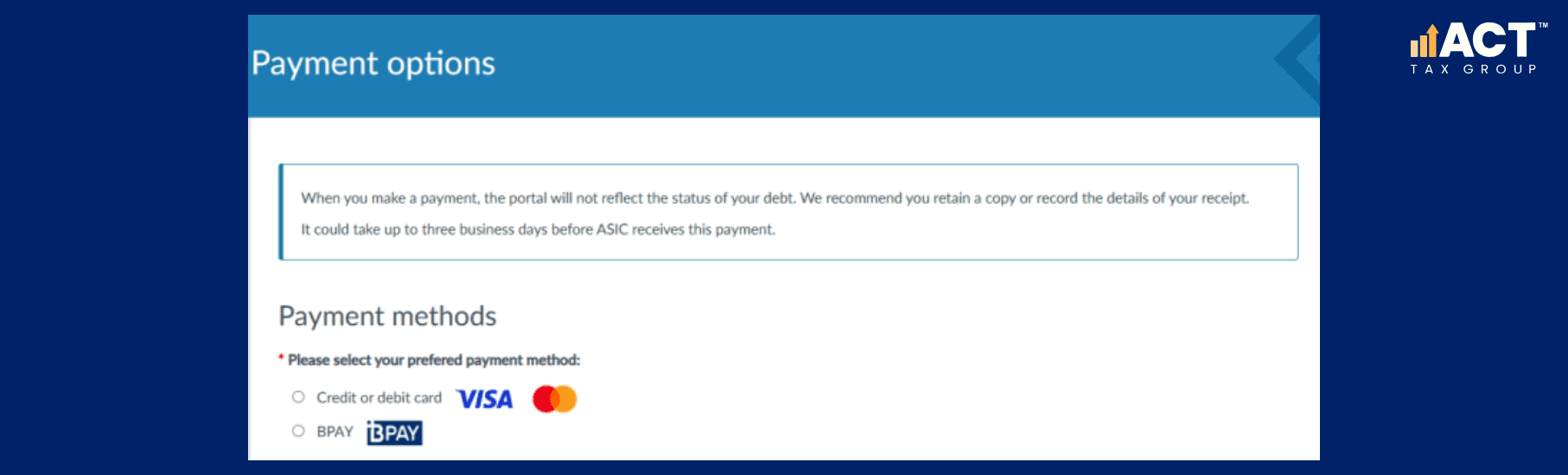
When the company annual statement arrives, you should act promptly. The ASIC payment options include credit card, BPAY®, and electronic funds transfer on ASIC Connect.
Applying Online and Paying ASIC Fees
Log into ASIC Connect to view and pay the annual review fee online. Applying online ensures immediate processing—no mail delays or cheque rejections. BPAY® payments can take two days to process, so pay well before the due date to avoid late fee penalties triggered by processing delay. If your invoice is received close to the deadline, choose credit card payment for same-day processing.
Managing Rejected Payments and Errors
If your payment is rejected—for example, due to incorrect company details—contact ASIC immediately to rectify and reapply payment. Do not wait. Even if you fix the error within days, ASIC’s system may have already applied a late fee. Pay the penalty plus the original fee, then lodge an application for fee waiver under specific situations like natural disaster impact or limited power in your region. ASIC may approve waivers, but only for exceptional circumstances.
Applying for Fee Waivers and Special Consideration
In rare cases—such as serious illness, natural disaster, or loss of control over your bank account—ASIC may consider waiving late lodgement fees if you apply online with full documentation.
When You Can Apply for Waiving ASIC Fees
ASIC’s guidelines state you can apply in writing for fee waiver in specific situations: natural disaster, limited power outages, or other events beyond your control. Submit your application online within 60 days of incurring the penalty, including details, documents, and any notices from insurers or authorities. ASIC’s friendly team may respond, but approvals are limited. Assume your waiver will be rejected and focus first on paying fees to stop further penalties.
Responding to ASIC Reviews and Notifications
If ASIC contacts you to review a late fee, respond in writing immediately. Provide evidence of your situation: hospital records for illness, council notices for power outages, or mail delays confirmed by your registered agent. Keep a log of all communications. While ASIC reviews your application, ensure you’ve paid the original fee and any penalties to avoid additional late lodgement fees.
Integrating ASIC Compliance into Business Operations
Avoid ASIC late fees permanently by making compliance part of your ongoing business processes, alongside liability insurance renewals and land clearing permits.
Aligning Annual Reviews with Other Renewals
Schedule your annual review date near other key financial tasks, such as BAS lodgements and superannuation deadlines. When you plan your June job pipeline, allocate one day to handle all administrative tasks: send reminders, verify company details, and process payments.

Using Professional Support and Automation
Consider engaging your accountant or a registered agent to lodge your company annual statement and pay ASIC fees each year. Their systems and mass reminders remove the risk of missing due dates. Many arborists find the cost of a friendly team’s support worth every dollar compared to the penalties they’d otherwise owe.
Handling Late Fees if They Occur
Even with the best systems, oversights can happen. When they do, take immediate action.
Paying Outstanding Fees and Stopping Penalties
Once ASIC late fees apply, pay all outstanding amounts—original fee plus penalties—right away. This stops further late lodgement fees from accumulating each month. After payment, lodge any outstanding documents to ensure your company details are current.
Learning from Errors and Preventing Future Issues
After resolving the current penalty, conduct a review to identify why documents were missing or payments rejected. Did the invoice go to the wrong address? Was the payment option prone to processing delays? Adjust your compliance schedule: increase reminder frequency, switch to credit card payments, or assign responsibility to a dedicated staff member.
Protecting Your Company’s Good Standing
Continued non-compliance can lead to company deregistration—stripping away limited liability protection in an industry where liability insurance and crew safety are critical.
Consequences of Company Deregistration
If ASIC deregisters your company, you’ll lose protection over personal assets. Any ongoing tree services work, land clearing contracts, and liability claims could then expose you personally. Restoring deregistered companies is time-consuming and costly.
Ensuring Long-Term Compliance
Embed ASIC compliance in your company culture. Celebrate each successful renewal and keep a record of paid invoices, notifications received, and any applications for a fee waiver. If you ever have to pay an annual review fee late, make sure to review what caused the delay and update your systems to prevent it in the future. Go over your compliance procedures every year—ASIC fees and the Consumer Price Index change on 1 July, so staying current matters. Keeping control of your company annual review now helps your tree services business grow, supports your crew, and protects your family without the stress of ASIC late fees again.

Lukasz Klekowski
Principal of ACT Tax Group, specialising in tax compliance and financial strategy for Australian small businesses.

Disclaimer: All information provided in this publication is of a general nature only and is not personal financial or investment advice. It does not take into account your particular objectives and circumstances. No person should act on the basis of this information without first obtaining and following the advice of a suitably qualified professional. To the fullest extent permitted by law, no person involved in producing, distributing or providing the information in this publication (including ACT TAX GROUP PTY LTD, each of its directors, councilors, employees and contractors and the editors or authors of the information) will be liable in any way for any loss or damage suffered by any person through the use of or access to this information. The Copyright is owned exclusively by ACT TAX GROUP PTY LTD (ABN 31634338088)