

The Annual SMSF Compliance Checklist for Australian Trustees
Published on November 12, 2026
The Annual SMSF Compliance Checklist for Australian Trustees helps you manage your fund’s financial reporting, investments, audits and tax obligations. Running your own Self-Managed Superannuation Fund (SMSF) provides more control over retirement savings, but meeting ongoing compliance requirements takes time and effort. Unlike retail super funds, an SMSF requires trustees to take an active role in managing investments and meeting Australian Taxation Office (ATO) requirements. Understanding these responsibilities helps protect members’ super savings, reduce compliance risks and support long-term retirement planning.
Essential Annual Compliance Requirements for SMSF Trustees
SMSF trustees must review financial records, investment strategies, contributions, assets and reporting obligations each financial year. These checks help ensure the fund operates within Australian superannuation and tax laws. According to the ATO’s March 2025 statistics, Australia had 646,168 SMSFs, approximately 1.2 million members and $1.01 trillion in estimated assets. These figures highlight the importance of responsible fund management.
Unsure whether your SMSF meets its annual compliance obligations?
Schedule a complimentary consultation with us today to review your SMSF compliance.
Your Annual SMSF Compliance Checklist
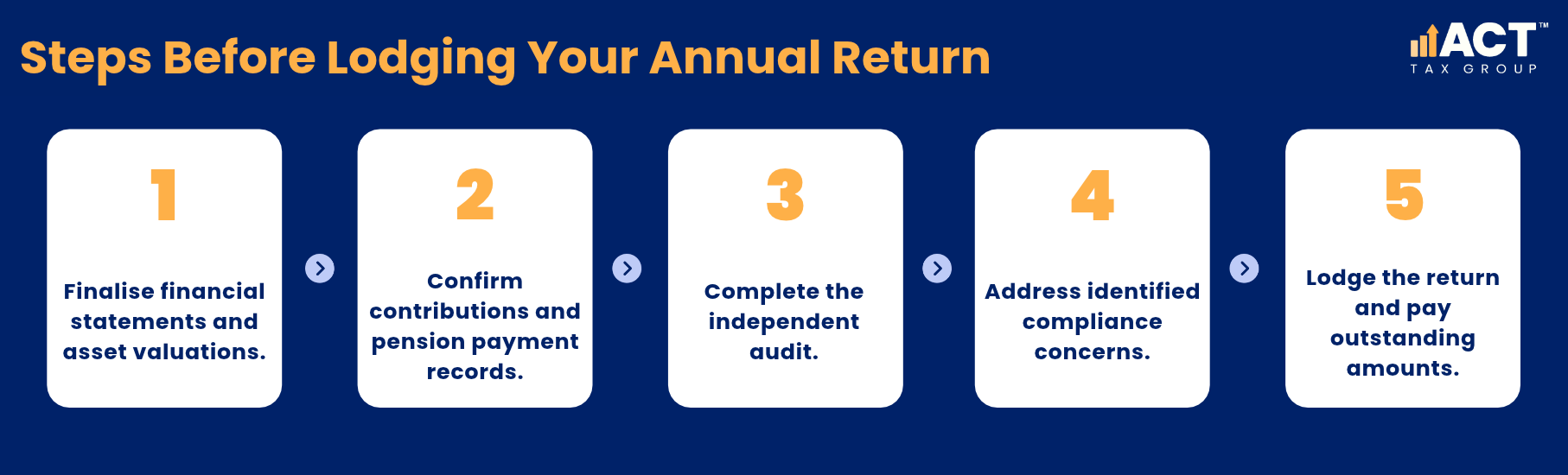
Review financial records: Check income, expenses, bank account transactions and financial statements.
Value fund assets: Confirm market values at 30 June and retain supporting evidence.
Review your investment strategy: Consider investment options, diversification, risk and insurance.
Check contributions: Verify employer contributions, member contributions and applicable limits.
Review pension payments: Confirm minimum payments and reporting requirements.
Arrange an independent audit: Appoint an approved SMSF auditor before the required deadline.
Lodge your annual return: Confirm lodgement dates and pay applicable tax and fees.
Accurate Financial Records Support SMSF Compliance
Maintaining accurate financial records is essential when managing your own super fund and preparing annual returns. Trustees must document investment income, expenses, transactions and asset valuations. Your SMSF must keep fund money separate from personal finances, using a dedicated bank account. Regular record reviews help accountants and auditors identify discrepancies before annual reporting.
Real Example: The ATO’s 2025 compliance activity identified SMSFs reporting unchanged asset values across several years. Trustees who update property valuations using appropriate market evidence can improve reporting accuracy and address potential audit concerns.
Common SMSF Compliance Mistakes and How to Avoid Them
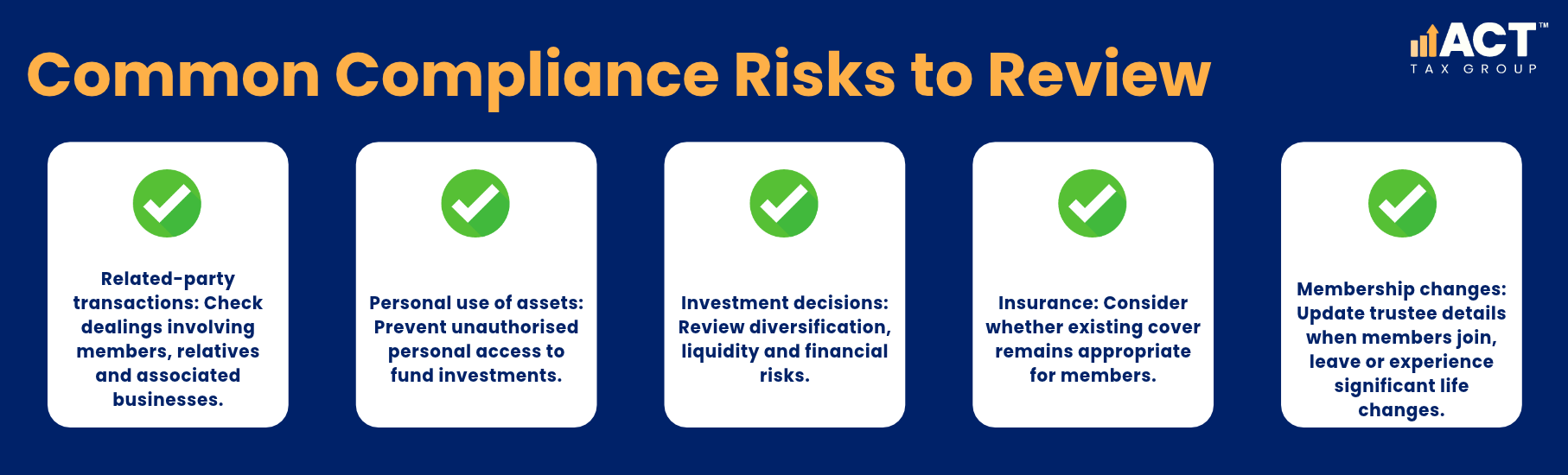
Trustees can reduce compliance risks by maintaining an appropriate investment strategy, reviewing fund decisions and understanding restrictions on SMSF assets. Even when accountants or financial advisers assist, trustees remain legally responsible for their fund’s obligations. Investment decisions must support members’ retirement benefits rather than provide unauthorised personal financial advantages. Reviewing your investment strategy when circumstances change helps maintain appropriate oversight.
The Importance of Independent SMSF Audits
Every SMSF must complete an annual independent financial and compliance audit, even when no contributions or pension payments occur. Trustees must appoint an approved auditor at least 45 days before the annual return lodgement deadline. Auditors examine financial records, investment transactions and compliance with superannuation requirements.

Understanding SMSF Annual Return Obligations
SMSF trustees generally must lodge an annual return and pay applicable tax and the supervisory levy. Newly registered funds without assets or contributions may qualify for a return not necessary exception. Lodgement deadlines depend on the fund’s circumstances. Missing deadlines can create compliance problems and affect the fund’s regulatory status. The ATO‘s SMSF guidance explains reporting requirements, contributions and trustee responsibilities.
How ACT Tax Group Can Help with Annual SMSF Compliance
At ACT Tax Group, our friendly, IPA-certified accounting team helps Australian trustees manage SMSF financial records, tax reporting and compliance responsibilities. We provide practical accounting advice tailored to your fund’s circumstances and retirement objectives. Whether your fund has individual trustees or a corporate trustee, we can assist with annual reporting preparation and coordinating independent audits. Book a consultation with our team to discuss your SMSF responsibilities and upcoming deadlines.

Key Takeaways for Responsible SMSF Management
Managing your own super fund involves investment decisions, financial responsibilities and ongoing compliance obligations. Accurate records, appropriate investment strategies and independent audits help protect members’ retirement savings. Start by reviewing financial statements, confirming reporting deadlines and assessing your fund’s investment decisions. With organised processes and professional support, you can meet your trustee responsibilities while maintaining control over retirement planning.
Frequently Asked Questions
What Should You Consider Before Setting Up an SMSF?
A Self-Managed Super Fund is a private superannuation fund that gives members greater investment choice and control over their own fund. Before setting up an SMSF, consider ongoing costs, insurance, the time involved and whether you have a good understanding of super investments. An SMSF specialist can help you assess your responsibilities and develop an exit plan for the future.
What Is an Electronic Service Address for an SMSF?
An Electronic Service Address (ESA) lets your SMSF receive contribution information and process rollovers electronically through SuperStream. Trustees must obtain an active ESA from a suitable provider, notify the ATO and check that it supports the required services. Your accountant can help arrange this.
Are SMSF Members Protected Against Investment Fraud?
Unlike funds regulated by the Australian Prudential Regulation Authority (APRA), SMSFs cannot access the same government compensation for fraud or theft. The Australian Financial Complaints Authority (AFCA) may consider eligible complaints against financial firms providing services to SMSF trustees. Trustees should assess investment risks before deciding where to invest.

Lukasz Klekowski
Principal of ACT Tax Group, specialising in tax compliance and financial strategy for Australian small businesses.

Disclaimer: All information provided in this publication is of a general nature only and is not personal financial or investment advice. It does not take into account your particular objectives and circumstances. No person should act on the basis of this information without first obtaining and following the advice of a suitably qualified professional. To the fullest extent permitted by law, no person involved in producing, distributing or providing the information in this publication (including ACT TAX GROUP PTY LTD, each of its directors, councilors, employees and contractors and the editors or authors of the information) will be liable in any way for any loss or damage suffered by any person through the use of or access to this information. The Copyright is owned exclusively by ACT TAX GROUP PTY LTD (ABN 31634338088)