

Pty Ltd for Arborists: How Shareholding and Directorship Decide Who Carries the Financial Risk
Published on July 7, 2026
Pty Ltd for Arborists is a key business structure consideration when tree service business owners want to understand who carries the financial risk in a growing company. For arborists managing crews, vehicles, equipment, insurance, subcontractors, and higher-risk job sites, the issue is not just the meaning of Pty Ltd, but how shareholding and directorship affect legal responsibility, personal assets, and business debts.
A Pty Ltd company can offer limited liability protection because it is a separate legal entity from its owners. However, a Pty Ltd structure does not remove every risk, especially where a company director signs personal guarantees, allows unpaid Pay as You Go (PAYG) withholding, Goods and Services Tax (GST), or superannuation guarantee charge (SGC) liabilities to build up, or does not keep proper financial records.
What Does Pty Ltd Mean for an Arborist Business?
Pty Ltd means proprietary limited, which is a type of privately owned Australian company. A proprietary limited company has its own legal status, can operate bank accounts, borrow money, enter legal documents, employ staff, and carry on business in its own name. For arborists, this matters because the company structure can separate the business from the individual owner in ways that a sole trader structure cannot. A sole trader and the business are generally treated as the same legal entity, while a Pty Ltd company is a separate legal entity with its own financial responsibility.
Are your PAYG, GST and super putting you personally at risk?
Schedule a complimentary consultation with us today to review ATO debts, director exposure and BAS lodgements.
Shareholding Sets Ownership, But Directorship Sets Control
Shareholders own the company through share capital, while directors control the company’s decisions. This means at least one shareholder can own the company, while at least one director must take responsibility for managing the company under Australian law. A company director carries legal obligations that are different from shareholders liability. Shareholders are generally protected beyond the amount unpaid on their shares, but directors may become personally liable if they breach duties, ignore compliance obligations, or allow certain company debts to remain unpaid.
Why Financial Risk Is Different for Arborists
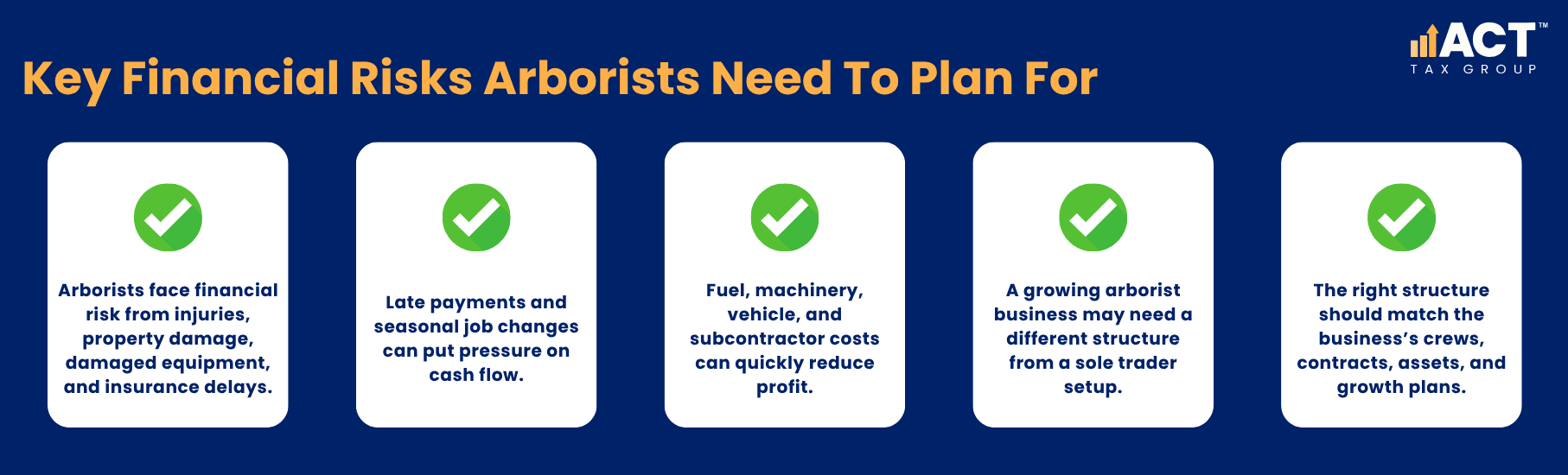
Arborists face financial risk from more than the company’s debts. Risk can also come from workplace injuries, property damage, insurance delays, damaged equipment, subcontractor disputes, late payments, fuel costs, and weather-related job cancellations. This is why the right company structure needs to reflect how the arborist business actually operates. A small business with one owner-operator may need a different setup from an Australian company with multiple crews, a registered office address, commercial contracts, and growth plans across the Australian Capital Territory and surrounding areas.
Does a Pty Ltd Company Protect the Owner’s Personal Assets?
A Pty Ltd company offers limited liability, but it does not guarantee that personal assets are safe in every situation. Directors can still be personally responsible where they breach legal obligations, trade while the business cannot pay its debts, sign personal guarantees, or allow unpaid PAYG withholding, GST, or SGC liabilities to remain unresolved. This is where some business owners misunderstand limited liability protection. The company may be legally separate, but personal assets can still be exposed if the director has personally guaranteed a loan, mixed personal and company finances, or failed to meet compliance obligations.
How Do Directors Become Personally Exposed?
A company director can become personally exposed when the company’s compliance, cash flow, or decision-making falls behind. This can happen when Business Activity Statement (BAS) or Instalment Activity Statement (IAS) lodgements are late or liabilities remain unpaid, payroll is not reconciled, PAYG withholding or GST amounts are not paid, superannuation guarantee obligations are missed, or finance documents are signed without understanding the personal guarantees attached.
Director risk can also increase when proper financial records are not kept. Without clear records, it becomes harder to show what the company owes, whether the business can pay its debts, and whether directors have acted carefully and responsibly. Common areas of director exposure include unpaid Pay As You Go (PAYG) withholding, unpaid Goods and Services Tax (GST), superannuation guarantee charge, insolvent trading concerns, personal guarantees, poor record keeping, failure to act in the company’s best interests, and related-party loans that are not documented properly.

Shareholders Carry Risk Differently from Directors
Shareholders usually carry risk through their investment in the company. They may lose the value of their shares, but they are not usually personally liable for day-to-day business debts unless they are also directors, guarantors, employees, or involved in decisions that create risk. This distinction matters in family businesses. A spouse, sibling, or business partner may be listed as a shareholder, but directorship should only be accepted by someone who understands the legal responsibility, reporting obligations, shareholder meetings, and corporate governance involved.
Personal Guarantees Can Override the Comfort of a Company Structure
A personal guarantee is one of the most common ways directors lose the comfort they expected from a Pty Ltd company. Traditional banks, equipment financiers, landlords, suppliers, and insurers may ask directors to personally guarantee company debts before approving finance, credit, or leases. This means the company may be the borrower, but the individual director can still be pursued if the company cannot pay. For arborists buying chippers, stump grinders, elevated work platforms, trailers, trucks, and specialist equipment, personal guarantees should be reviewed carefully before signing.
Company Types Matter When Choosing a Structure
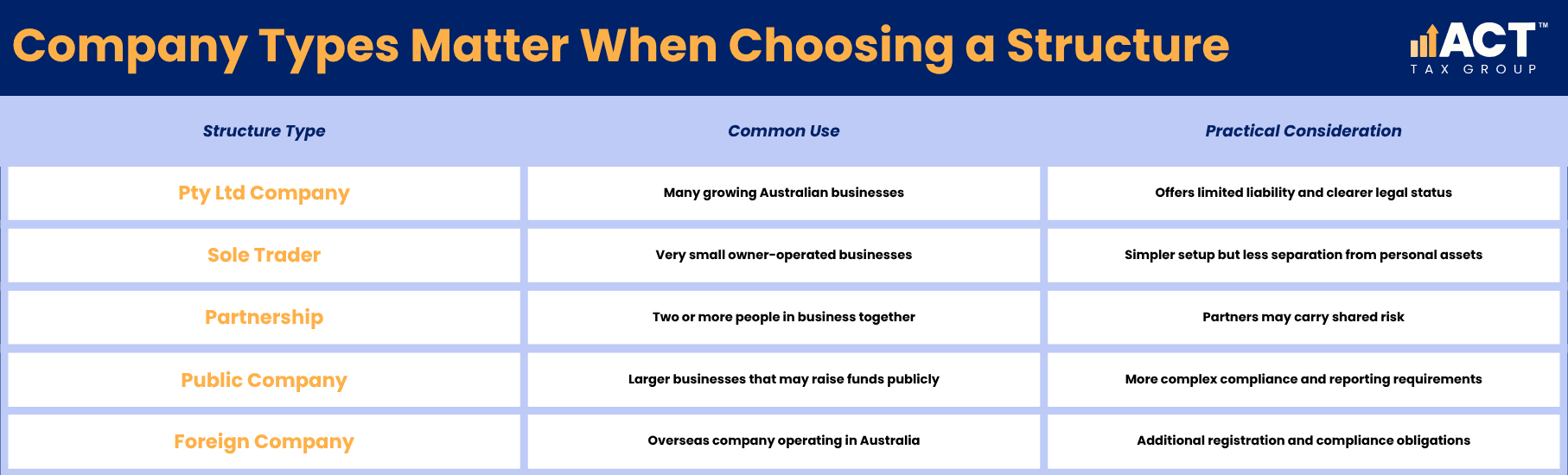
There are several company types in Australia, including proprietary limited companies, public companies, unlimited companies, and foreign company registrations. Most small businesses choose a proprietary company because it is privately owned, cannot list on the Australian Stock Exchange or another stock exchange, and generally has simpler reporting requirements than public companies. Small proprietary companies and large proprietary companies also have different reporting obligations. For many arborists, the practical question is whether the structure supports day-to-day operations, compliance overhead, regulatory requirements, growth plans, and future options to raise capital or raise funds.
Registration Creates the Company, But Records Keep It Safe
The registration process gives the company its legal status, company name, Australian Company Number (ACN), and formal existence under the Corporations Act. A company may also need an Australian Business Number (ABN), tax registrations, a registered office address, and separate bank accounts. However, registration alone is not enough. Directors need to manage the annual review fee, keep company details current, maintain proper financial records, and ensure legal documents match the way the business actually operates.
Asset Ownership Needs More Thought Than a Company Name
Asset protection is not just about registering a Ltd company or putting Pty Ltd after the business name. It also involves deciding who owns equipment, who leases it, who signs finance agreements, and whether valuable assets should sit inside the trading company. Some arborist businesses keep trading risk in one company and hold major assets separately, but this should be reviewed carefully with accounting, legal, finance, and insurance advice. The right answer depends on profit level, debt, family circumstances, commercial contracts, insurance cover, and future sale plans.
Key questions include who owns the chipper, truck, stump grinder, and climbing equipment; whether finance agreements are in the company name or personal names; whether anyone has signed a personal guarantee; whether related-party loans are documented; whether insurance matches the real operating structure; and whether the structure is simple enough to manage properly.
A Pty Ltd Structure Can Support Growth, But It Adds Compliance
A Pty Ltd structure can create enhanced credibility with commercial clients, councils, insurers, and lenders. It may also support higher value contracts, clearer ownership, selling shares, bringing in investors, or planning for future expansion. The trade-off is that proprietary limited companies also bring compliance obligations. Directors need to manage records, lodgements, company changes, tax registrations, employment obligations, and regulatory requirements in a way that suits the business.
For some arborists, the Pty Ltd structure supports growth because it can make it easier to employ staff, tender for larger work, separate personal and business assets, build a business beyond the owner, raise capital from private investors, bring in a business partner, or prepare for sale or succession.
Grow your tree care business with Accounting Built for Arborists
From start-up to expansion, our accounting team supports your tax, payroll, and cash flow — so you can focus on running your business safely and profitably.
Tax Compliance Still Follows the Business Activity
A company structure does not remove the need for accurate records, BAS lodgements, payroll reporting, and superannuation management. For arborists, messy records often come from fuel receipts, subcontractor payments, equipment repairs, insurance claims, cash deposits, and delayed customer payments. The Australian Taxation Office (ATO) expects businesses to keep accurate and complete records that explain transactions and support tax, superannuation, employer, registration, and lodgement obligations. For company directors, clean bookkeeping is not just administration, because it helps show what the company owes, who it owes, and whether the business is financially viable.
Important compliance areas include registering for Goods and Services Tax (GST) if GST turnover is $75,000 or more, lodging BAS and managing GST reporting on time, reporting payroll correctly, meeting superannuation guarantee obligations under Payday Super rules from 1 July 2026, reconciling equipment finance, tracking business and private vehicle use, keeping director loan accounts accurate, and reviewing cash flow before tax debts build up.
When Should Arborists Review Their Company Structure?
Arborists should review their company structure before a major risk event, not after one. The best time is usually before hiring staff, buying major equipment, taking on higher value contracts, bringing in a partner, or signing long-term finance. A review is also important when the business grows beyond one owner-operator. Once there are crews, supervisors, subcontractors, vehicles, recurring commercial clients, and possible international trade or interstate expansion plans, the structure needs to support control, accountability, tax compliance, and practical cash flow.

How ACT Tax Group Can Help with Pty Ltd Structuring for Arborists
We help arborists understand how shareholding, directorship, tax obligations, legal responsibility, and financial risk fit together before decisions are locked in. Our ACT-based, IPA-certified team can review your current setup, explain your options, and help you identify where personal guarantees, director obligations, BAS debt, payroll issues, or asset ownership may create avoidable stress. You can book a consultation with ACT Tax Group to discuss whether a Pty Ltd company structure suits your arborist business, how your current risks are allocated, and what records or agreements may need attention. We work with small to medium-sized Australian businesses that want practical advice, stronger compliance, and a clearer structure for growth.

Lukasz Klekowski
Principal of ACT Tax Group, specialising in tax compliance and financial strategy for Australian small businesses.

Disclaimer: All information provided in this publication is of a general nature only and is not personal financial or investment advice. It does not take into account your particular objectives and circumstances. No person should act on the basis of this information without first obtaining and following the advice of a suitably qualified professional. To the fullest extent permitted by law, no person involved in producing, distributing or providing the information in this publication (including ACT TAX GROUP PTY LTD, each of its directors, councilors, employees and contractors and the editors or authors of the information) will be liable in any way for any loss or damage suffered by any person through the use of or access to this information. The Copyright is owned exclusively by ACT TAX GROUP PTY LTD (ABN 31634338088)