

ATO Data-Matching for Electricians: What’s Checked Behind the Scenes When You Lodge Your Individual Tax Return
Published on July 7, 2026
ATO Data-Matching for Electricians: What’s Checked Behind the Scenes When You Lodge Your Individual Tax Return explains how the Australian Taxation Office (ATO) checks your income, deductions, payments, and details during the annual tax return process. For electricians, this matters because employment income, business income, car expenses, tool costs, allowances, and bank account activity may affect taxable income, tax liability, tax refund, or how much income tax you need to pay.
Most people lodge a tax return each financial year to report assessable income, claim deductions, and determine whether they owe tax or receive a refund. Whether you lodge online, use a tax agent, or prepare your own tax return, the Australian Tax Office may compare information from employers, banks, government payments, other entities, and previous year records for tax purposes.
What Does ATO Data-Matching Check for Electricians?
ATO data matching checks whether the income and deductions in your individual tax return appear complete and reasonable. This can include wages, allowances, interest earned, dividends, investment income, rental income, partnership income, business income, superannuation pensions, youth allowance, and other income types. The ATO may also check details linked to your Tax File Number (TFN), employers, bank account information, fringe benefits, and Pay as You Go (PAYG) instalments or other periodic income tax payments where they apply. For electricians, the Australian Taxation Office (ATO) may review deduction claims for tools, uniforms, training, phone use, car expenses, and claiming car expenses where private use is involved.
Worried your income won’t match ATO records?
Schedule a complimentary consultation with us today to review all income sources before lodgement.
Common Tradie Claims Need Careful Support
Electricians often earn income in different ways, including as employees, sole traders, or self-employed individuals. Each taxpayer needs to separate employment income, business income, and other assessable income clearly before lodging an individual tax return. Common areas reviewed include tools, vehicle costs, protective clothing, phone expenses, allowances, licences, investment income, rental income, and interest deductions where they are allowable and properly connected to assessable income, particularly for electricians who also have BAS and GST reporting obligations through a business. Each claim should relate to how you earn income and be supported by clear records.

What Triggers a Closer Look?
A closer look may happen when a tax return does not match information the ATO already holds. This may include missing wages, undeclared business income, unusual deductions, rounded expenses, capital gains not reported, or income appearing in a bank account but not in the return. The Australian Taxation Office may also review claims that appear high compared with similar employees or taxpayers. This does not mean the claim is wrong, but you may need to provide additional information to support the assessment.

How To Prepare Before You Lodge
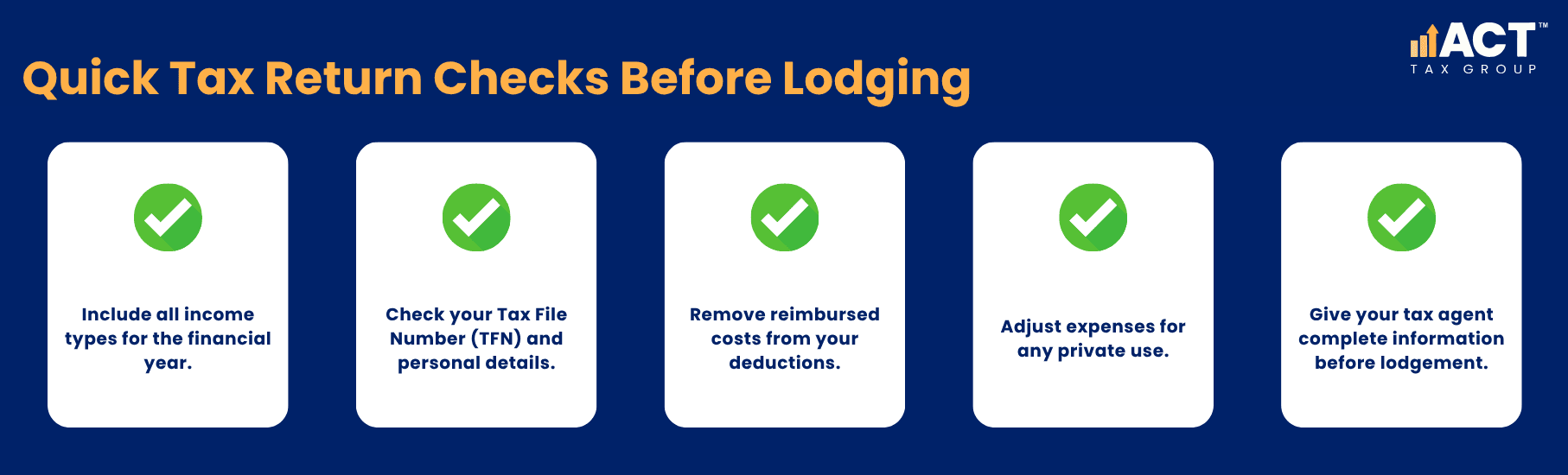
Good records make it easier to lodge individual tax returns accurately and respond calmly if the ATO asks questions. Keep receipts, invoices, bank statements, logbooks, employer details, allowance records, and notes showing how each claim relates to your income. Before you lodge your tax return, check that all income types are included, your TFN and personal details are correct, reimbursements are not claimed as deductions, private use has been removed from expenses, and your tax agent has complete information, and consider using ATO Online Services for Business if you run your own electrical business. You may also need to consider capital gains, rental income, investment income, or lodge a non-lodgment advice only if you work out that you do not need to lodge a tax return for that income year.
What Individual Tax Rules Should Electricians Keep in Mind?
Individual tax is based on taxable income for the income year. Taxable income generally means assessable income minus allowable deductions, which helps determine whether you receive a refund or need to pay tax. Most Australian residents can claim the tax-free threshold on the first $18,200 of income earned in the income year, but this does not make all income tax free or remove the need to lodge a tax return where required. Electricians who earn income from employers, business activities, property, investments, or other entities should check what needs to be included in their income tax return, especially if they receive PAYG instalments or need to lodge Instalment Activity Statements (IAS) during the year.
Power up your business with Accounting Built for Electricians
From start-up to expansion, our accounting team supports your tax, payroll, and cash flow at every stage of growth.
Why Record Keeping Matters for Tax Purposes
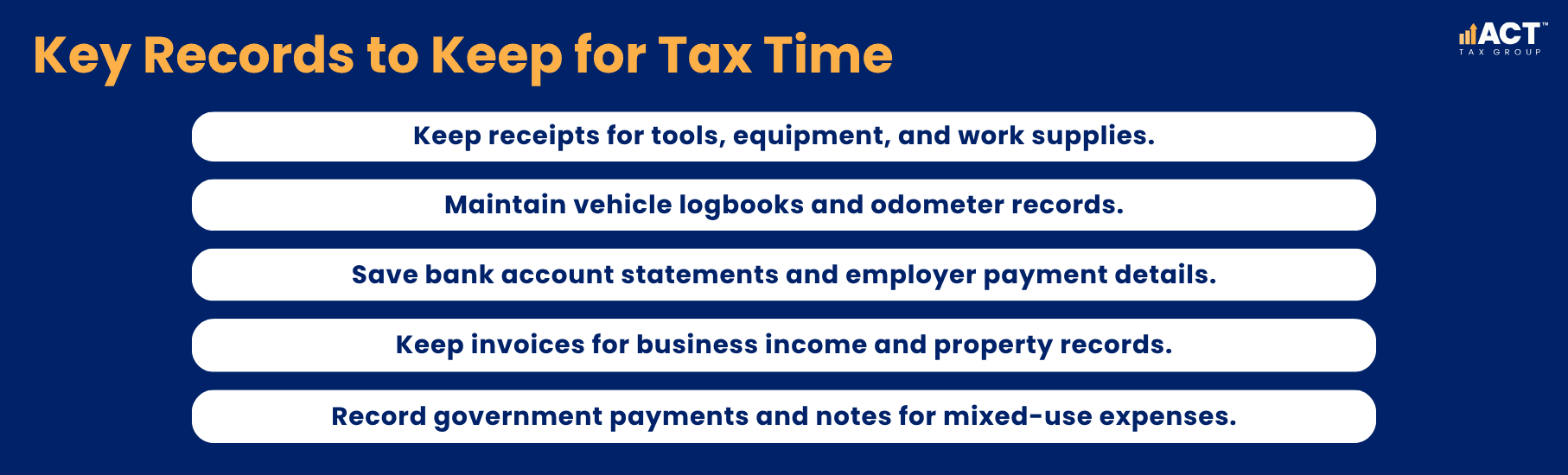
Record keeping supports the details in your tax return and helps explain your claims if the Australian Taxation Office asks for proof. Without records, even a genuine expense may be hard to claim. Useful records include receipts for tools, vehicle logbooks, bank account statements, employer payment details, invoices for business income, property records, interest records, government payments, and notes explaining mixed-use expenses.
How ACT Tax Group Can Help with ATO Data-Matching for Electricians
We help electricians lodge individual tax returns with clear records, practical advice, and confidence around work-related claims. Our IPA-certified team can review your income, deductions, tax liability, car expenses, business income, investment income, rental income, and other details before you lodge. You can book a consultation with our tax experts to check your tax position, organise your records, and reduce the stress of ATO follow-up.

Lukasz Klekowski
Principal of ACT Tax Group, specialising in tax compliance and financial strategy for Australian small businesses.

Disclaimer: All information provided in this publication is of a general nature only and is not personal financial or investment advice. It does not take into account your particular objectives and circumstances. No person should act on the basis of this information without first obtaining and following the advice of a suitably qualified professional. To the fullest extent permitted by law, no person involved in producing, distributing or providing the information in this publication (including ACT TAX GROUP PTY LTD, each of its directors, councilors, employees and contractors and the editors or authors of the information) will be liable in any way for any loss or damage suffered by any person through the use of or access to this information. The Copyright is owned exclusively by ACT TAX GROUP PTY LTD (ABN 31634338088)