

Electricians: Using a Pay Calculator to Test If Your Hourly Rate Covers Tax, Super and Time Off
Share this article
Published on June 16, 2026
Pay calculator hourly rate checks help electricians see whether the amount they charge per hour is enough to cover taxable income, income tax, superannuation guarantee, time off, overheads and a fair business profit. For electricians in the Australian Capital Territory (ACT) and across Australia, a pay calculator is a useful starting point, not a complete pricing system. It helps you test whether your annual income, net pay, tax payable, hours per week and pay calculations are realistic before you quote work, hire staff or accept a long-term contract.
What Should Electricians Use a Pay Calculator For?
Electricians should use a pay calculator to compare gross salary, net income, tax deductions, employee superannuation guarantee obligations and time off against the hourly rate charged to clients. This helps identify whether the business is earning enough to cover the owner’s wage, employee costs, overheads and compliance obligations. A pay calculator, salary calculator, Australian salary calculator or hourly rate calculator can be helpful when checking salary expectations, pay rates and pay frequency.
However, electrical businesses also need to add costs that a standard calculator may not include, such as tools, vehicles, insurance, software, bookkeeping, unpaid quoting, call-backs and time spent on Business Activity Statement (BAS) preparation.
Is your hourly rate actually covering tax and super?
Schedule a complimentary consultation with us today to test your rate against ATO obligations.
Your Hourly Rate Is Not Your Take-Home Pay
Your hourly rate is the amount billed to a customer, while take home pay is what remains after tax, super, business costs and other deductions. This distinction matters because gross income can look strong even when net pay is under pressure. For example, an electrician may have strong annual contractor income, but taxable income depends on allowable expenses, tax deductions, business structure and the way the income is earned. Australian income tax, the Medicare levy, any student loan repayments and possible Medicare levy surcharge issues can all affect actual tax and final net income.
A useful way to think about this is simple. Gross income is the total income before tax and deductions, while taxable income is the amount used to calculate income tax after allowable deductions. Net pay or take home pay is the amount left after tax, deductions and other commitments.
How Do Tax, Super and Time Off Affect Your Rate?
Tax, super and time off affect your hourly rate because they reduce the real amount available from each paid hour. A simple hourly calculator may show gross pay, but it may not show whether the business can afford annual leave, public holidays, personal leave, payroll costs and downtime. The superannuation guarantee is a cost that needs to be factored into eligible employee pay and, where the owner is paid as an employee of their company, owner salary planning. From 1 July 2026, employers must pay superannuation guarantee on payday under Payday Super, so pricing should support timely payments rather than relying on spare cash at the end of the quarter.
A practical rate test starts with the annual salary or owner income you want, then allows for income tax, Medicare levy, super where applicable, leave, public holidays, vehicle costs, tools, insurance, licences, software and bookkeeping. That total should then be divided by realistic billable hours, not every hour you work.
The Billable Hours Trap for Electrical Contractors
Many electricians work long hours per week, but not all of those hours are billable. Time spent quoting, travelling, ordering parts, chasing invoices, handling payroll, checking pay rates and reviewing tax obligations still needs to be paid for through your charge-out rate. If your annual calculations assume 38 billable hours per week, your rate may be too low. A more realistic model separates total working hours from paid customer hours, then uses the lower billable figure to test your contractor pay, annual figure and expected net income.

What Numbers Should Go into a Pay Calculator?
Electricians should enter base salary, pay period, pay frequency, hours per week, overtime hours, penalty rates and expected tax deductions when using a pay calculator. If the calculator applies current Australian Taxation Office (ATO) tax rates, it may also estimate income tax, tax bracket, tax payable and net pay. A contractor pay calculator needs a broader view than a wage calculator because contractors carry their own business costs. Annual contractor income should be tested against insurance, vehicle costs, tools, licences, admin support, bookkeeping fees, GST, BAS obligations, Instalment Activity Statement (IAS) requirements and time off.
The most useful inputs are your hourly rate, annual income target, gross salary, expected fortnightly pay or monthly salary, hours per week, overtime hours, Pay as You Go (PAYG) withholding for employees or PAYG instalments for business owners, Medicare levy, superannuation guarantee, salary sacrifice, salary packaging, other deductions and any fringe benefits. These figures give a clearer picture than looking at one pay period in isolation.
How Taxable Income Changes the Result
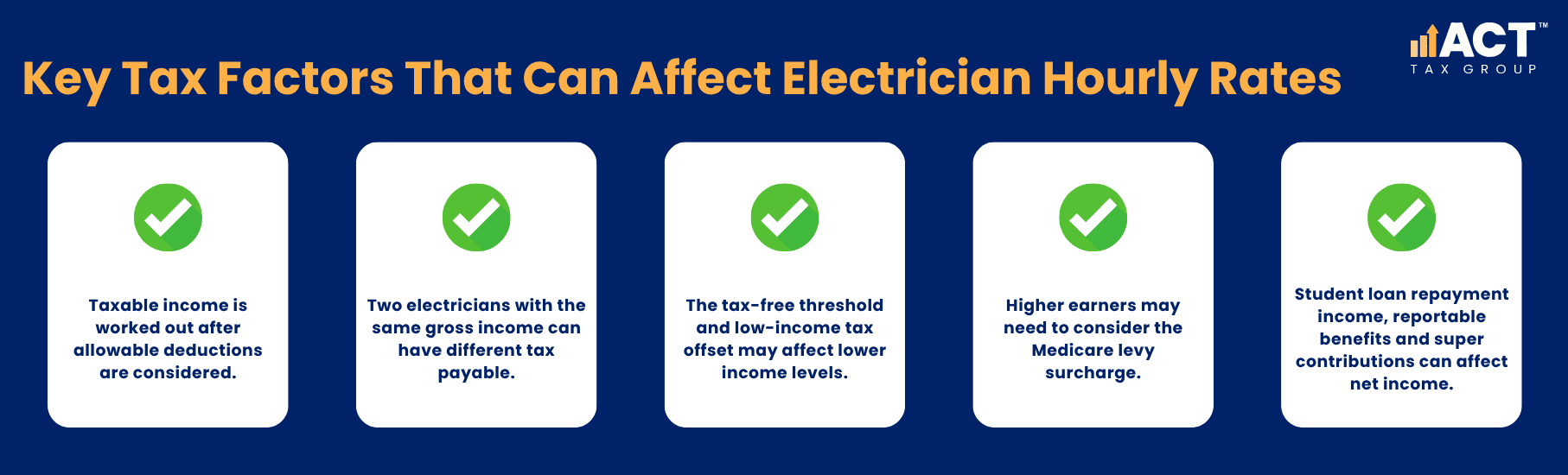
Taxable income is the amount used to work out income tax after allowable deductions are considered. This means two electricians with the same gross income may have different tax payable depending on their business expenses, structure, tax deductions and personal circumstances.
The tax-free threshold and low-income tax offset can affect lower income levels, while higher earners generally pay more tax as income moves through each tax bracket. Higher earners may also need to think about whether they and their dependants have an appropriate level of private patient hospital cover, because the Medicare levy surcharge may apply on top of the Medicare levy depending on their income and personal situation.
A careful review should consider the Medicare levy, student loan repayment income, current ATO tax rates, tax offsets, reportable fringe benefits and reportable super contributions, as well as home office claims under the fixed rate method, as these can affect tax outcomes and income tests. These items can affect net income, so they should not be ignored when setting an hourly rate.
A Simple Charge-Out Rate Formula for Electricians
A practical formula is total annual costs plus target profit, divided by realistic annual billable hours. This gives you a clearer hourly rate than simply copying the market value of another electrician’s price. For example, if your business needs $185,000 to cover annual income, tax, super, leave, overheads and profit, and you expect 1,350 billable hours, your base hourly rate needs to be about $137 before reviewing GST and job-specific pricing.
That $185,000 might include a target owner income of $105,000, an allowance for super and leave, vehicle and equipment costs, insurance, software, licences, bookkeeping, accounting and a profit buffer. The exact figure will depend on your business structure, workload, staffing and risk level.
Why a Salary Calculator Alone May Not Be Enough
A salary calculator can help compare gross salary, monthly salary, fortnightly pay and net pay for salaried positions. It is less useful when you need to test contractor pay, employment contract terms, annual contractor income and the cost of running a trade business. A salary converter may show what an hourly worker earns per week or per year, but it may not include business risk, unpaid admin, equipment replacement or quiet periods. Electricians should use these tools as a guide, then adjust the result with real business numbers.
How GST and BAS Timing Can Affect Your Bank Account
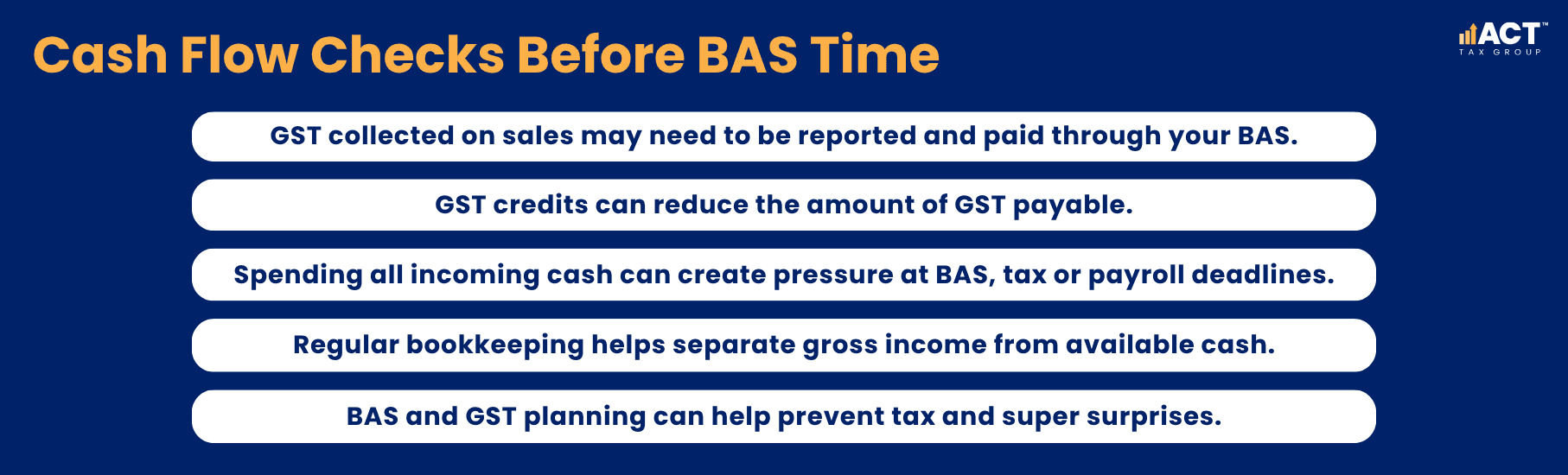
GST can make your bank account look stronger than it really is because GST collected on sales may need to be reported and paid through your Business Activity Statement (BAS), after allowing for any GST credits you are entitled to claim. If you spend all incoming cash without setting aside GST, PAYG withholding or instalments, and superannuation guarantee where applicable, the next BAS, tax or payroll deadline can create pressure.
This is where regular bookkeeping helps electricians stay organised and avoid confusion between gross income and available cash. A clear pay calculator review should work alongside BAS and GST reporting planning, so tax payable, GST and super do not become last-minute surprises.
Employees, Apprentices and Minimum Wage Considerations
If you employ electricians, apprentices or admin staff, your rate must cover more than minimum wage or base pay rates. It should also allow for superannuation guarantee, leave, penalty rates, overtime hours, workers compensation, payroll software, supervision and training time. Employment contract terms should also be reviewed so pay calculations match actual duties, classifications and working arrangements. When staff work overtime, receive allowances or move between job types, a basic hourly calculator may not be enough to show the full cost to the business.
For apprentices, the direct wage is only part of the calculation because training and supervision can reduce the billable time of licensed staff. A sustainable charge-out rate should recognise this cost rather than treating apprentice wages as simple savings.
When Salary Packaging and Salary Sacrifice Matter
Salary sacrifice and salary packaging can affect taxable income, net pay, reportable amounts and retirement savings, but they need to be handled carefully. These arrangements may be useful in some circumstances, but they can also affect reportable super contributions, fringe benefits tax treatment and other tax outcomes. Electricians should avoid using salary sacrifice only as a way to reduce tax without checking the broader effect. For example, salary sacrifice into a complying super fund may support retirement savings and reduce take home pay in the short term, but the employer must still pay superannuation guarantee as though there was no salary sacrifice arrangement.
How Often Should Electricians Review Their Hourly Rate?
Electricians should review their hourly rate at least annually and whenever major costs change. Wages, insurance, fuel, materials, software, super, interest rates and the Consumer Price Index (CPI) can all affect the cost of running an electrical business. A pay rise for employees, changes in annual salary expectations or increases in supplier costs should trigger a pricing review. A small salary increase or cost rise may seem manageable on its own, but several small changes can quickly reduce profit if your charge-out rate stays the same.
Power up your business with Accounting Built for Electricians
From start-up to expansion, our accounting team supports your tax, payroll, and cash flow at every stage of growth.
Common Pricing Mistakes Electricians Make
The most common mistake is assuming a high hourly rate automatically means high net income. A contractor may appear to earn more than an employee, but contractors generally need to manage their own tax obligations, expenses, leave, insurance and business risk, with the exact tax treatment depending on their business structure and working arrangement. Another mistake is focusing only on income tax while ignoring super, GST, Medicare levy, student loan obligations, private health insurance settings and other deductions that can be easily mishandled at tax time. A complete rate review considers the full picture, not just one tax rate or one pay period.
Warning signs include being busy without building cash reserves, delaying super or supplier payments, feeling stressed at BAS time, avoiding holidays because unpaid time hurts cash flow, or winning plenty of work without seeing profit improve. These signs usually point to a pricing, cash flow or bookkeeping issue that should be reviewed early.
How ACT Tax Group Can Help with Electrician Hourly Rate and Tax Planning
ACT Tax Group helps electricians use tax‑savvy strategies to test whether their hourly rate covers tax, super, time off, overheads and sustainable profit. Our IPA-certified team can review your pay calculator results, taxable income, tax deductions, PAYG tax, BAS position, contractor pay, payroll settings and cash flow so you can make pricing decisions with confidence. We can also help you arrange a consultation to review your annual income, charge-out rate, pay calculations and business structure. With clear numbers and practical advice, you can quote more confidently, reduce financial stress and build a business that supports your income, compliance obligations and long-term goals.

Conclusion
A pay calculator is a useful tool, but it should not be the only tool used to set your hourly rate. Electricians need to look beyond gross income and check tax, super, leave, non-billable time, BAS, overheads and profit before deciding what to charge. Before your next quote, pay rise, new hire or major contract, compare your hourly rate with realistic annual calculations. A clear review can help you protect cash flow, avoid underquoting and make sure the business is working for you, not just keeping you busy.

Lukasz Klekowski
Principal of ACT Tax Group, specialising in tax compliance and financial strategy for Australian small businesses.

Share this article
Disclaimer: All information provided in this publication is of a general nature only and is not personal financial or investment advice. It does not take into account your particular objectives and circumstances. No person should act on the basis of this information without first obtaining and following the advice of a suitably qualified professional. To the fullest extent permitted by law, no person involved in producing, distributing or providing the information in this publication (including ACT TAX GROUP PTY LTD, each of its directors, councilors, employees and contractors and the editors or authors of the information) will be liable in any way for any loss or damage suffered by any person through the use of or access to this information. The Copyright is owned exclusively by ACT TAX GROUP PTY LTD (ABN 31634338088)